


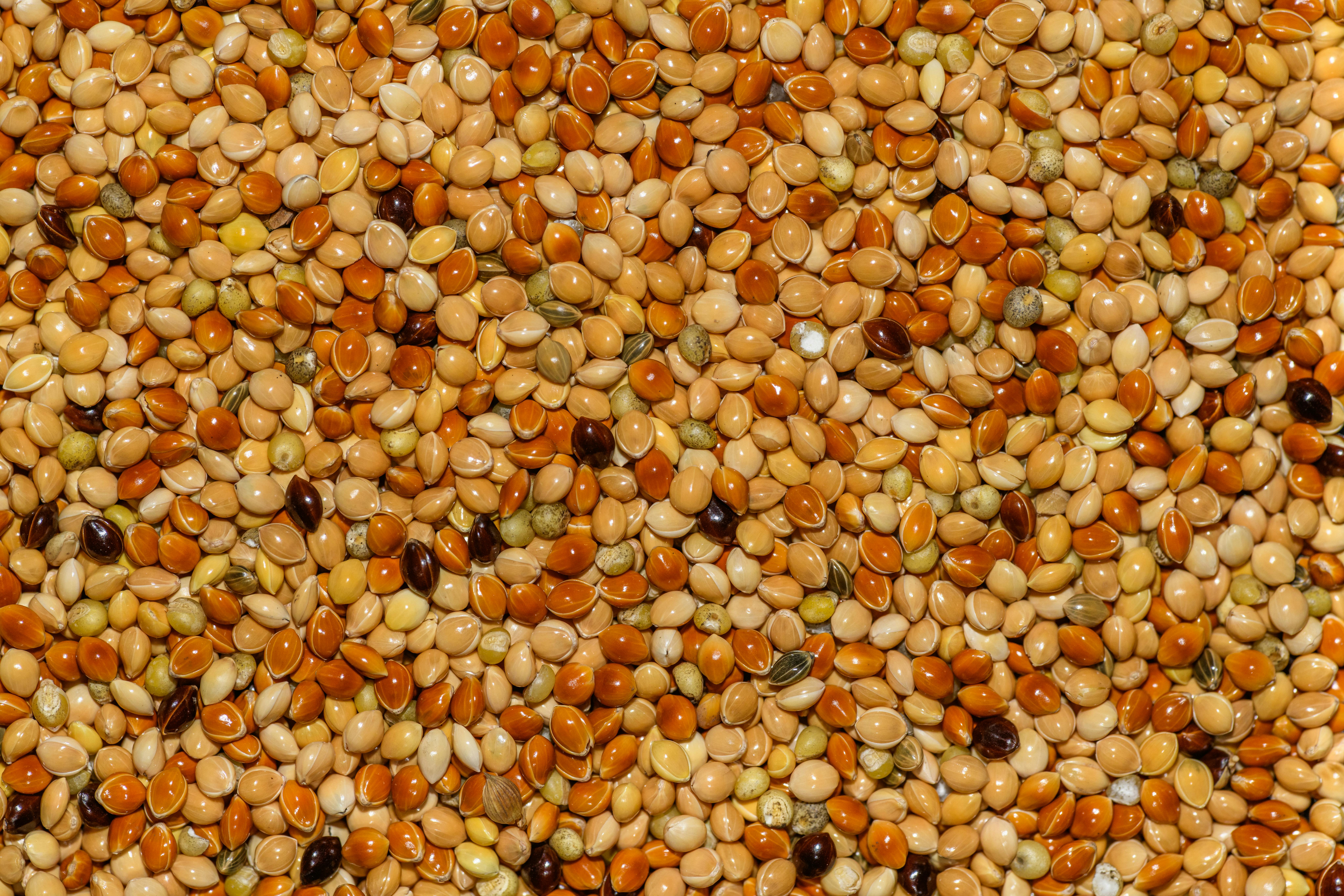
Millet
The porridge grain of the early Magyars — Setaria italica, high iron, gluten-free alternative.
In 1 minute
What does it provide? A naturally gluten-free grain providing arabinoxylan (prebiotic fiber, SCFA-producing), resistant starch, polyphenols (tannins and proanthocyanidins in finger millet — antioxidant + ferment into gut-friendly phenolic acids), high iron (biofortified pearl millet varieties), and magnesium. Anitha 2021 meta-analysis: millet-based diet reduces fasting blood glucose and HbA1c in type 2 diabetes.
How much? 60–80 g dry (≈ 1 cup cooked) per meal, 2–4×/week. Soak 6–8 hours (phytate reduction) or dry-toast in a pan before cooking (nutty aroma). Finkelstein 2015 RCT: 200 g/day biofortified pearl millet over 6 months improved iron status in Indian adolescent girls.
When to avoid? Confirmed Hashimoto's thyroiditis + iodine-deficient diet (C-glycosyl flavones inhibit thyroid peroxidase — safe in a mixed diet with iodized salt); celiac disease if no "gluten-free" certification (mill cross-contamination); hemochromatosis (biofortified varieties should be avoided); rancid, old millet (fat oxidation — discard if older than 6–8 months); CKD stage 4–5 (moderate potassium and phosphorus).
Millet is not a single plant but a collective name for several small-seeded, fast-maturing grains domesticated independently on multiple continents. Pearl millet (Cenchrus americanus, formerly Pennisetum glaucum) entered cultivation in the western Sahel region, in today's Mali and Mauritania, in the middle of the 3rd millennium BCE: science infers this from the imprints on ceramic vessels made during the severe droughts of that era and from seed finds. In Northern China, in parallel — or even earlier, 8,000–10,000 years ago — foxtail millet (Setaria italica) and broomcorn millet (Panicum miliaceum, proso) were already cultivated in the Yellow River valley, where for a time, together with rice, they formed the "two legs" of mixed grain agriculture. Finger millet (Eleusine coracana, known as ragi in India), however, began on the Ugandan and Ethiopian mountains, and reached India about 4,000 years ago via the maritime trade network.
Millets appeared in Europe from the Bronze Age to the Middle Ages in varying degrees from region to region — they occupied a special place in Central European life: it was part of the early Magyar grain wreath, and the Matthias-era court kitchen also published a millet porridge recipe. "Köles-kelt" and "kölesmálé" were customary foods until the mid-19th century, but then corn and potatoes dramatically pushed them aside. In the dry regions of India, China, and Africa, however, millets continue to function as a staple food today, and the UN declared 2023 the International Year of Millets — because of their climatic stress tolerance and nutritional value.
🔬 Scientific Background
"Millet" is botanically a collective name for several small-seeded, fast-maturing C4 grasses. The main cultivated species: - Setaria italica — "foxtail millet," the traditional ingredient of Central European köles-kasa - Panicum miliaceum — "proso millet" - Cenchrus americanus (syn. Pennisetum glaucum) — pearl millet - Eleusine coracana — finger millet/ragi (particularly tannin- and polyphenol-rich)
Proso fat content: millet has higher fat content (≈ 3–5%) than classic grains, with favorable MUFA + PUFA ratio. This explains its tendency to rancidity (short shelf life).
Bioactives: - AX/AXOS — prebiotic fiber, SCFA-producing - Tannin/proanthocyanidin — particularly high in finger millet (microbial metabolism → phenolic acids) - High Fe content — biofortified pearl millet varieties showed Fe status improvement in clinical trials (HarvestPlus, Indian adolescent girls) - Resistant starch — variety- and technology-dependent
Goitrogen question: millet polyphenols (especially C-glycosyl flavones) can inhibit the thyroid peroxidase enzyme → in iodine-deficient diet + monotonous millet eating, goiter risk (documented in Ethiopia). Safe in a mixed diet with adequate iodine intake.
Human evidence: - According to recent reviews (2024–2025), millet-based whole-grain products produced microbiome shifts, glycemic improvement, and body weight advantage in overweight populations. - Drinks/foods from fermented finger millet showed SCFA + antioxidant activity improvement in in vitro/human experiments. - In kidney dialysis patients (CKD 3–4), finger millet-based symbiotic diet documented uremic toxin reduction.
The "cook-and-chill" RS3 yield in millet is not always significant — variety- and technology-dependent. Fermentation and sprouting dramatically increase polyphenol bioavailability.
- + Fermentation/sprouting: reduces antinutrients (phytate, tannin), increases polyphenol bioavailability. Fermented millet drink, sprouted finger millet flatbreads.
- + Legumes (chickpea, lentil): complete amino acid profile + broader prebiotic matrix.
- + Vitamin C source (lemon, peppers): 2–3× Fe absorption boost.
- + Yogurt/kefir (live cultures): synbiotic synergy (especially on fermented millet porridge base).
- + Iodine-containing food (sea fish, iodized salt): maintains goitrogen balance.
- + "Cook-and-chill" RS protocol with potato or rice: broader RS profile.
- Iodine-deficient diet + monotonous millet + raw crucifers (cabbage, broccoli) together: additive goitrogen effect.
- Strong tea/coffee at the meal: tannin addition (especially with finger millet) → Fe absorption decreases.
- Iron supplementation at the same meal: temporal separation recommended.
- Over-refined millet porridge + sugar: glycemic advantage disappears.
- Long-stored rancid millet: fat oxidation, avoid.
- Hashimoto's thyroiditis, iodine-deficient state: monotonous millet eating in large quantities to be avoided; in mixed diet with moderation is fine.
- Celiac disease: gluten-free, BUT processing cross-contamination risk → certified product.
- Hemochromatosis: high Fe content pearl millet and biofortified varieties should be avoided.
- Active IBS flare: generally low FODMAP, but start with a small portion.
- Severe kidney disease (CKD 4–5): moderate potassium, phosphorus — dosing with dietitian.
- Millet allergy (very rare): avoid.
Daily serving
60–80 g dry (1 cup cooked) per meal, 2–4×/week.
Preparation pattern
- Central European millet porridge: 100 g millet + 300 ml milk/water + pinch of salt, to a boil, then on low heat 20–25 minutes covered.
- Soaking 6–8 hours: phytate reduction, shortened cooking time.
- Toasting before cooking: in a dry pan 3–5 minutes → nutty aroma.
- Sprouting 24–48 hours: polyphenol, fiber, vitamin increase.
- Fermentation (idli-style): millet + water + LAB starter → 12–24 hours → flatbread.
Classic patterns
Central European millet porridge: classic peasant breakfast — millet + milk + honey + apple.
Indian ragi mudde: finger millet + water → thick balls, with sauce.
Chinese xiaomi zhou: millet soup for breakfast, with Chinese medicinal herbs.
Modern fusion millet salad: millet + roasted beets + walnut + parsley + olive oil-lemon juice.
Millet flatbread (Central Asian): from sprouted millet flour, with yogurt.
Storage and avoidances
Storage: Dry millet in an airtight jar, in a dark, cool place, 6–8 months (shorter than wheat due to higher fat content). Refrigerated 12 months. Cooked millet in the fridge 4 days.
What not to do: Don't consume exclusively millet in an iodine-deficient diet. Don't store in warm, humid places. Don't substitute millet for quinoa for complete-protein focus.
References
[1] Saleh AS et al. Millet grains: nutritional quality, processing, and potential health benefits. Compr Rev Food Sci Food Saf 2013;12(3):281–295.
[2] Anitha S et al. A systematic review and meta-analysis of the potential of millets and sorghum for managing and preventing diabetes mellitus. Front Nutr 2021.
[3] Finkelstein JL et al. Iron-biofortified pearl millet improves iron status in adolescents in India: a randomized trial. J Nutr 2015;145(7):1576–1581.
[4] Devi PB et al. Health benefits of finger millet (Eleusine coracana L.) polyphenols and dietary fiber: a review. J Food Sci Technol 2014;51(6):1021–1040.
[5] Gaitan E et al. Goitrogenic effects of millet in iodine-deficient populations. J Clin Endocrinol Metab 1989.
[6] Anitha S et al. Millets can have a major impact on improving iron status, hemoglobin level, and in reducing iron deficiency anemia — a systematic review and meta-analysis. Front Nutr 2022;8:725529.
[7] ICRISAT. Millets: nutricereals for climate-resilient food systems. 2023 (UN International Year of Millets).
[8] Hithamani G, Srinivasan K. Bioaccessibility of polyphenols from selected cereal grains and legumes. Food Chem 2014.
[9] Monash University. High and Low FODMAP foods — millet. Monash FODMAP database.