


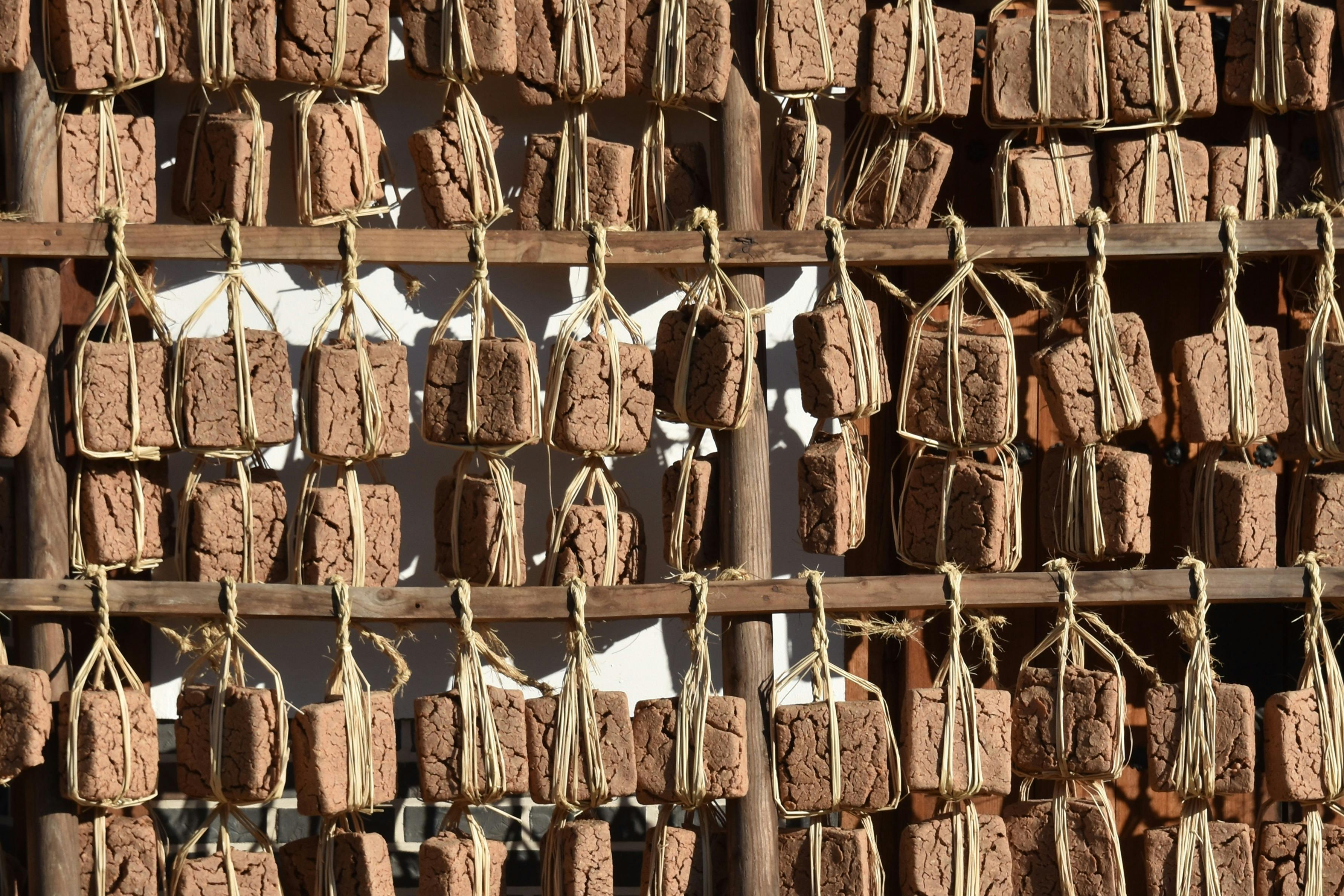
Doenjang / gochujang
Korean fermented soybean pastes — Bacillus-dominant ancient soy ferment (doenjang) + capsaicin ferment (gochujang), isoflavone + capsaicin synergy.
- Latin név
- Glycine max (soy) + Capsicum annuum (gochujang) + Bacillus subtilis / Aspergillus oryzae + Lactobacillus + Zygosaccharomyces
- FODMAP
- 🟡 moderate (1 tbsp)
- Evidence
- ★ ★ (human pilots — isoflavone + Korean population data)
- Microbiota
- Live LAB + Bacillus + postbiotic isoflavone + capsaicin
- What does it provide?
- Doenjang (된장) is Korean fermented soybean paste: pure soy, Bacillus subtilis (from traditional "meju" blocks' natural ferment) and Aspergillus fermentation, 6–12 month aging. Gochujang (고추장) is a sweet-spicy paste: soy + glutinous rice + chili (gochugaru) + malt rice (yeotgireum), 1–6 months ferment. Both provide a live postbiotic matrix, isoflavones (genistein, daidzein — in aglycone form), lactic acid (Lactobacillus), and — in gochujang — capsaicin (anti-inflammatory, metabolically activating).
- How much?
- 1–2 tbsp (15–30 g) doenjang in soup base (jjigae); 1 tsp gochujang as seasoning (bibimbap, marinade). High Na (1500–2500 mg/100 g).
- When to avoid?
- Severe hypertension (high Na); soy allergy; in gluten sensitivity check the label (some versions also contain wheat); young children (spiciness, Na); MAO inhibitors (tyramine); active GERD flare (chili); histamine intolerance; infant < 1 year.
The Korean soy fermentation tradition is over two thousand years old: finds from the Goguryeo era (1st millennium BCE) — tomb chambers — already contain jang paste vessels. "Doenjang" (된장, "thick paste") evolved from the Chinese jiang line but differed significantly: the Korean version is Bacillus subtilis-dominant spontaneous fermentation on "meju" blocks (traditionally soy paste blocks sun-dried in winter, inoculated with natural Bacillus strains). This distinguishes it from Japanese miso (which is Aspergillus-kōji-dominant).
"Gochujang" (고추장) is much younger — chili (Capsicum annuum) came to Korea at the end of the 16th century via Portuguese traders from Japan. The "Hunmong Jahoe" (1527) dictionary does not yet mention chili; the 1614 "Jibong Yuseol" encyclopedia does. Modern gochujang (rice + soy + chili + malt) has been established since the mid-18th century. Korean population data (Lee 2014, Park 2015) show that high doenjang/gochujang consumption is associated with reduced breast cancer risk and favorable microbiome patterns. The 2017 Marco review names Korean soy ferments as one of the most effective food matrices for isoflavone bioactivity.
🔬 Scientific Background
Doenjang fermentation: 1. Meju block making: boiled soy paste formed into bricks, air-dried in winter — natural Bacillus subtilis, Aspergillus oryzae inoculation. 2. Placement in brine (6–12 months): meju blocks in salt water (15–20% salt). LAB (Lactobacillus), Bacillus, and salt-tolerant yeasts (Zygosaccharomyces rouxii) produce a lactic acid, glutamate, isoflavone-aglycone matrix. 3. Separation: liquid part is "ganjang" (Korean soy sauce), paste part is "doenjang."
Gochujang fermentation: 1. Soy flour + glutinous rice + malt rice + chili + salt mixed. 2. In clay vessel (onggi) outdoors 1–6 months of aging. Lactobacillus, Bacillus, and Saccharomyces activity. Malt rice amylases produce sweet flavor.
The Bacillus subtilis-dominant fermentation is unique: it differs from Japanese miso (Aspergillus-kōji-dominant) and Chinese jiang (longer ferment). Bacillus spore content is high, meaning live microbe intake (up to 10⁶–10⁷ CFU/g). Some Bacillus strains are probiotic-like (Bacillus coagulans, B. subtilis natto).
Isoflavone aglycone ratio: Park (2015) reports that the Korean doenjang aglycone-isoflavone ratio is 70–85% (vs. unfermented soy 5–10%) — excellent bioavailability. The aglycone (free genistein, daidzein) is directly absorbed in the small intestine; unfermented glycoside forms require bacterial hydrolysis.
Capsaicin (gochujang): chili capsaicin activates the TRPV1 receptor and is metabolically activating (UCP1, brown fat), anti-inflammatory (resolvins), and — paradoxically — gastric mucosa-protective (in small doses). In large doses inflammation-enhancing.
Korean population data: Lee (2014) reports that high doenjang consumption in Korean populations is associated with lower breast cancer incidence (HR ≈ 0.70) and more favorable metabolic profile. A 2021 Korean study showed LDL reduction and reduced inflammation markers (CRP, IL-6) after 12 weeks of 30 g/day doenjang consumption.
Microbiome effect: Tamang (2016 Front Microbiol) and Sanlier (2019 Crit Rev Food Sci) report that Korean soy ferments increase Bifidobacterium and Lactobacillus levels and reduce opportunistic Proteobacteria ratios.
- + Doenjang jjigae (doenjang stew): tofu + vegetables + doenjang + green chili — classic Korean.
- + Ssamjang (mixed soy paste) for wrap: doenjang + gochujang + sesame oil + crushed garlic + scallion — for salad wraps.
- + Bibimbap (mixed bowl): rice + vegetables + gochujang + sesame oil + egg.
- + Tteokbokki (rice cakes in chili): rice cakes + gochujang sauce + fish cake.
- + Bulgogi marinade: soy sauce + gochujang + ginger + sesame oil + pear.
- + Fresh greens (lettuce, perilla leaves): Mediterranean-typical polyphenol + LAB.
- High-Na diet: with cheese, sausage — Na overload.
- MAO inhibitors: tyramine content risks hypertensive crisis.
- Iron supplement at the same meal: residual phytate + polyphenols chelate.
- Undiluted gochujang on an empty stomach: capsaicin gastritis.
- High-spice diet (chili overdose): gastritis, GERD flare.
- Combined with histamine-sensitive foods (aged cheese, fish): superimposes.
- Severe hypertension, heart failure, kidney disease: high Na — max 1 tsp/day.
- Celiac, NCGS: check label (some gochujang contains gluten — malt rice).
- Soy allergy: strictly avoid.
- MAO inhibitors: avoid.
- Active GERD flare, erosive esophagitis: capsaicin irritates.
- Active peptic ulcer: chili in small amounts OK, large doses avoided.
- Thyroid + iodine sensitivity + soy isoflavone: separate from levothyroxine (≥ 4 hours).
- Histamine intolerance: avoid.
- History of hormone-sensitive tumor: dietary amounts safe (meta-analyses), high-dose supplements avoided.
- Infant < 1 year: avoid (spicy + Na).
- Migraine with tyramine trigger: avoid.
"Doenjang and miso are the same, just different names." Partly a myth. Both are fermented soy paste, BUT: doenjang is Bacillus subtilis-dominant spontaneous ferment (meju block), miso is Aspergillus oryzae kōji-dominant. Doenjang has a stronger smell, "funky-drier"; miso is sweeter, rounder. Clinically: doenjang has higher Bacillus CFU, miso higher peptide matrix.
"Gochujang is super-spicy — it makes you lose weight." Partly a myth. Capsaicin is metabolically activating (brown fat, UCP1) — small effect on weight mobilization (Whiting 2014 meta-analysis pattern: ≈ 50–100 kcal extra/day). Not alone "fat-burning," but contributes.
"Doenjang isoflavones cause breast cancer." Myth. Lee (2014) Korean population data show that high doenjang consumption reduces breast cancer risk (HR ≈ 0.70). Fermented-aglycone isoflavone is bidirectional SERM activity, protective at the clinical level.
"Korean soy pastes are gluten-free." Partly a myth. Classic doenjang is pure soy — gluten-free. Some gochujang versions contain wheat (malt rice, molasses items) — check label, in celiac disease "gluten-free" cert.
"'Natural' doenjang does not contain added Na." Myth. The high Na (15–20% salt) is part of doenjang fermentation — without it the ferment would be contaminated. "Reduced-sodium" versions exist, but classic is high Na.
"Gochujang is just seasoning, a small amount — has no effect." Partly a myth. 1 tbsp (≈ 20 g) gochujang ≈ 400–500 mg Na and 1–3 mg capsaicin. Steady consumption (3–5 tbsp/week) is clinically relevant — Korean population data are based on this.
"'Meju' homemade is dangerous." Partly true, partly a myth. Traditional meju block fermentation is safe if the classical protocol is followed (winter drying, brine). For modern home preparation with starter culture (Bacillus subtilis ATCC) it is better controlled.
🍳 Kitchen Protocol
Daily serving: 1–2 tbsp doenjang in soup base, or 1 tsp gochujang as seasoning.
Preparation patterns: 1. Doenjang jjigae (classic Korean stew): 2 tbsp doenjang + 1 liter dashi/anchovy broth + tofu + zucchini + potato + green chili + scallion. 2. Ssamjang (salad wrap sauce): 2 tbsp doenjang + 1 tbsp gochujang + 1 tbsp sesame oil + 1 tsp grated garlic + sesame + scallion. 3. Bibimbap sauce: 1 tbsp gochujang + 1 tsp sesame oil + 1 tsp rice vinegar + 1 tsp sugar + sesame. 4. Bulgogi marinade: 3 tbsp soy sauce + 1 tbsp gochujang + 1 tbsp mirin + 1 tsp sesame oil + grated pear + garlic + ginger. 5. Tteokbokki: rice cakes + 3 tbsp gochujang + 1 tbsp soy sauce + 1 tbsp sugar + fish cake + scallion. 6. Doenjang-pa (scallion doenjang): scallion + doenjang + sesame oil + grated garlic — quick side.
Storage: doenjang in refrigerator (after opening) 6 months. Gochujang in refrigerator 6–12 months. In onggi clay vessel for traditional long storage (breathable).
What not to do: don't cook at high heat too long (LAB loss). Don't add to boiling (protein coagulation, "chunky" soup base). Don't store at high heat (oxidation).
📚 References (selected)
1. Tamang JP et al. Functional properties of microorganisms in fermented foods. Front Microbiol 2016;7:578. 2. Lee SA et al. Soyfood intake and breast cancer risk in Korean women. Br J Nutr 2014;112(1):112–119. 3. Park J et al. Doenjang consumption and bioavailability of soy isoflavone aglycones. J Med Food 2015. 4. Marco ML et al. Health benefits of fermented foods: microbiota and beyond. Curr Opin Biotechnol 2017;44:94–102. 5. Sanlier N et al. Health benefits of fermented foods. Crit Rev Food Sci Nutr 2019;59(3):506–527. 6. Whiting S et al. Capsaicinoids and capsinoids on weight management: a meta-analysis. Appetite 2014;73:183–188. 7. Messina M. Soy and breast cancer: a comprehensive review. Womens Health 2014;10(3):265–292. 8. Shin D et al. Effect of doenjang consumption on cardiometabolic risk factors: a randomized clinical trial. Nutrients 2021.