


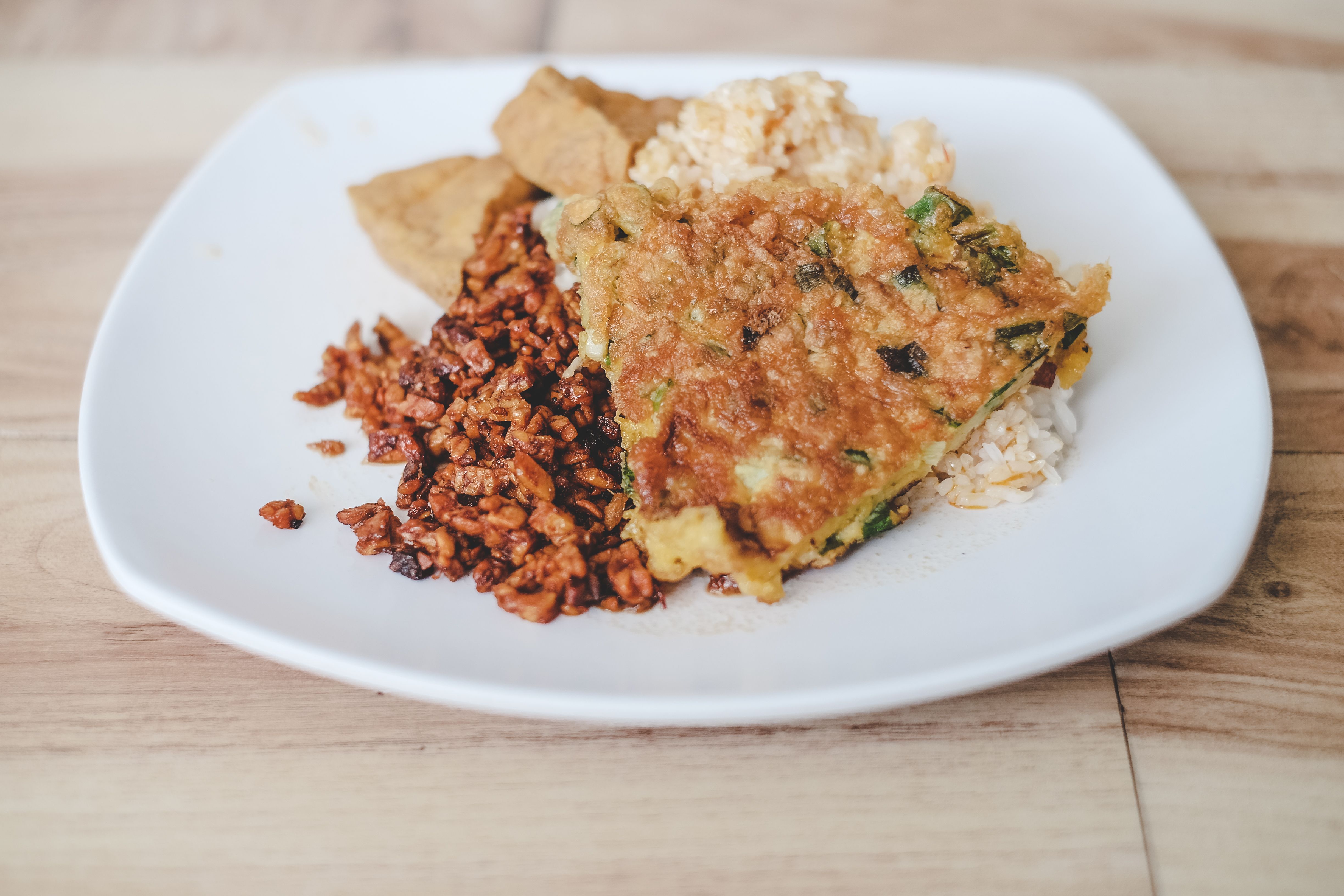
Tempeh
From under the banana leaves of Java to the vegan protein world market — a dense, sliceable soy cake with Rhizopus oligosporus.
In 1 minute
What does it provide? Complete soy protein (≈ 20 g/100 g, with all 9 essential amino acids), aglycone-form isoflavones (genistein, daidzein — during Rhizopus mold fermentation the sugar bond is cleaved, so absorption is 2–3× better than in tofu), reduced (40–60% lower) phytate content → better iron and zinc absorption. Afifah 2020 RCT: 100–150 g tempeh/day produced significant LDL reduction over 8 weeks in pre-diabetic patients.
How much? 80–120 g fresh tempeh daily (≈ ½–¾ pack), 3–5×/week — gently steamed, grilled, or pan-fried at low heat (high heat, > 200 °C, destroys isoflavone aglycones).
When to avoid? Soy allergy (absolute contraindication — IgE-mediated anaphylaxis); during MAO inhibitor therapy (phenelzine, tranylcypromine — hypertensive crisis due to tyramine content); levothyroxine concurrently (≥ 4 hours separation); tamoxifen therapy (phytoestrogen interaction — medical consultation); hypothyroidism/Hashimoto's > 150 g/day (goitrogenic potential in iodine deficiency); active IBS flare; not recommended as a regular food for infants.
The story of tempeh begins on the island of Java, during the time of the 17th–18th-century Mataram Sultanate: the first written mention dates to 1815, from the Javanese poetry collection "Serat Centhini," where it appears under the name "tempe" — but tradition holds that the method is much older. It was created from the soybean residue left over from tofu making and the tropical heat, when beans wrapped in banana leaves were knit by the Rhizopus mold present in the air into a white, dense mycelium within a few days. In Dutch colonial times, tempeh became the cheap, high-protein staple of Javanese peasant households and, according to tradition, was the first easily digestible soy product offered to children.
The 20th-century Indonesian independence movement elevated tempeh into a national identity symbol. In the 1960s, President Sukarno first used the phrase "bangsa tempe" (tempeh nation) in a derogatory sense — today, however, it is a proud label. From the 1970s on, vegetarian movements brought it to the West: first to the Netherlands, then to the USA, and in 2021 it became a candidate for UNESCO Intangible Cultural Heritage. Modern microbiology has described the role of Rhizopus oligosporus in detail: the mold's phytase and protease enzymes break down soy phytates, increase the bioavailability of amino acids, and produce B-vitamin metabolites. (Wikipedia, ScienceDirect)
🔬 Scientific Background
Tempeh is a "matrix-transforming" fermented soy product: the enzymatic activity of Rhizopus oligosporus (phytate ↓ ≈ 40–60%, oligosaccharides ↓, isoflavone aglycones ↑) is well documented. The mold's phytase breaks down soy's antinutrients, which improves the absorption of iron, zinc, and calcium — particularly important for those on a plant-based diet (Reyes-Bastidas 2010, Frontiers). PMC
Isoflavones (genistein, daidzein) enter the aglycone form during fermentation, which means faster absorption and potentially stronger endocrine modulation — particularly in equol-producing individuals (≈ 25–30% of the Western population). PMC
In human intervention, daily consumption of 100–150 g tempeh produced moderate LDL and total cholesterol reduction in short-term RCTs (Afifah 2020), as well as moderate insulin sensitivity improvement in pre-diabetics (8 weeks, Malaysian–Indonesian cohorts). PubMed At the microbiome level, daily tempeh intake (4 weeks) increased the proportion of Bifidobacterium and Faecalibacterium prausnitzii, especially when combined with a fiber-rich diet. PMC
There is a significant difference between industrial pasteurized tempeh and fresh, live unpasteurized tempeh: the live version contains higher enzyme activity and live microbiota; pasteurization inactivates every live fraction.
- + Whole grains (rice, buckwheat, millet): complete amino-acid profile + synbiotic fiber combination.
- + Vegetables and live-culture fermentum (yogurt, kefir, sauerkraut): fermented protein + fiber + LAB triple synbiotic pattern.
- + Citrus dressing (lime, lemon, tamarind): vitamin C for iron absorption + flavor harmony.
- + Indonesian spices (turmeric, ginger, garlic, coriander): polyphenol synergy and aromatic carminative effect.
- + Coconut oil or sesame oil: fat-soluble carotenoid and isoflavone bioavailability improvement.
- + Fermented soy sauce (small amount): flavor enhancer, umami — but be sodium-aware.
- MAO inhibitor therapy (phenelzine, tranylcypromine, moclobemide): risk of hypertensive crisis due to tyramine content — avoid.
- Levothyroxine (hypothyroidism treatment): isoflavones and soy protein can reduce absorption — time separation ≥ 4 hours.
- Tamoxifen (breast cancer treatment): theoretical conflict — phytoestrogen effect of isoflavones may clash with hormonal therapy; moderate consumption or consultation.
- During antibiotic course: antibiotics destroy the live tempeh microbiota — restart 1–2 weeks after the course.
- Iron supplement: residual phytate can chelate — separate by ≥ 1 hour.
- High-heat frying in oil: isoflavone aglycones and live enzymes are destroyed — gentle steaming/grilling is preferred.
- Soy allergy: absolute contraindication — cross-reactivity with IgE-mediated anaphylaxis.
- Mold allergy (rare): to be avoided in case of Rhizopus-specific sensitivity.
- Thyroid dysfunction (hypothyroidism, Hashimoto's): high doses (≥ 150 g/day) have goitrogenic potential; balance with iodine status.
- Kidney stones, oxalate sensitivity: soy has moderate-to-high oxalate content.
- Gout: moderate purine content — in moderation.
- Hormone-sensitive tumors during active treatment: medical consultation due to phytoestrogen effect.
- Infant/young-child feeding: high isoflavone dose not recommended on a regular basis.
- Acute IBS flare: test with a small portion, although due to fermentation it is better tolerated than non-fermented soy.
Daily serving
Fresh tempeh: 80–120 g (≈ 1/2–3/4 pack), 3–5× weekly.
Preparation pattern
- Thin slices (≈ 5–8 mm) or cubes (≈ 2 cm).
- Marinade: soy sauce/tamari + lime/lemon + ginger + turmeric + garlic — 20–30 minutes.
- Gentle frying: in a pan with 1 tbsp oil, medium heat, 4–5 min/side — until golden brown.
- Add to a vegetable stew, fried rice, or salad at the end.
Classic patterns
Indonesian tempe orek: marinated tempeh slices + soy sauce + chili + lime — over warm rice.
Tempeh curry: coconut-milk sauce + turmeric + coriander + vegetables + tempeh cubes — with lentils or rice.
Tempeh "bacon": thin slices + smoked paprika + maple syrup + soy sauce marinade → gentle frying.
Tempeh Buddha bowl: quinoa + roasted tempeh + sauerkraut + avocado + leafy greens + tahini dressing.
Storage
Fresh, refrigerated: 7–10 days. Frozen: 6 months (texture may change). Black dots that appear on the surface are NORMAL (Rhizopus spore production, not spoilage). Slimy, ammoniacal smell = spoiled, don't eat.
What not to do
Don't fry in oil that's too hot (≥ 200 °C, 10+ min) — isoflavone aglycones and enzyme activity will be destroyed. Don't eat raw, unpasteurized when immunocompromised (pregnancy, chemotherapy, post-transplant). Don't try to cover your B12 needs with tempeh alone.
References
[1] Nout MJR, Kiers JL. Tempe fermentation, innovation and functionality: update into the third millennium. J Appl Microbiol 2005;98(4):789–805.
[2] Kiers JL et al. Effect of fermented soya beans on diarrhoea and feed efficiency in weaned piglets. J Appl Microbiol 2000;88(1):60–66.
[3] Reyes-Bastidas M et al. Biological, nutritional, and processing aspects of phytate. Frontiers in Nutrition 2010.
[4] Afifah DN et al. Effect of tempeh on lipid profile: a randomized controlled trial. Asia Pac J Clin Nutr 2020.
[5] Watanabe F. Vitamin B12 sources and bioavailability. Exp Biol Med 2007;232(10):1266–1274. (Tempeh contains plant-derived pseudo-B12, which is inactive in humans — a supplemental B12 source is required in a vegan diet.)
[6] Hamilton-Reeves JM et al. Clinical studies show no effects of soy protein or isoflavones on reproductive hormones in men: results of a meta-analysis. Fertil Steril 2010;94(3):997–1007.
[7] Messina M. Soybean isoflavone exposure does not have feminizing effects on men. Fertil Steril 2010;93(7):2095–2104.
[8] Huang YC et al. Tempeh fermentation increases isoflavone aglycone content and bioavailability. Food Chem 2018;245:1140–1147.
[9] Monash University. Tempeh — Low FODMAP serving guidelines. Monash FODMAP database.