


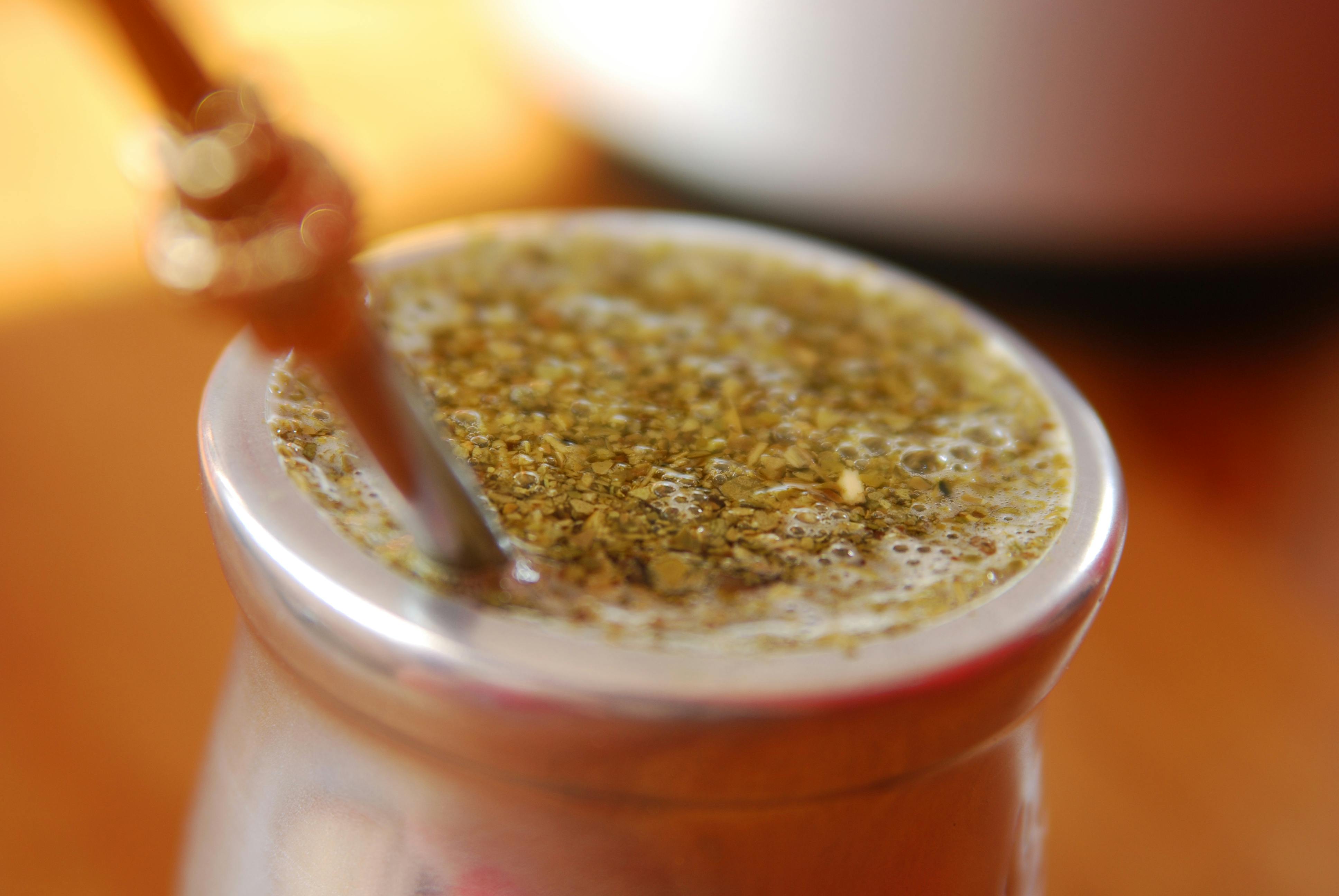
Yerba mate
The South American "green coffee" — mate polyphenols, natural caffeine, and the gaucho energy tradition.
In 1 minute
What does it provide? A triple methylxanthine profile: caffeine (70–110 mg/cup — alertness), theobromine (milder, longer vasodilator), and theophylline (bronchodilator) — together they produce "calm focus." Chlorogenic acid (a polyphenol also present in coffee, modulating lipid and glucose metabolism) accounts for 5–10% of the dry matter. Boaventura 2012 RCT: 1 liter/day of mate over 8 weeks produced 13% LDL reduction in hyperlipidemic adults.
How much? Traditionally 50 g dried yerba / 500 ml water (bombilla and gourd), 2–4 times daily = ≈ 200–400 mg caffeine. As modern tea: 2–3 g / 200 ml, 70–80 °C, 3–5 min. Tereré (cold, iced, citrus form) is the safest.
When to avoid? Hot consumption > 65 °C (IARC 2A — probable carcinogen, esophageal squamous-cell cancer — temperature, not the plant!); pregnancy with > 200 mg/day caffeine; severe hypertension ≥ 160/100; panic disorder, GAD; MAO inhibitor or lithium (interaction); clozapine, theophylline drug (CYP1A2 inhibition); paroxysmal SVT, AF; after 2 pm (insomnia); childhood < 14 years; alongside smoking (cancer-risk multiplication).
Yerba mate is the sacred drink of the Guaraní indigenous peoples for 1,500 years — the word "caá" ("plant") was synonymous with tea, forest, and life. In the 16th century, Spanish colonizers first branded it "the devil's herb" because of its stimulant effect, but the Jesuit order soon adopted it and imported it to Europe as "Jesuit tea." The 18th-century mission caravans (Reducciones) turned yerba production into an organized industry in Paraguay, in the province of Misiones, and in southern Brazil. The Guaraní gourd (calabaza squash shell) and the bombilla (silver straw) stamped the tradition with ritualistic sipping — mate sipping is also a communal gesture, a symbol of "belonging." (Etnobotanica Sudamericana 2014)
In the modern era, mate culture is a central element of Argentine, Uruguayan, Paraguayan, and southern Brazilian identity — Uruguay leads the world with annual 8 kg/person yerba consumption. Twenty-first-century scientific interest exploded with the Loomis 2016 IARC monograph: hot mate drinking (≥ 65 °C) became an independent risk factor for esophageal squamous-cell cancer (2A — probable human carcinogen). This concerns temperature, not the mate plant itself. The other main line of clinical evidence is lipid and weight markers: Boaventura 2012 (RCT) documented −13% LDL reduction in hyperlipidemic patients after 8 weeks of 1 liter mate/day. (Lancet Oncol 2016, Nutrition 2012)
🔬 Scientific Background
Yerba mate's methylxanthine profile is unique among teas: coffee only has caffeine; tea has caffeine + small amounts of theophylline/theobromine — but mate contains all three xanthines in significant amounts. This explains the "calmer alertness" subjective profile: theobromine is a milder, longer-lasting vasodilator and bronchodilator than caffeine, so the energy peak is less "spiky." The chlorogenic acid content (5–10% of dry matter) is higher than in many coffees — this is mate's main non-stimulant active component. (J Food Sci 2011)
The most robust area of clinical evidence is lipid metabolism. Boaventura 2012 (RCT, n = 102, hyperlipidemic adults): 1 liter mate/day for 8 weeks → −13% LDL and +7% HDL increase. Klika 2017 meta-analysis (5 RCTs) confirmed moderate LDL and body weight reduction. In T2DM, small pilot studies document moderate HbA1c reduction. Ursolic acid (and its derivatives) show AMPK activation and glucose-uptake enhancement in vitro. (Nutrients 2017)
The oncology side is the most controversial. South American observational studies (Loria 2009, IARC summaries) find a consistent association with esophageal, laryngeal, and oral cavity cancer — BUT rigorous analysis shows this is the effect generally seen with hot beverages, NOT yerba-mate-specific. In non-hot (lukewarm or cold "tereré") consumption, the risk disappears. The IARC 2016 monograph specifically classifies only hot beverages (> 65 °C) as 2A — the mate plant itself is 3 (not classifiable). (Lancet Oncol 2016)
At the microbiome level, chlorogenic acid degradation products (particularly caffeic and quinic acids) increase the proportion of Bifidobacterium and Lactobacillus in human in vitro fermentation models. The caffeine content moderately reduces the Bacteroides proportion. Human RCT microbiome evidence in this area is still sparse. (Food Funct 2018)
- + Lemon, orange peel: classic Uruguayan "mate dulce" flavor element — polyphenol synergy.
- + Honey, date syrup (in lukewarm tea): flavor correction, glycogen replenishment before training.
- + Ginger, mint: southern Brazilian chimarrão tradition — digestion-supporting combination.
- + Morning/forenoon consumption: caffeine timing window; not advised in the evening.
- + Tereré (cold water + ice + citrus juice): THE SAFEST preparation — no esophageal cancer risk, Paraguayan summer form.
- + High fiber intake (oats, legumes): chlorogenic acid + fiber synergistic SCFA production.
- MAO inhibitors (phenelzine, tranylcypromine, moclobemide): hypertensive crisis risk with high caffeine intake.
- SSRIs, SNRIs at high doses: caffeine + serotonin syndrome risk (rare but described).
- Lithium: caffeine reduces lithium levels — monitoring.
- Adenosine, dipyridamole (drug stress tests): caffeine demonstrably blocks the adenosine effect.
- Warfarin, DOAC: weak vitamin K and methylxanthine content — INR monitoring.
- Clozapine, theophylline drugs: caffeine inhibits CYP1A2, drug levels rise.
- Ephedrine, pseudoephedrine, weight-loss stimulants: cumulative cardiovascular stress.
- Iron supplementation: chlorogenic acid and tannin chelate iron — 2 hours separation.
- Hot beverages (> 65 °C) generally: IARC 2A esophageal cancer risk.
- High-dose aspirin + lots of mate: weak additive GI bleeding risk.
- Hot-beverage drinker (> 65 °C): ⚠️ IARC 2A — esophageal squamous-cell cancer probable carcinogen. Cool the water below 65–70 °C, or consume as tereré (cold).
- Pregnancy: caffeine limit 200 mg/day (≈ 1 mate session). High doses with miscarriage and preterm-birth risk.
- Lactation: caffeine enters breast milk — infant restlessness, sleep disturbance.
- Severe hypertension (≥ 160/100): caffeine can cause BP elevation.
- Panic disorder, severe anxiety, GAD: caffeine can trigger.
- Insomnia, sleep disturbance: to be avoided after 2 pm.
- Active gastric ulcer, severe GERD: caffeine + acidic tannin can irritate.
- Severe cardiac arrhythmia (paroxysmal SVT, AF): caffeine can trigger.
- Hyperthyroidism: caffeine aggravates.
- Glaucoma (closed-angle): transient IOP elevation.
- Kidney failure (CKD 4–5): caffeine clearance reduced.
- Childhood (< 14 years): caffeine toxicity risk.
- Smokers (hot mate combination): esophageal cancer risk rises dramatically.
Traditional (chimarrão/mate cebado): 30–50 g yerba mate into the gourd, heat water to 70–80 °C (DO NOT boil!), pour next to the bombilla, let it "open" for 1 minute, sip. The same yerba can be re-poured 6–10 times until the flavor is "lavada" (washed).
Tereré (PARAGUAYAN SUMMER, SAFER): 30 g yerba + 500 ml cold water + ice + lime/lemon + mint/ginger. NO esophageal cancer risk. Particularly recommended for modern health-conscious consumption.
As modern tea: 2–3 g dried yerba / 200 ml water at 70–80 °C, 3–5 min, strained.
Classic patterns:
- Mate cocido (Argentine tea-bag mate): filtered, below 80 °C — coffee substitute in the morning
- Chimarrão (southern Brazil): bitter, "mate amargo" — pure, without sugar
- Mate dulce uruguayo: with a little sugar, orange peel
- Tereré paraguayo: cold, citrus juice, mint — safe summer choice
- Mate latte: frothed almond/oat milk + strong cold-brewed mate + honey — modern café trend
Storage: in an airtight jar, in a dark place. Freshly purchased yerba is polyphenol-stable for 6 months; aroma decreases afterward.
What not to do: ⚠️ DO NOT POUR HOT WATER (> 70 °C) ON IT! Esophageal cancer risk. Don't combine with smoking (risk multiplication). Don't drink in the evening (insomnia). Don't combine with MAO inhibitors. Don't give to infants/young children. Don't keep the kettle at 100 °C near the maté — 70 °C is optimal.