


Coconut oil
The MCT-like saturated fat — lauric acid, antimicrobial activity, and a contested health profile.
In 1 minute
What does it provide? A high-smoke-point (≈ 175–204 °C) tropical cooking fat with ≈ 82–92% saturated fatty acids — dominantly lauric acid (C12, ≈ 47% — converts to antimicrobial monolaurin in the stomach, in vitro active against Gram-positives and Candida). NOT a classic MCT oil: C12 behaves like a long-chain fatty acid (incorporated into chylomicrons, does NOT travel via portal vein to the liver). Khaw 2018 RCT and AHA 2017 advisory: consistently raises LDL cholesterol by 10–15 mg/dL vs. olive oil.
How much? Maximum 1–2 tablespoons (15–30 g) per day, mainly in tropical cuisine (Thai/Indian/Indonesian curry) — NOT an everyday cooking fat in a Western diet. "Bulletproof coffee" as a daily routine is not recommended.
When to avoid? Confirmed high LDL cholesterol or familial hypercholesterolemia (ApoE ε4/ε4 genotype is particularly sensitive); confirmed ASCVD (AHA 2017 opposes); NAFLD/NASH (SFA reduction is part of treatment); acute pancreatitis or acute gallstone attack (fat restriction); cystic fibrosis without enzyme replacement; coconut IgE allergy (rare but exists); severe insulin resistance with metabolic syndrome.
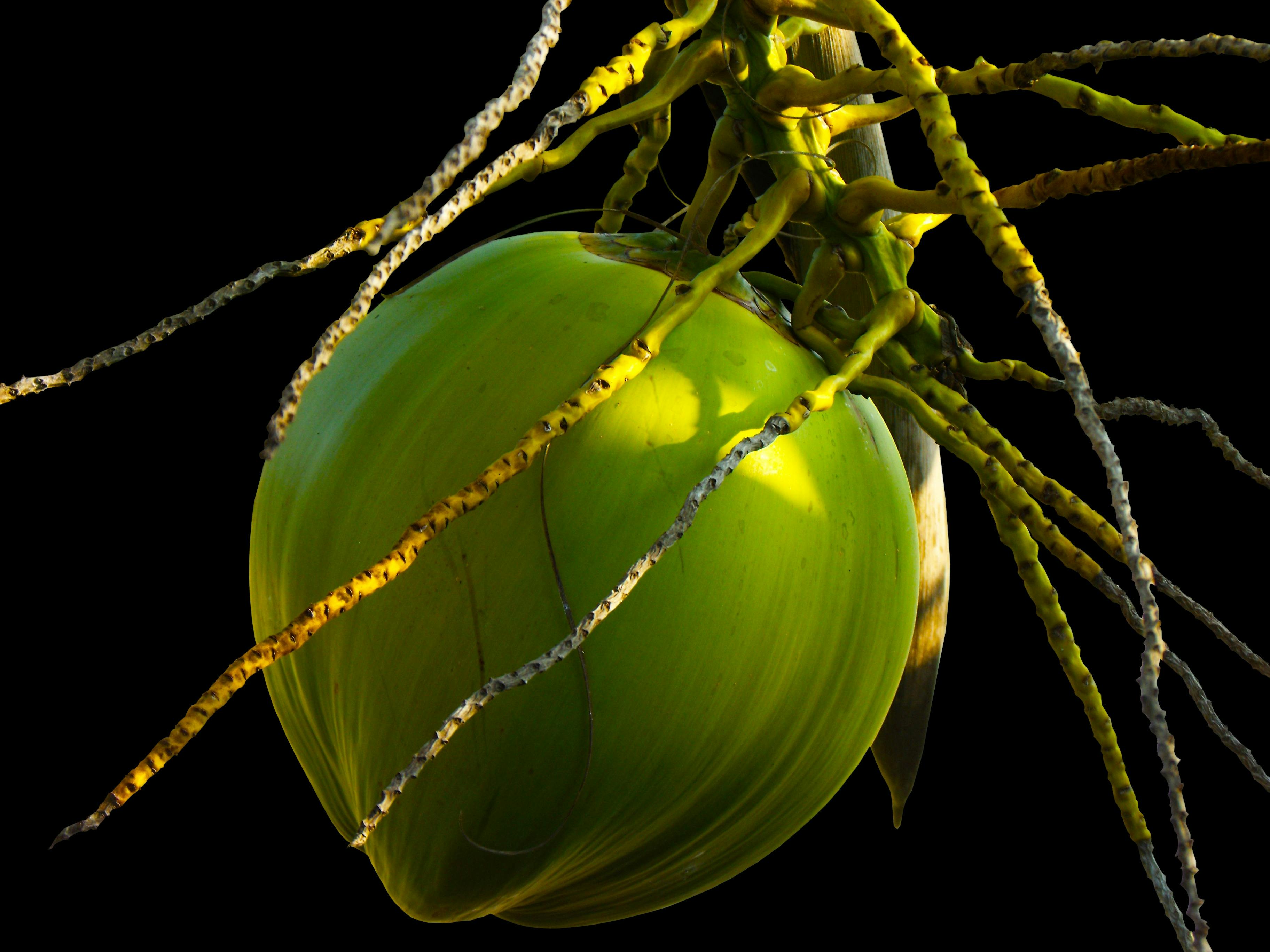
Coconut (Cocos nucifera) has been a foundational food of Pacific and Indian Ocean coastal cultures for millennia — revered in Polynesian water culture as the "king of trees" ("te ariki o te rakau"), covering every life stage in roles as hydration (coconut water), food (coconut meat), building material (fiber, shell), and lighting fuel (oil). The Malay word "kelapa" became the Portuguese "coco" — Vasco da Gama's sailors named it after the spiky-hairy coconut's face-like shape ("coco" in Portuguese = grinning ghost head).
From the mid-20th century, coconut oil featured in the "tropical oil" category as a base material for margarine production. The 1960–80s dietary guidelines (Ancel Keys paradigm) classified it as definitely-to-be-avoided due to high SFA content. In the 2000–2010s, "bulletproof coffee," the ketogenic movement, and Dave Asprey-style wellness positioning celebrated coconut oil as a miracle — labeled "superfood," "smart fat," "MCT bomb." In 2017, the American Heart Association scientific advisory (Sacks et al., Circulation 2017) firmly opposed coconut oil: human RCTs consistently showed LDL-raising effect, and there is no evidence to offset this with clinical outcome benefits. The realistic picture: coconut oil is a good flavor carrier for tropical cuisine, usable for medium-heat cooking, but the "superfood" character is significantly marketing-driven.
🔬 Scientific Background
Coconut oil's fatty acid profile is unique: about 82–92% saturated fatty acids, with the dominant being lauric acid (C12, about 47%). Lauric acid was traditionally classified among "medium-chain triglycerides" (MCTs) because of its carbon count (C12) — however, by modern lipid chemistry classification, lauric acid metabolically behaves more like a long-chain fatty acid: incorporated into chylomicrons in the small intestine, not transported via the portal vein (as classic C6–C10 MCTs are). So the "coconut oil = MCT" argument is partly false.
Human RCT evidence (Eyres 2016 review, Khaw 2018 RCT): coconut oil consumption consistently raises LDL cholesterol vs. plant oil substitution (about +10–15 mg/dL), and also raises HDL moderately — the net effect on CVD risk is likely negative. The AHA 2017 advisory (Sacks et al., Circulation 2017) therefore clearly opposes coconut oil as an everyday dietary fat. Population evidence (tropical populations with traditional coconut-rich diet) cannot be extrapolated to Western dietary context — the overall dietary matrix, physical activity, and genetic background differ fundamentally.
At the microbiome level there are in vitro antimicrobial data: lauric acid and monolaurin (the monoglyceride derivative of lauric acid) inhibit certain Gram-positive bacteria, Candida species, and even enveloped viruses. Human gut-flora evidence is limited — small-intestinal microbiota modulation is expected, but robust clinical RCTs are absent. Statements like "coconut oil kills Candida" are extrapolation of in vitro data to clinical indication — not rigorous.
Virgin (cold-pressed) coconut oil contains small amounts of polyphenols (caffeic acid derivatives); the refined (RBD — refined, bleached, deodorized) version loses these. The absolute amount of polyphenols, however, is low — not comparable to olive or walnut oil.
- + Tropical spices (turmeric, ginger, cumin, garlic): classic Southeast Asian cuisine — coconut oil is the flavor carrier of the spices.
- + Legumes (lentils, red lentils, beans) in tropical curry style: the coconut milk + coconut oil curry base is the foundation of Thai, Indonesian, and South Indian cuisine, fiber-fat-spice synergy.
- + High-temperature stir-frying of vegetables, fish (short duration): medium-high smoke point (175–204 °C) usable for frying.
- + Sweet pattern: coconut oil + cocoa + dates: "raw" chocolate base.
- + With coconut milk + coconut meat: coherent tropical matrix, fiber + fat + water together.
- + With high-vitamin-C fruits (mango, pineapple, papaya): protection against lipid peroxidation.
- + External use (skin, hair — not a dietary indication): moisturizing, lipid replacement — skin microbiota research is active.
- Fat replacement with high LDL levels: the "coconut oil is healthy, I can eat it" mindset can worsen dyslipidemia. The LDL-raising effect is documented.
- Statin therapy + high-dose coconut oil consumption: theoretical SFA-driven LDL elevation can reduce statin efficacy. Moderation.
- Coconut "bulletproof coffee" as a daily routine on an unbalanced diet: calorie excess + SFA excess + flavor-based "appetite conditioning" — not a weight-loss strategy but a CVD-risk-raising pattern for many.
- Hydrogenated "palm-kernel" coconut substitute oils ("coconut shortening"): cheap commercial products may be partially hydrogenated — trans-fat content, seriously harmful. Read labels.
- Severe steatorrhea, exocrine pancreatic insufficiency: fat restriction is mandatory.
- Coconut allergy (rare but exists): strict avoidance. Coconut does NOT belong to tree-nut allergens (botanically it's a drupe seed, not a nut) — cross-reactivity with other tree nuts is rare.
- Familial hypercholesterolemia, confirmed ASCVD: the AHA 2017 advisory specifically opposes coconut oil in this population.
- NAFLD/NASH: SFA reduction is part of treatment — coconut oil is not a priority.
- Acute pancreatitis, acute cholesterol gallstone attack: fat restriction is mandatory.
- ApoE ε4/ε4 genotype: higher SFA sensitivity — individual LDL monitoring is mandatory.
- Coconut IgE-mediated allergy (rare): strict avoidance.
- Severe insulin resistance with metabolic syndrome: routine coconut oil intake is not supported by evidence.
- Pregnancy and breastfeeding: small-moderate amounts are safe; "superfood"-style daily large doses are not justified.
- Cystic fibrosis, exocrine pancreatic insufficiency: without enzyme replacement (pancreatin), fat absorption is impaired.
Daily serving: maximum 1–2 tablespoons (15–30 g) — mainly for tropical cuisine, in moderation.
Preparation methods:
1. Thai/Indian/Indonesian curry base: coconut oil + spice paste (yellow, red, green curry) → tropical cuisine foundation.
2. Wok cooking: short-duration, high-temperature stir-frying of vegetables, fish, shrimp.
3. Toasting: granola toasted with coconut flakes and coconut oil.
4. In sweets: raw chocolate bonbon base (coconut oil + cocoa + sweetener).
5. Coconut rice: jasmine/basmati rice + coconut milk + drops of coconut oil.
Classic patterns:
- Thai red curry: coconut oil + red curry paste + coconut milk + vegetables + tofu/chicken + Thai basil + fish sauce
- South Indian sambar: red lentil + vegetables + coconut-oil "tarka" (pungent spices) + grated coconut
- Indonesian nasi goreng: rice + coconut oil + sambal + egg + vegetables
- Polynesian fish: fish fillet + coconut milk sauce + lime + chili + cilantro
Storage: at room temperature, in a dark place, in an airtight jar — solid below 25 °C, liquid above. Keeps 12–18 months. Rock-hard in the refrigerator; can be liquefied by warming.
What not to do: Do NOT use as a daily cooking fat in a Western diet with high LDL, do NOT believe the "superfood" marketing, do NOT mix hydrogenated "palm-kernel" substitute with real coconut oil.