


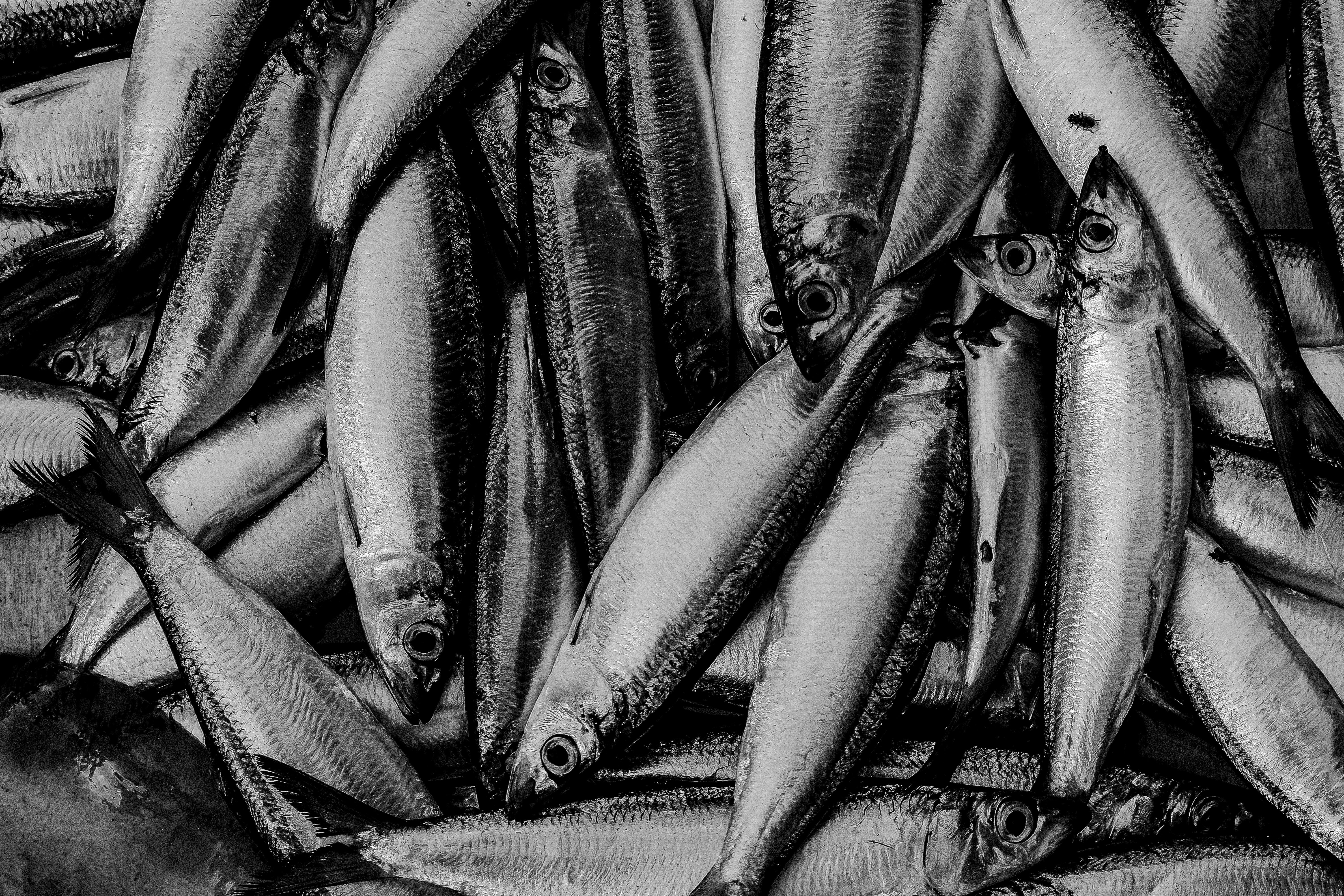
Herring
The Scandinavian "blue gold" — EPA/DHA bomb, vitamin D, and the Bang–Dyerberg tradition.
In 1 minute
What does it provide? Herring is one of the most useful and cheapest omega-3, vitamin D, and B12 sources in the world. 100 g of herring contains 1.7–2.5 g EPA + DHA, 15–25 µg vitamin D, and 15–20 µg B12 — one serving covers the weekly omega-3 requirement and a large part of the daily vitamin D need.
How much? 100–150 g fresh, baked, or steamed herring 2–3 times per week. Salted / pickled versions (matjes, rollmops, schmaltz herring) once or twice a week — limited due to high salt content.
When to avoid? Histamine sensitivity (MAO inhibitor, atopic dermatitis, mastocytosis). High blood pressure, avoid salted forms. Gout (purine). Allergy.
Herring is one of the most deeply rooted fish in European gastronomy and economy — the economic strength of the 13th–17th-century Hanseatic League partly rested on Baltic Sea herring trade. The Dutch link the invention of the salted-cleaned herring ("haring kaken") technique around 1380 to Willem Beukelszoon, which made long storage and overseas shipping possible. In the 17th-century Dutch Golden Age, the herring fleet ("Buys") of 2,000 ships fished the Dogger Bank — it became part of Dutch national identity.
In Central and Eastern European Jewish cuisine (from Slovakia to Lithuanian shtetls), salted herring was a Sabbath meal staple: schmaltz herring (fatty, salted), matjes (young, lightly salted), forshmak (minced, vinegar-apple-onion). It was one of the pillars of New York immigrant communities ("Lower East Side") in the 19th century. In Scandinavia, the fermented version (Swedish "surströmming") is an extreme curiosity.
In the mid-20th century the North Sea stock dramatically collapsed due to overfishing (1977 complete fishing ban), then slowly recovered through international regulation. Today Atlantic and Pacific herring are positive examples of MSC-certified sustainable fisheries — high omega-3 content, low mercury, and a small carbon footprint.
🔬 Scientific Background
Herring's nutrient profile is outstanding. Omega-3 EPA + DHA content is 1.7–2.5 g/100 g — among the highest of commercial fish (salmon ≈ 1.5–2.5 g; sardine ≈ 1.5–2.0 g; tuna ≈ 0.3–0.5 g; cod ≈ 0.2 g). Meta-analyses (Mozaffarian 2011, Rimm 2018 AHA Science Advisory) show ≈ 36% cardiac-origin mortality reduction with 2 servings of fatty fish per week.
Vitamin D content is a record: 100 g of herring contains 15–25 µg D3 — surpassing salmon (10–20 µg) and trout (10–15 µg). At northern winter latitudes (including the Carpathian Basin) winter D synthesis is minimal, so dietary D is indispensable. Vitamin D directly modulates the microbiome (Akkermansia muciniphila, Bifidobacterium↑) and gut-barrier integrity (Bashir 2016, Charoenngam 2020).
Mercury accumulation is low (≈ 0.04 mg/kg) — herring is a small plankton-feeder at the low end of the food chain, with a short life cycle (3–4 years), so it accumulates fewer toxic metals. On the FDA "best choices" list — recommended for pregnant and small-child consumption.
Coenzyme Q10 (CoQ10) content is also outstanding (≈ 2 mg/100 g), useful for mitochondrial energy production and for statin-treated patients as compensation.
The histamine question: herring is scombroid-type (lots of free histidine in muscle tissue). With improper refrigeration, bacteria decarboxylate histidine to histamine → "scombroid poisoning" (flushing, headache, low blood pressure). With MAO-inhibitor antidepressants, severe hypertensive crisis is possible. Fresh or freshly frozen herring is safe; old, warm-held herring is to be avoided.
- + Red onion + apple + pickle (forshmak style): classic Central European combination — the polyphenol matrix protects omega-3.
- + Potato (roasted or boiled) + sour cream + chives: classic Scandinavian and Central European combination.
- + Rye bread + reform butter: whole-grain fiber + omega-3 + vitamin D = microbiome super combination.
- + Dill, parsley, chives: essential-oil antioxidant matrix.
- + Lemon: helps iron absorption, plus polyphenol-omega-3 stabilization.
- + Dairy (yogurt, kefir): calcium + live cultures, microbiome synergy.
- + Mediterranean salad (tomato, cucumber, olive, feta): carotenoid-omega-3 cardio synergy.
- MAO-inhibitor antidepressant (phenelzine, tranylcypromine, moclobemide, selegiline) + salted / pickled / smoked herring: severe hypertensive crisis danger! Histamine and tyramine accumulation. Even with fresh herring, caution.
- High blood pressure + matjes / rollmops / schmaltz herring in large portions: salt content is hypertension-aggravating.
- Antihistamine insufficiency (DAO deficiency) + non-fresh herring: scombroid poisoning risk.
- Anticoagulant (warfarin, DOAC) + 5+ servings of fatty fish per week + fish-oil supplement: additive bleeding risk.
- Cold-smoked herring (in pregnancy, immunodeficiency): Listeria risk.
- High Na intake-restriction (heart failure, CKD) + salted herring: contraindicated.
- Deep frying in lots of oil: trans fat + omega-3 oxidation — exactly the opposite of what herring provides.
- Fish allergy (parvalbumin): classic symptoms can reach anaphylaxis.
- Histamine sensitivity, mastocytosis, chronic urticaria, atopic dermatitis flare: herring can be a histamine releaser AND histamine-containing — to be avoided.
- MAO inhibitor antidepressant treatment: strictly avoid salted, pickled, fermented, smoked herring.
- High blood pressure, heart failure, edema: avoid salted forms.
- Chronic kidney disease (CKD 3+): high protein + phosphorus + Na — portion restriction.
- Gout, hyperuricemia: purine content 200–300 mg/100 g (high) — avoid during flare.
- Pregnancy: fresh or thoroughly cooked herring is RECOMMENDED. Cold-smoked, salted, cured forms to be avoided (Listeria, histamine, high Na).
- Immunocompromised patient: avoid fermented surströmming and raw-cured cold-smoked forms.
- Anisakis sensitivity: raw or non-frozen herring carries parasite risk — eliminate by freezing (−20 °C, 7 days) or thorough heat treatment (≥ 63 °C, 15 sec).
- Hyperthyroidism: avoid large portions due to iodine content in untreated Graves' disease.
Daily/weekly serving: 2–3× per week 100–150 g (fresh, baked, steamed); salted / pickled version 1–2× per week.
Preparation pattern — herring grilled over coals (Central European style):
1. Fresh herring cleaned, head/tail left on.
2. Salt, pepper, dill, lemon zest into the body cavity.
3. On grill / over coals 4–5 minutes / side — crispy skin, flaky inside.
4. With new potatoes, fresh salad, onion garnish.
Classic patterns:
- Dutch "groene haring" (fresh, mild herring): May-June fresh "matjes" — raw, with onion.
- Matjes herring (mildly salted): salt-cured for 24 hours, with apple, onion, sour cream.
- Rollmops (pickled, stuffed): vinegar + pickle + onion — Central European Jewish kitchen classic.
- Forshmak (Eastern European Jewish): salted herring + apple + onion + vinegar + egg — puréed.
- Scandinavian "pickled herring": mustard, dill, spiced variations.
- Surströmming (Swedish fermented): curiosity — don't start with this.
Storage: fresh herring refrigerated (4 °C) max 24 hours. Frozen (−18 °C) 3–6 months. Salted / pickled herring refrigerated 2–3 weeks unopened.
What not to do: don't eat warm-held (cooled, reheated) herring (histamine!). Don't combine with MAO inhibitor. Don't eat the salted form daily with high blood pressure.