


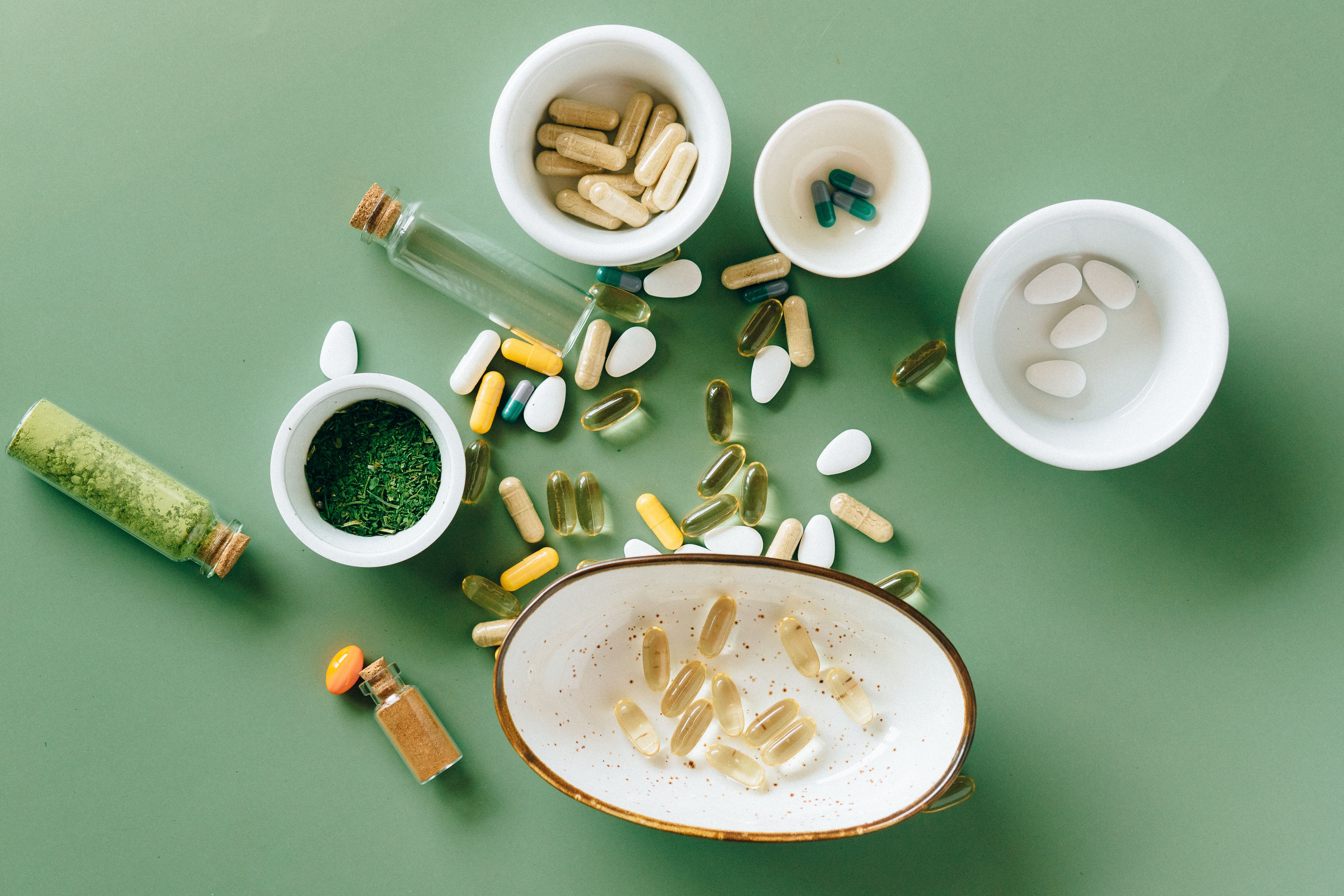
Beta-glucan supplement
Standardized soluble beta-glucan powder — EFSA-recognized LDL reduction from 3 g/day, low-FODMAP IBS tolerance.
Beta-glucan supplement in 1 minute
What does it provide? A standardized, high-purity beta-glucan polymer (oat/barley-derived β(1→3)(1→4) linear glucan OR yeast/fungal β(1→3)(1→6) branched glucan). Oat beta-glucan has EFSA-recognized health claim: daily 3 g oat beta-glucan contributes to maintaining normal blood LDL cholesterol (≈ 5–10% LDL reduction). High water-binding capacity, forms a viscous gel in the small intestine — slows glucose/cholesterol absorption.
How much? Oat beta-glucan: 3–4 g/day for EFSA-threshold LDL reduction (Whitehead 2014 Am J Clin Nutr meta-analysis), 4–6 g/day optimal for glycemic control. Yeast/fungal beta-glucan: 100–500 mg/day (immune-modulating dose, different profile). GI tolerance: beta-glucan is low FODMAP, so generally well tolerated in IBS — except at high doses (> 10 g/day).
When to avoid? Glucan allergy (theoretical in yeast-sensitive individuals — rare), active autoimmune flare (yeast/fungal beta-glucan can be a potent immune stimulant — relative caution), severe carbohydrate malabsorption, severe dysphagia (the powder gels rapidly), age < 1 year (no established safety data for supplement form), very high dose (> 15 g/day oat beta-glucan — unnecessary, GI irritation).
Beta-glucans come from three pillars of life: grains (oats, barley, partly rye/wheat), fungi (oyster mushroom, shiitake, reishi, maitake), and yeast (Saccharomyces cerevisiae cell wall). Oat beta-glucan research began in the mid-20th century: American researchers (Anderson et al. 1984, AJCN) observed that oat bran significantly lowered LDL cholesterol in hypercholesterolemic patients. The mechanism became clearer later: the viscous beta-glucan gel binds bile acids in the small intestine, reducing their reabsorption, and the liver replenishes the depleted bile acid pool by drawing more cholesterol from the blood — LDL reduction.
The 1997 FDA "heart-healthy" health claim (21 CFR 101.81) was the first to officially recognize oat beta-glucan's LDL-lowering effect: ≥ 3 g/day beta-glucan from whole oats for coronary heart disease risk reduction. EFSA confirmed in 2010: 3 g/day oat beta-glucan for maintaining normal LDL levels. Fungal beta-glucan (β(1→3)(1→6) branched, "dectin"-like) follows another route: Lentinula edodes (shiitake) and Trametes versicolor immune-oncology research (Japan, 1970–80s — lentinan, krestin/PSK), then the Saccharomyces cell-wall beta-glucan (Wellmune) spread as an adult immune supplement from the 2000s.
Scientific Background
Beta-glucans are glucose polymers linked by β-glycosidic bonds — their structural differences imply different clinical functions.
Two main structural families:
- Oat/barley beta-glucan: β(1→3)(1→4) LINEAR — alternating β-1,3 and β-1,4 linkages, linear, with high water-binding capacity. Viscosity-mediated LDL/glucose reduction is the main effect.
- Yeast/fungal beta-glucan: β(1→3)(1→6) BRANCHED — β-1,3 backbone with β-1,6 side chains. Immune modulation is the main effect (Dectin-1 receptor on dendritic cells).
Oat beta-glucan — LDL reduction (EFSA-recognized). According to Whitehead A, Beck EJ, Tosh S, Wolever TMS. Am J Clin Nutr 2014;100(6):1413–1421 (meta-analysis of oat β-glucan cholesterol-lowering RCTs) and Tiwari 2011 Nutrition meta-analysis, 3 g/day oat beta-glucan produces clinically relevant LDL reduction over 4 weeks. The mechanism has three pillars: (1) viscous gel in the small intestine → reduced bile acid reabsorption → enhanced hepatic cholesterol utilization; (2) reduced cholesterol absorption; (3) colonic SCFA production (acetate, propionate) → reduced hepatic lipogenesis.
Oat beta-glucan — glycemic control. EFSA 2011: 4 g beta-glucan per 30 g carbohydrate contributes to postprandial glucose reduction. Viscosity slows gastric emptying and intestinal glucose absorption — flatter postprandial curve.
Yeast beta-glucan — immune modulation. Talbott 2009 J Sports Sci Med RCT in marathon runners: 250 mg/day Wellmune (Saccharomyces beta-glucan) for 4 weeks reduced upper respiratory infection episode count. Mechanism: the Dectin-1 receptor on dendritic cells/macrophages recognizes the β-1,3-glucan pattern → innate immune activity, cytokine profile modulation. Evidence is heterogeneous — some cold/flu-season studies are positive, others fail to replicate.
Fungal beta-glucan — immune oncology. Lentinan (shiitake-derived, intravenous) and krestin/PSK (Trametes versicolor) are officially recognized adjuvant cancer therapies in Japan. Oral fungal beta-glucan supplements (reishi, maitake) show milder, clinically mixed immune-modulating effects.
Microbiota effect. Beta-glucan is a slowly fermenting soluble fiber — less gas, high SCFA. Velikonja 2019 J Funct Foods RCT: 6 g/day oat beta-glucan for 4 weeks slightly raised Bacteroidetes proportion and fecal butyrate. Bifidogenic effect is smaller than with FOS/inulin.
GI tolerance and FODMAP. Purified beta-glucan is low FODMAP — generally tolerated by IBS-sensitive individuals, unlike fructan fibers. High doses (> 10–15 g/day) can cause mild bloating, abdominal discomfort.
Regulatory status. EFSA: Oat beta-glucan LDL claim (3 g/day) and glycemic claim (4 g/30 g CHO) approved. FDA: 21 CFR 101.81 — oat beta-glucan heart-health claim (since 1997). Yeast beta-glucan: GRAS.
- + Morning oatmeal + extra oat beta-glucan (3 g/day LDL): EFSA-claim fulfillment.
- + Seeds (chia, flax): broader fiber profile.
- + Red yeast rice (monacolin K) [medical supervision only]: combined lipid-lowering pattern.
- + Yogurt + oat beta-glucan smoothie: palatable, prebiotic.
- + Yeast beta-glucan + zinc/vitamin D (immune season): combined immune support.
- + 15–30 minutes before a meal: postprandial glucose reduction.
- High-dose iron simultaneously: theoretical chelation — separate by 2 hours.
- High-dose multivitamin simultaneously: possible absorption interference — separate in time.
- Unnecessary high dose (> 15 g/day): GI irritation, no additional benefit.
- "Glucan blend" with sugar (sweetened): worsens metabolic profile.
- Active immunosuppressive therapy + yeast/fungal beta-glucan (autoimmune, transplantation): theoretical immune stimulation — medical consultation.
- Glucan allergy (extremely rare): absolute contraindication.
- Active autoimmune flare (SLE, RA, MS) + yeast/fungal beta-glucan: theoretical immune stimulation — medical consideration.
- Post-transplant immunosuppression: avoid yeast/fungal beta-glucan.
- Severe celiac (oats may have trace gluten contamination): "certified gluten-free oat" labeling.
- Severe dysphagia: powder gels quickly — choking risk.
- Infants < 1 year: avoid supplement form.
- Severe carbohydrate malabsorption: caution.
- Recent bowel surgery: medical clearance.
References
[1] EFSA NDA Panel. Scientific opinion on the substantiation of a health claim related to oat beta-glucan and lowering of blood cholesterol. EFSA Journal 2010;8(12):1885. Link
[2] FDA. Health claim — soluble fiber from oats (beta-glucan) and coronary heart disease. 21 CFR 101.81 (1997). Link
[3] Whitehead A, Beck EJ, Tosh S, Wolever TMS. Cholesterol-lowering effects of oat β-glucan: a meta-analysis of randomized controlled trials. Am J Clin Nutr 2014;100(6):1413–1421. Link
[4] Anderson JW et al. Hypocholesterolemic effects of oat-bran or bean intake for hypercholesterolemic men. Am J Clin Nutr 1984;40(6):1146–1155. Link
[5] Tiwari U, Cummins E. Meta-analysis of the effect of β-glucan intake on blood cholesterol and glucose levels. Nutrition 2011;27(10):1008–1016. Link
[6] Talbott S, Talbott J. Effect of BETA 1,3/1,6 GLUCAN on upper respiratory tract infection symptoms and mood state in marathon athletes. J Sports Sci Med 2009;8(4):509–515. Link
[7] Slavin J. Fiber and prebiotics: mechanisms and health benefits. Nutrients 2013;5(4):1417–1435. Link
[8] Velikonja A et al. Effects of a beta-glucan-enriched diet on the gut microbiota in adults with metabolic syndrome. J Funct Foods 2019. Link