
Hijiki
The "Japanese black weave" — high calcium, iron, and the serious arsenic warning.
In 1 minute
Warning — Important public health alert: hijiki has exceptionally high inorganic arsenic content compared with other sea algae (≈ 50–100 mg/kg dry weight — IARC Group 1 carcinogen). The UK Food Standards Agency (2004, 2010) and Food Standards Australia New Zealand (FSANZ, 2001) officially recommend avoidance or minimization of hijiki. Hong Kong, New Zealand, and Canada hold similar positions. Japan does not ban it, but the Tokyo Metropolitan Government recommends limiting it to < 5 g per week and the soaking protocol.
What does it provide? A black, grass-like brown seaweed rich in iron, calcium, fiber, and iodine — a staple of traditional Japanese macrobiotic cooking.
How much? If you eat it: maximum 5 g dried per week (≈ 30–50 g rehydrated), with mandatory 30-minute soaking + 2× rinse + drain (reduces arsenic level by 30–60%).
When to avoid? Pregnancy, breastfeeding, infants/children, kidney disease, hyperthyroidism, frequent (≥ 2×/week) consumption. The evidence-based recommendation: where possible, replace with another alga (arame, wakame, kombu).
Hijiki is already mentioned as a food in 8th-century Nara-era documents in Japan — a staple of Buddhist monastery cuisine and on the list of traditional "ikiru tame no shokumotsu" (food for living). It is traditionally a symbol of long life and strong hair — according to the Japanese saying, "those who eat hijiki don't get gray hair." In Edo-era (1603–1868) fishing villages, it was harvested seasonally, sun-dried, then long-cooked and served caramelized with soy sauce and sugar — this classic "hijiki no nimono" recipe is still a foundational dish today.
From the mid-20th century, the macrobiotic movement (George Ohsawa, Michio Kushi) popularized hijiki in the West as a "superfood," as a vegan iron-calcium source. From the 1990s, however, toxicological analyses appeared one after another: in 2001, FSANZ, the Australian-New Zealand food safety authority, published the first official warning based on inorganic arsenic. In 2004, the UK FSA, and then in 2010 Hong Kong and Canadian authorities followed. After the 2011 Fukushima disaster, the Japanese food authority introduced stricter monitoring — alongside cesium contamination, the endemic arsenic risk remains relevant. From the 2010s, fine dining and macrobiotic chefs are increasingly switching to alternative brown seaweeds (arame, wakame), although hijiki remains present in traditional Japanese cuisine.
🔬 Scientific Background
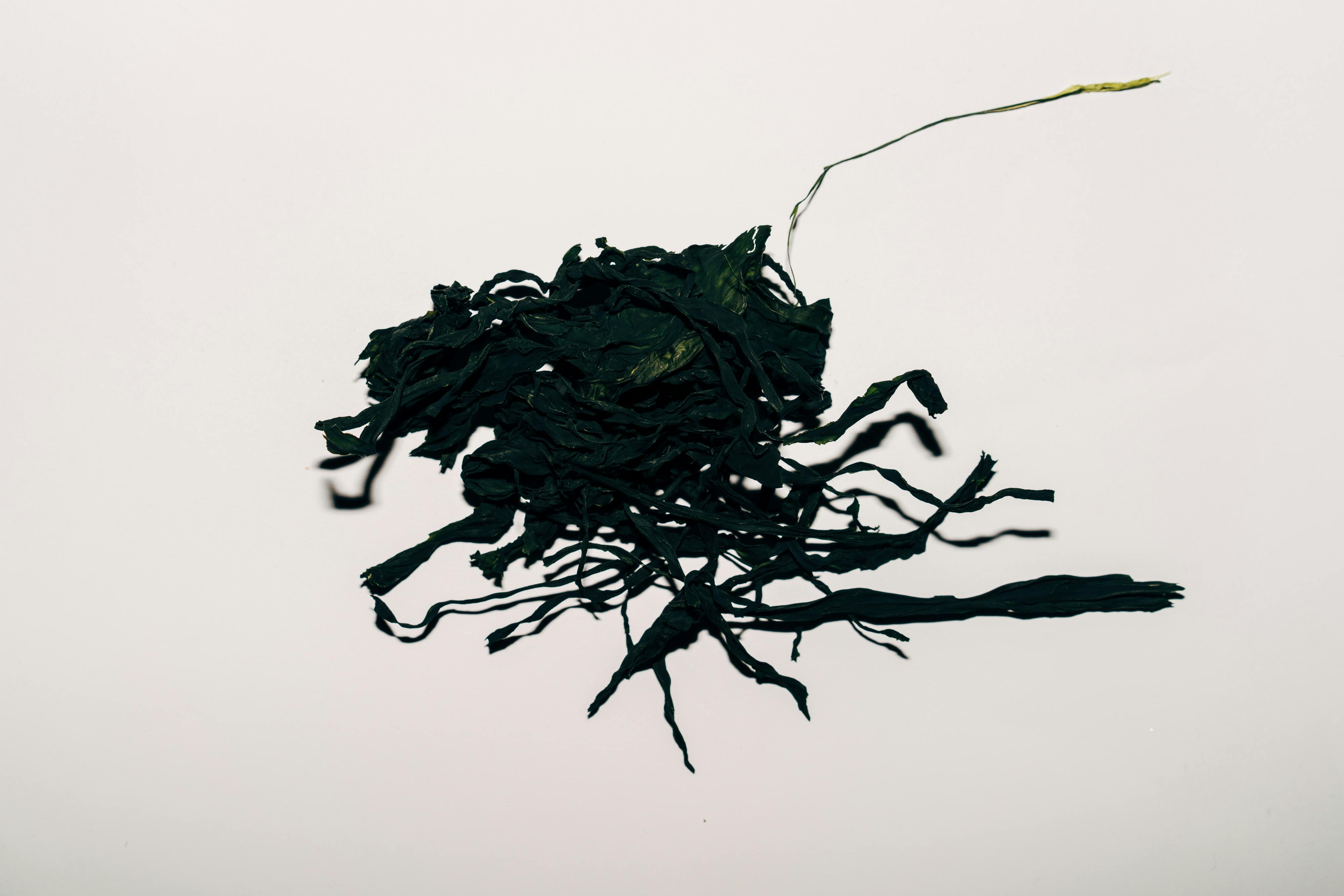
Sargassum fusiforme is a brown seaweed (Phaeophyceae), 30–100 cm long, grass-like, with dark-brown to black thalli, in the shallow subtidal zone of Japanese, Korean, and Chinese coasts. Dried it is almost black; soaked it swells 4–5×.
Nutrient profile — two-faced: - Iron: 55 mg/100 g dry matter (about 5× spinach level) - Calcium: 1400 mg/100 g (about 13× milk level per gram) - Fiber: 40–50% (mainly alginate, fucoidan, cellulose) - Iodine: 300–600 μg/g (high — a 5 g serving ≈ 1500–3000 μg, which far exceeds the WHO upper safety limit of 1100 μg/day) - Carotenoids: fucoxanthin (characteristic brown seaweed pigment), antidiabetic and anti-obesity effects in animal studies
Inorganic arsenic — critical toxicological issue: Sea algae contain two arsenic forms: organic arsenic (arsenobetaine, arsenosugars — practically non-toxic in humans) and inorganic arsenic (As³⁺, As⁵⁺ — IARC Group 1 carcinogen). Most sea algae (nori, wakame, dulse) contain almost exclusively the organic form. Hijiki is an extraordinary exception: 50–80% of total arsenic content is inorganic arsenic — unprecedented for its category.
According to the FSANZ (2001) survey, inorganic arsenic content of dried hijiki on sale is 22–124 mg/kg (median about 56 mg/kg). UK FSA (2010) documented similar values. The WHO drinking-water limit is 10 μg/L inorganic arsenic — by contrast, a 5 g dried hijiki ≈ 250–600 μg inorganic arsenic, which in a single serving is 60–150× the daily drinking-water limit.
Soaking reduction: Hanaoka et al. (2001) and follow-up studies documented that 30 minutes of cold soaking + 2× rinse + drain reduces the inorganic arsenic content by about 30–60% (efficacy is source-dependent). 12-hour soaking can yield further reduction (up to 70–80%). The remaining level is still significant — regular, high consumption is to be avoided.
Other bioactives: - Fucoidan: sulfated polysaccharide, anticoagulant and immunomodulating activity (in vitro and animal) - Fucoxanthin: carotenoid, anti-obesity and antidiabetic activity (animal models, small human pilot) - Alginate: prebiotic-like, cholesterol-lowering matrix
Microbiome effect: fucoidan and alginate are useful colonic substrates, supporting Bacteroides growth and SCFA production. But this effect is present in other, safe algae (wakame, arame) as well — hijiki provides no unique benefit.
- If you do consume it (≤ 1×/week, ≤ 5 g):
- + Vitamin C (lemon, vegetables): iron bioavailability improves.
- + Healthy fat (sesame oil — traditional Japanese): fucoxanthin and carotenoids are fat-soluble — better absorption.
- + Live cultures (miso, natto): synbiotic matrix, alginate fermentation support.
- + Fiber-rich vegetables (carrot, lotus root): classic "hijiki no nimono" pairing.
- + Tofu, edamame, sesame: plant-protein synergy.
- Note: these combinations accompany the alga, they do NOT reduce arsenic risk. Arsenic reduction depends solely on the soaking protocol.
- Other high-arsenic foods (brown rice, apple juice, chicken — particularly USA): don't stack; arsenic intake is cumulative.
- Levothyroxine (L-thyroxine): separate timing by ≥ 4 hours — the high iodine causes significant interference.
- Antithyroid medications (carbimazole, propylthiouracil): the high iodine influences therapy.
- Amiodarone: double iodine load.
- Anticoagulants (warfarin, DOAC): fucoidan's anticoagulant effect is additive.
- Iron supplementation: alginate may bind — separate timing.
- Skipping soaking: strictly forbidden — you get the maximum arsenic load.
- Pregnancy and breastfeeding: avoid — inorganic arsenic poses a fetal-developmental risk. Replaceable with other algae.
- Infant, small child (< 12 years): avoid — the developing organism is more sensitive to arsenic and high iodine load.
- Hyperthyroidism (Graves' disease): avoid — the high iodine may worsen.
- Hashimoto's thyroiditis under strict iodine-restriction protocol: avoid.
- Kidney disease (chronic, GFR < 60): avoid — arsenic elimination impaired, also iodine load.
- Chronic arsenic exposure from another source (contaminated drinking water, occupational): avoid.
- Previous non-melanoma skin cancer, bladder cancer, lung cancer survivor: avoid — arsenic is associated with these tumors.
- Anticoagulant therapy: avoid due to fucoidan additive activity.
- Hemochromatosis, iron overload: avoid — high iron content.
- Healthy adult: if you do consume it, ≤ 5 g/week, with mandatory soaking protocol.
Warning — If you do use it (≤ 1×/week, ≤ 5 g dry matter):
Mandatory soaking protocol (arsenic reduction):
1. 5 g dry hijiki + 500 ml cold water, 30-minute soak (or 12 hours for maximum reduction).
2. Drain, rinse under running water.
3. Fresh 500 ml cold water, additional 10 minutes.
4. Drain. Never use the soaking water (as a soup or sauce base).
Classic "hijiki no nimono":
1. Soaked hijiki + ½ carrot in strips + ½ pack tofu in cubes + 1 tbsp sesame oil — toss in a wok for 1 minute.
2. 100 ml dashi or water + 1 tbsp soy sauce + 1 tsp mirin + 1 tsp sugar — pour over.
3. 10–15 minutes slow simmer until liquid evaporates.
4. Sesame sprinkle before serving.
Storage: airtight, in a dark place — stable dry for years. Within 6 months after opening.
What not to do: don't skip the soaking. Don't eat regularly (≥ 2×/week). Don't give to children, pregnant women. Don't use the cooking water as a base. Don't think of it as a "superfood."
Alternatives (recommended): arame (similar taste, lower arsenic), wakame (softer, moderate iodine, low arsenic), dulse (red alga, high iron, low arsenic). The macrobiotic traditional "black sea" character is achievable with arame without arsenic risk.