


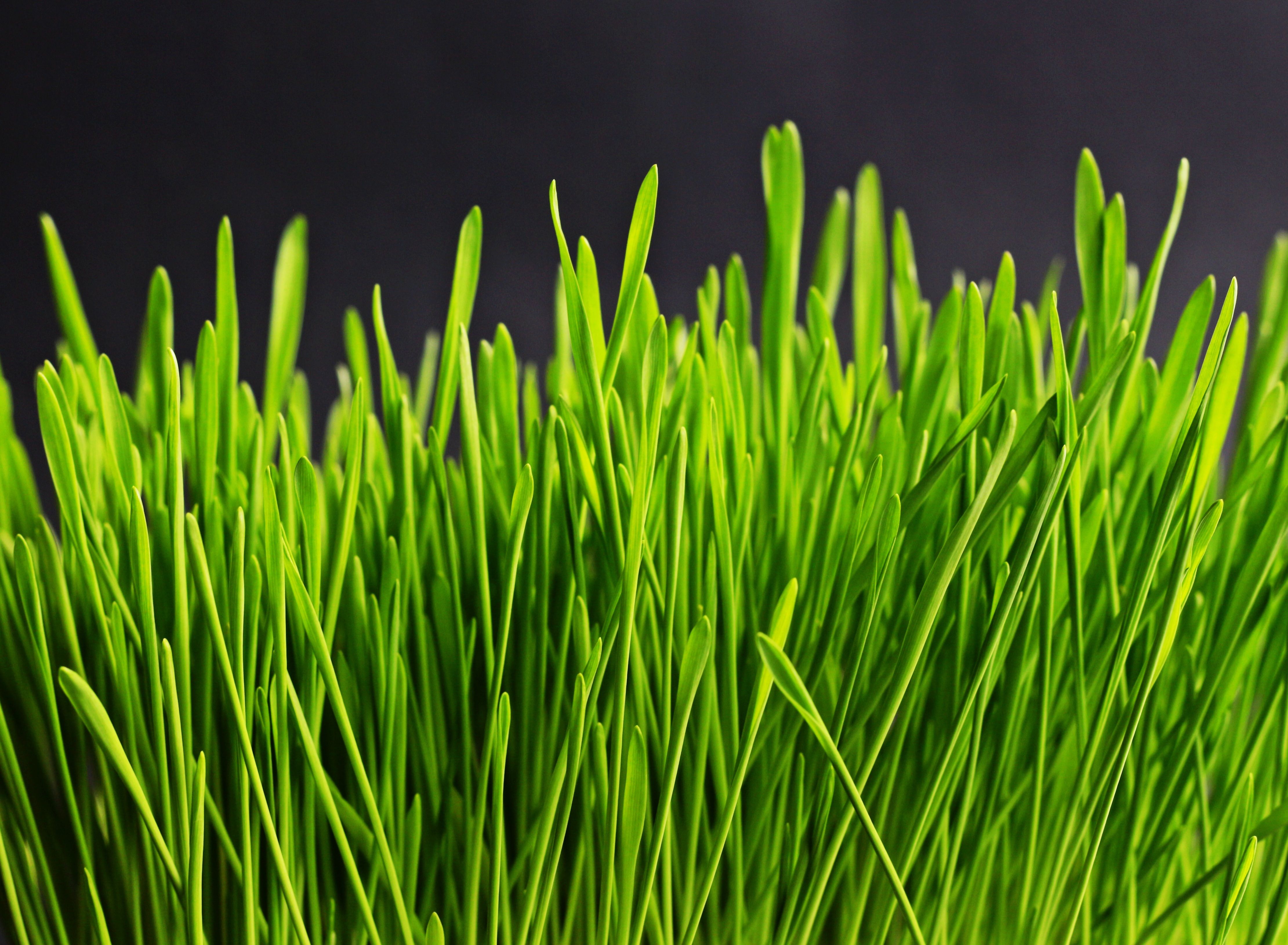
Wheatgrass
The "chlorophyll green bomb" — high chlorophyll, the Ann Wigmore lifestyle movement, and vitality evidence.
In 1 minute
What does it provide? A chlorophyll concentrate in a water matrix (≈ 50–70 mg/100 g fresh juice), vitamin C (≈ 11 mg/100 g), beta-carotene (≈ 4500 µg/100 g), folate (≈ 38 µg/100 g), and vitamin K. Freshly pressed juice (1 shot ≈ 30 ml) is a daily micronutrient supplement.
How much? Fresh juice 30–60 ml/day (1–2 shots), or powder 1–2 tsp/day. On empty stomach. UC clinical protocol (Ben-Arye 2002, Scand J Gastroenterol): 100 ml fresh wheatgrass juice/day, over 4 weeks — reduced rectal bleeding and symptom severity score in mild-to-moderate distal UC.
When to avoid? Gluten sensitivity (wheat SHOOT is IDEALLY gluten-free, but safer until grain forms — for strict celiacs a verified gluten-free source is needed). Pollen asthma. Moldy juice.
Wheatgrass as functional food traces to the 1930s work of agronomist Charles F. Schnabel — originally a poultry feed enhancer. The modern "wheatgrass movement" is associated with Ann Wigmore (1909–1994), founder of the Boston Hippocrates Health Institute (1950s–1960s), who popularized wheatgrass as a "detoxifying superfood" with many unfounded claims (including cancer cure).
In the 2000s the functional food market turned it into a "wheatgrass shot" category — an iconic offering of LA and New York juice bars. The best clinical data come from small studies by Ben-Arye (2002, IBD) and Marawaha (2004, thalassemia); no meta-analysis exists. The "chlorophyll = plant blood" idea ties to Bircher (Swiss nutrition researcher, 1930s) — modern scientific rebuttal: chlorophyll is chemically similar to hemoglobin (porphyrin ring), but it has a central magnesium ion instead of iron, and does NOT become hemoglobin after digestion.
🔬 Scientific Background
Wheatgrass (7–10 day-old young Triticum shoot) freshly pressed juice composition per 100 ml: ≈ 17 kcal, 1 g protein, 0.5 g fat, chlorophyll ≈ 70 mg, vitamin C 30 mg, beta-carotene (provitamin A), vitamin K, folate, iron, enzymes. Chlorophyll is the most prominent component.
Scientific overview of the chlorophyll question: Chlorophyll and hemoglobin do contain similar porphyrin-ring structures, but the central ion is magnesium in chlorophyll and iron in hemoglobin. During digestion, HCl and gut juices break chlorophyll into pheophytin (Mg loss), then further metabolite breakdown. The "chlorophyll = blood-like building block" idea is a fundamental biochemical misunderstanding.
Clinical evidence (moderate): - Ulcerative colitis: Ben-Arye (2002, Scand J Gastroenterol), 100 ml/day wheatgrass juice over 4 weeks reduced rectal bleeding and symptom severity score in a small-n study. - Beta-thalassemia: Marawaha (2004) reduced transfusion requirement in children — small study, replication incomplete. - Hematopoiesis support (sapropterin-like context): debated, biochemical mechanism not supported. - Chemotherapy side-effect reduction (mucositis, immunosuppression): small studies (Bar-Sela 2007) gave modest signals.
"Antioxidant status improvement" at plasma TAC level is documented in small studies — functional clinical relevance uncertain.
"Detoxification" is a lay marketing claim with no scientific basis. The liver, kidneys, and gastrointestinal system are themselves the detoxification apparatus; wheatgrass juice does NOT "cleanse" the blood in any specific way. Some antioxidant matrix effects are real.
The gluten question is nuanced: young wheat shoots (7–10 days) are theoretically gluten-free because the gluten-containing endosperm forms in the mature kernel. In practice, commercial wheatgrass products CAN BE CONTAMINATED with gluten-containing kernels, so celiac patients must choose products with a VERIFIED GLUTEN-FREE label.
- + Lemon + ginger: classic juice bar matrix.
- + Apple or cucumber juice: flavor blend (wheatgrass juice is strongly grassy-bitter).
- + Berry smoothie: antioxidant synergy.
- + Empty stomach + warm water in the morning: "activator" matrix.
- + Spirulina or chlorella: "green concentrate" matrix — vegan micronutrient supplementation.
- Hot tea / hot drink: vitamin C and enzymes are heat-sensitive — warm consumption to be avoided.
- Anticoagulant + large vitamin K dose: fluctuating K intake worsens INR stability.
- Raw drink during antibiotic course: microbiological contamination risk.
- Thyroid replacement (levothyroxine) directly with it: time separation (chlorophyll-fiber matrix can reduce absorption) — about 30–60 min separation.
- Iron supplementation: fibrous matrix iron chelation potential — separate in time.
- Celiac disease / strict gluten-free diet: look for VERIFIED gluten-free (< 20 ppm) label. Risk of factory cross-contamination.
- Wheat allergy: absolute contraindication.
- Moldy juice or contaminated juice bar: microbiological poisoning risk (fresh juice is sold in gentle, unpasteurized form).
- Pregnancy, breastfeeding with raw, unpasteurized juice: Salmonella/E. coli/Listeria risk.
- Active IBS flare: chlorophyll concentrate may worsen symptoms.
- Active gastritis: bitter, acidic, may irritate.
- Lung allergy (wheat pollen): respiratory reaction risk during fresh grinding.
- Infant, small child under 1 year: avoid.
Daily serving: 30–60 ml fresh juice (1–2 shots) or 1–2 tsp powder.
Preparation patterns:
1. Fresh pressing (slow juicer): on empty stomach, in small sips, morning.
2. Powder mixed in water, drink, or smoothie: more stable storage.
3. Lemon-ginger wheatgrass shot: intense flavor matrix, quick consumption.
4. Spirulina + wheatgrass + berry smoothie: "green concentrate" mix.
Classic patterns:
- Morning "activator" shot: 30 ml wheatgrass juice + 1 slice lemon — on empty stomach
- Green smoothie: 30 ml wheatgrass juice + apple + spinach + cucumber
- Detox-matrix juice bar: wheatgrass + lemon + ginger (note: "detox" is a marketing claim, not a real clinical mechanism)
Storage: fresh juice MAX 30 min refrigerated (fast oxidation), powder in cool, dark place 1 year.
Home growing: germinate wheatgrass seed for 7–10 days in pot soil, cut on day 7–10 — with moderate hygiene more reliable than commercial form.
What not to do: don't put in hot drinks (vitamin C degradation); don't give to celiacs without gluten-free verification; don't store fresh juice for hours; don't believe marketing claims (chlorophyll = blood, detoxification).