
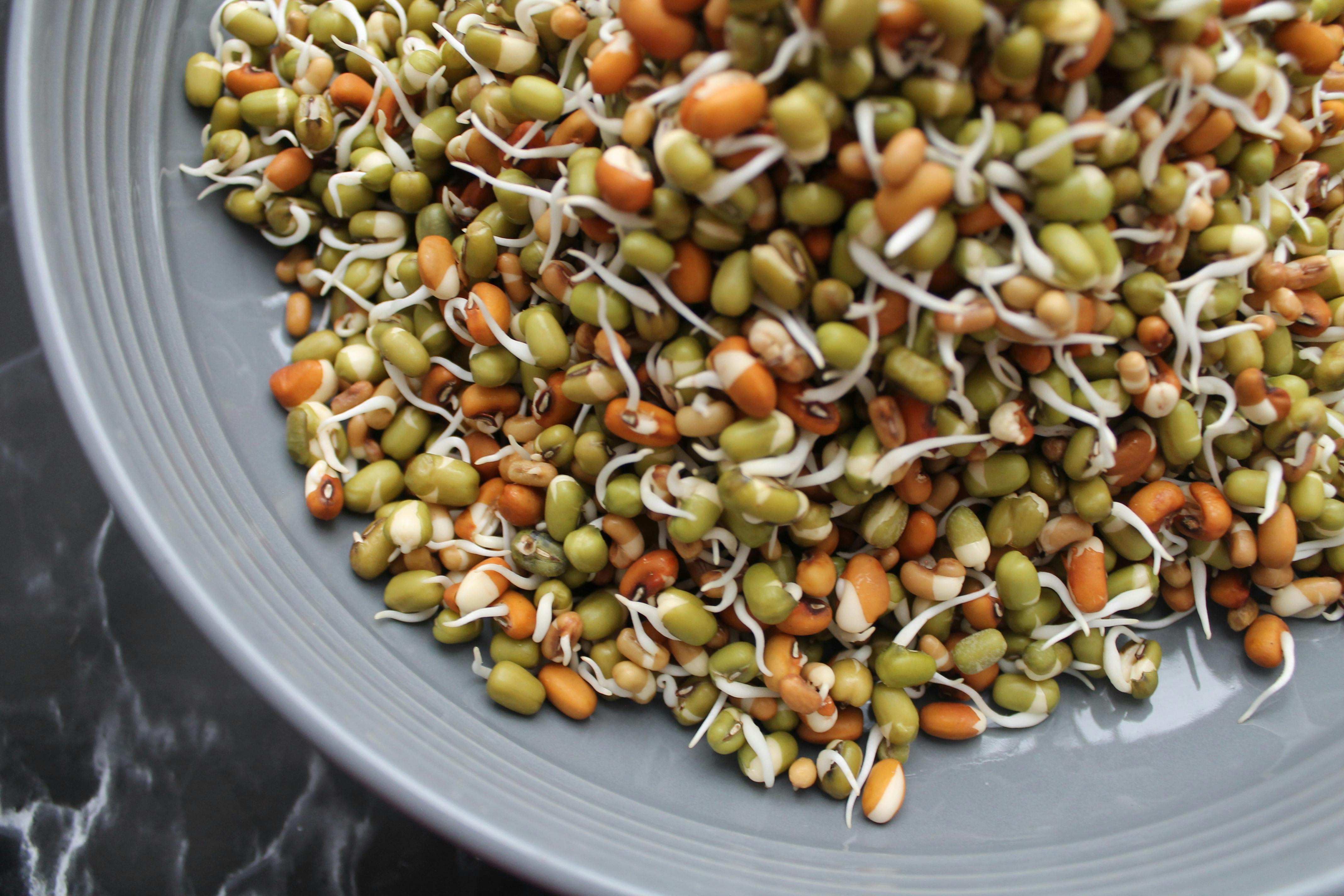
Lentil sprout
Legume activation — phytate reduction by soaking-sprouting and increased bioavailability.
In 1 minute
What does it provide? Sprouted lentil PROVIDES the dry form's protein and fiber matrix, but with improved bioavailability. 2–3 days sprouting (Ghavidel 2007, Kataria 1989): phytate ↓30–50% (iron and zinc absorb better), tannin ↓20–40%, GOS-raffinose ↓30–50% (more FODMAP-tolerable), folate ↑50–100%, vitamin C de novo synthesis (dry: 0 → fresh sprout: 12–15 mg/100 g). Residual oligosaccharides and resistant starch are substrates for Bifidobacterium and Faecalibacterium prausnitzii.
How much? 50–100 g fresh sprouts per meal. Short (1–2 min) wok stir-fry or cooked in curry/soup for the last 5 minutes: a compromise between Salmonella safety and vitamin preservation.
When to avoid? Raw in pregnancy, under immunosuppression (HIV, chemotherapy, bone marrow suppression), in infants/small children <1 year and elderly >65 (Salmonella, Listeria, EHEC — FDA avoidance; COOKED, however, an excellent folate source); legume allergy (Fabaceae cross-reactivity); active IBS flare in large doses (residual GOS may trigger). Detailed contraindications in the dedicated section.
Lentil (Lens culinaris) is one of humanity's oldest domesticated legumes — Middle Eastern archaeological finds around 8000 BCE prove its consumption. Sprouting technique in Indian-Persian cuisine is at least two millennia old: "dal sprout" ("mung," "chana sprout") is an Indian street food category.
Modern nutrition science began systematically investigating sprouting's antinutrient-reducing and vitamin-increasing effects in the late 20th century. Lentil is one of the most common model legumes because it sprouts quickly (2–3 days) and the folate, vitamin C elevation is dramatic. Since the 2010s, the vegan/plant-based diet movement and IBS-FODMAP matrix research raised clinical attention to sprouted legumes.
🔬 Scientific Background
Dry lentil is a moderate protein source (25 g/100 g dry), high in fiber (≈ 8 g/100 g), folate (479 µg, one of the richest plant sources), iron (8 mg), zinc, manganese. Drawbacks: phytate (reduces iron and zinc bioavailability), GOS (FODMAP, IBS irritation), tannin (iron chelation).
Sprouting biochemical processes (Ghavidel 2007; Kataria 1989): - Phytate: 30–50% decrease (iron, zinc bioavailability improvement) - Tannin: 20–40% decrease - GOS/raffinose: 30–50% decrease (more FODMAP-tolerable) - Trypsin inhibitor: 30–60% decrease - Folate: 50–100% increase - Vitamin C: DE NOVO synthesis (dry lentil: zero; 2–3 day sprouts: 12–15 mg/100 g) - Protein digestibility (PDCAAS): improves
Clinical evidence (moderate): - Glycemic control: low GI (Wong 2017), insulin sensitivity improvement in meta-analyses of legume consumption. - Iron absorption: Hurrell (1992) shows phytate reduction gives clear iron bioavailability improvement. - Microbiome: Carlson (2018) shows sprouted legumes strengthen Bifidobacterium and Faecalibacterium prausnitzii populations. - CVD risk markers: Bazzano (2011) meta-analysis on legume consumption shows modest LDL reduction.
Microbiome role is prominent: sprouted lentil oligosaccharides (resistant starch, residual GOS) are Bifidobacterium substrates; the protein matrix is Faecalibacterium-supporting. This food group is a main pillar of "FMT-like diet."
Microbiological safety: lentil sprouts have similar Salmonella/E. coli risk to other sprouts, BUT traditional Indian/Persian cuisine uses short cooking (1–2 min in wok) — this compromise: the phytate benefit partly remains, the Salmonella risk is eliminated.
Because of folate content, sprouted lentil during pregnancy (after short cooking!) is especially recommended — neural tube defect prevention.
- + Curry matrix (turmeric, ginger, black pepper): Indian dal sprout classic.
- + Lemon (vitamin C + iron absorption): explicit benefit synergy.
- + Olive, avocado: fat matrix.
- + Fresh cilantro stem, mint: Middle Eastern salad matrix.
- + Quinoa, buckwheat: complementary protein substrate.
- + Yogurt (on top cucumber raita style): prebiotic + probiotic.
- Milk, cheese + residual phytate: calcium partly chelates phytate (already modest reduction in iron absorption).
- Raw sprouts during antibiotic course: Salmonella risk + microbiome instability.
- Chemotherapy bone marrow suppression raw: absolute contraindication.
- Legume allergy: cross-reaction possible.
- Acute IBS flare in large amounts: residual GOS irritation.
- Pregnancy raw: FDA recommends avoidance; after short cooking it is an EXCELLENT folate source, recommended.
- Immunocompromised: avoid raw, short cooking recommended.
- Infant, small child under 1 year: avoid raw.
- Elderly 65+ immunosenescent: cautious raw.
- Legume allergy: caution.
- Gout flare: moderate purine — not main contraindication.
- G6PD deficiency: theoretical hemolysis risk (favism-like, lentil rarely triggers).
- IBS flare: start with small doses.
Daily serving: 50–100 g fresh sprouts per meal.
Preparation patterns:
1. Indian dal sprout (1–2 min wok stir-fry): classic matrix, compromise between raw and cooked.
2. Salad raw (after short soak): Middle Eastern classic.
3. Into curry matrix in the last 5 min of cooking: Salmonella risk eliminated, phytate benefit partly preserved.
4. On top of soup at serving (hot soup partly cooks): compromise.
Classic patterns:
- Indian dal sprout (turmeric + ginger + pepper + olive oil): iron-bioavailability-maximizing
- Middle Eastern salad (tabouli style): lemon + olive + parsley + lentil sprout
- On top of soups (lentil sprout topping)
- In wraps or sandwich fillings
Storage: refrigerated in airtight container 5–7 days.
Home sprouting: soak lentils 8–12 hours, then in a sprouter jar for 2–3 days, rinse 2× daily with clean water. Can be sprouted cheaply and safely at home.
What not to do: don't give raw to infants; don't leave at room temperature; don't believe "all antinutrients disappear" — they only decrease.