


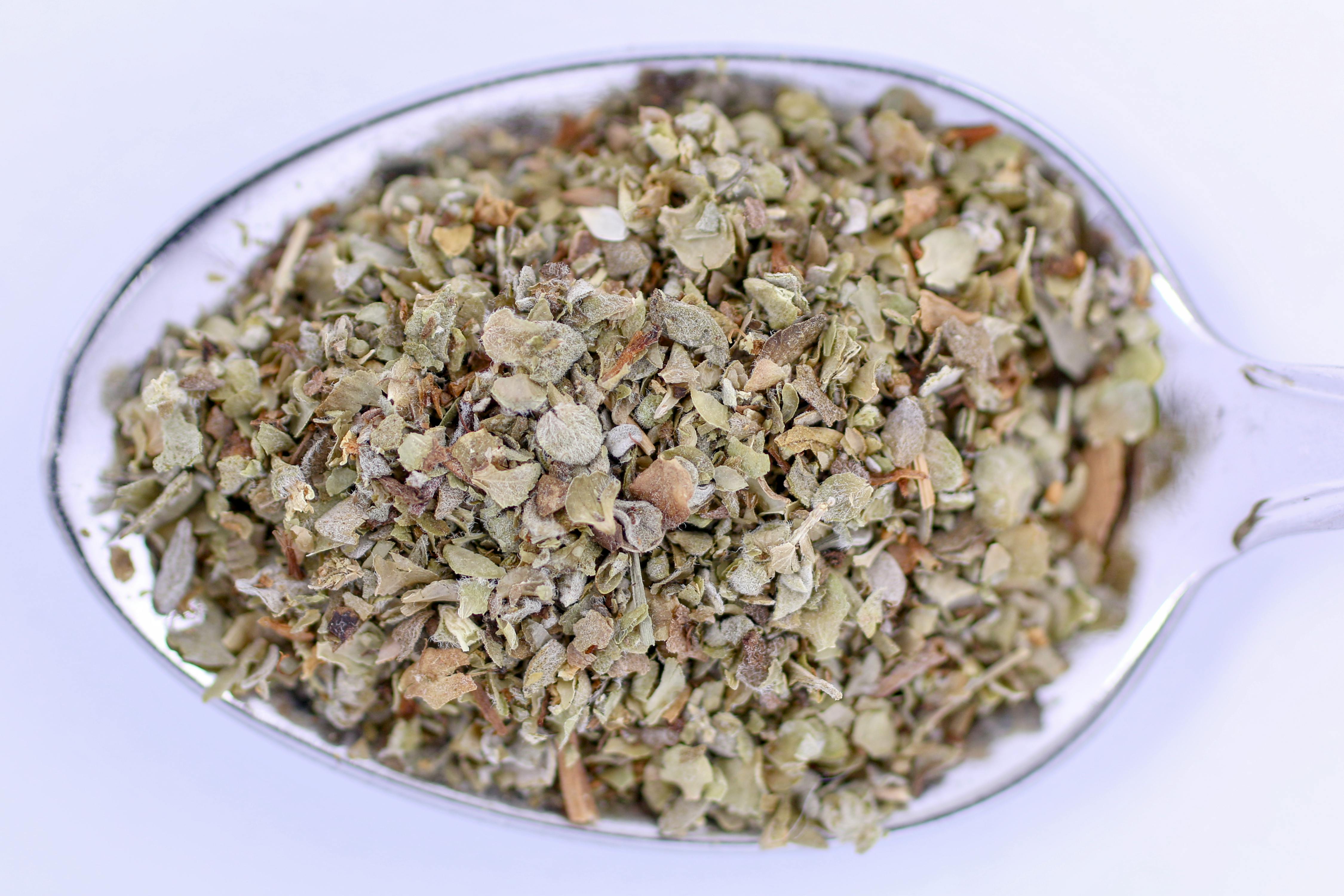
Marjoram
Aphrodite''s herb — sabinene hydrate, Central European stuffed cabbage, and the Mediterranean "sweet oregano".
In 1 minute
What does it provide? A sweet, Mediterranean essential oil matrix: sabinene hydrate (15–35% — source of the characteristic "sweet oregano" aroma), terpinen-4-ol (20–35% — antimicrobial monoterpene), linalool (5–15% — mild calmative), and small amounts of carvacrol. Traditionally digestive-supporting and bloat-reducing — Vasudevan 2012 RCT confirmed a bloating-reducing effect of marjoram extract. A pilot study (Haj-Husein 2016): 2 cups of marjoram tea daily for 1 month in PCOS women reduced DHEA-S and improved insulin sensitivity.
How much? In the kitchen 1–2 g fresh or dried leaf (1–2 tsp)/day. Tea: 1 g dried leaf / 200 ml hot water, 10 min covered.
When to avoid? During pregnancy with high-dose essential oil or supplement (uterotonic potential); infants/small children given concentrated essential oil internally; Lamiaceae allergy (basil-, oregano-, thyme- cross-reactivity); alongside anticoagulant therapy (warfarin, DOACs) with clinical-dose extract (additive bleeding risk); active gastric ulcer (concentrated essential oil irritates); clinical-dose supplement 2 weeks before planned surgery; severe hypotension tendency.
Marjoram (Origanum majorana) is a perennial spice native to the eastern Mediterranean coast — in Greek mythology, the goddess Aphrodite brought it to earth as a symbol of love. At classical Greek and Roman weddings, the bride and groom were adorned with marjoram wreaths — the herb of happiness. Pliny recommended it for digestion, cramps, and topical wound healing. The name "herba marjorum" ("marjor flower") became established in medieval monastery gardens.
In Central European cuisine, marjoram is essential: classic Hungarian stuffed cabbage, blood sausage, sausage, and pork paprikash are not the same without marjoram. "Hungarian marjoram" cultivation around Eger and Kalocsa is centuries old. German and Polish cuisines also use it heavily (Majoran).
Modern phytochemistry identified sabinene hydrate in the 1960s as the main bioactive responsible for the "sweet oregano" flavor. Clinical evidence is moderate — Vasudevan 2012 RCT showed a bloating-reducing effect, and small pilots support the classic digestive-supportive tradition. The clinical literature is more limited than for oregano or thyme, but traditional use is stable. EMA/HMPC does not list it in a separate monograph, but ESCOP recognizes general digestive-supportive use. **(ESCOP, Phytomedicine)
🔬 Scientific Background
Marjoram's essential oil has a different profile than oregano's: the main components are sabinene hydrate (15–35%), terpinen-4-ol (20–35%), linalool (5–15%), and smaller amounts of carvacrol (5–10%). This explains the milder, sweeter flavor profile compared to oregano (which is carvacrol-dominant).
Terpinen-4-ol and linalool have moderate antimicrobial and calmative effects — the latter explains the classic "calming tea" tradition.
Clinical evidence is limited. In Vasudevan 2012 RCT, marjoram extract showed bloating-reducing effects. Small pilot studies in PCOS (Polycystic Ovary Syndrome) described hormonal modulation.
Antimicrobial spectrum: moderately broad in vitro — effective against Gram-positive and Gram-negative bacteria, primarily in food preservation contexts.
Aromatherapy tradition: marjoram essential oil has relaxing-calming effects; a classic "herbal pillow" component for sleep support.
At the microbiome level, small pilots have shown a Lactobacillus-supporting effect of the polyphenol fraction.
Safety: at culinary amounts absolutely safe. High-dose essential oil in pregnancy has uterotonic potential — to be avoided. Concentrated essential oil is not recommended for infants.
- + Pork, stuffed cabbage, blood sausage, sausage (Central European classic): synergy.
- + Lamb, chicken, egg: flavor harmony.
- + Olive, lemon, garlic (Mediterranean): classic.
- + Thyme, rosemary, oregano (herbes de Provence): synergy.
- + Potato, carrot, with potato (paprikás potatoes): Central European classic.
- + Live cultures (yogurt, kefir): synbiotic.
- Anticoagulants + high-dose extract: theoretical additive bleeding risk.
- Antihypertensive agents + high-dose essential oil: theoretical additive hypotension.
- Long boiling at high heat: essential oil evaporates.
- Concentrated essential oil on infants: to be avoided.
- With iron: may chelate: separate in time.
- Clinical-dose supplement alongside anticoagulant: to be avoided.
- Pregnancy with high-dose essential oil: uterine-stimulant potential.
- Concentrated essential oil on infants and small children: to be avoided.
- Lamiaceae allergy (basil, oregano, thyme): cross-reaction.
- Active gastric ulcer: concentrated essential oil irritates.
- Anticoagulant therapy: medical supervision with high-dose supplement.
- Planned surgery: discontinue high-dose supplement.
- Severe hypotension tendency: caution.
- Undiluted on skin: contact sensitivity.
Daily serving
1–2 g fresh or dried leaf (1–2 tsp) per day.
Preparation pattern
- Dried leaf: crumble and add to meat/stuffed cabbage mid-cooking.
- Fresh leaf: strip from stem, chop finely before serving.
- Tea: 1 g leaf + 200 ml hot water, 10 min standing.
- Oil infusion: fresh leaf + olive oil, 1 week standing.
Classic patterns
Hungarian stuffed cabbage: sauerkraut + minced pork + rice + paprika + marjoram + bay leaf.
Blood sausage, sausage: pork + liver + rice + spices + marjoram.
Paprikás potatoes: potato + sausage + paprika + marjoram + bay leaf.
Provençal herbal mix: marjoram + thyme + rosemary + oregano + bay leaf.
Storage and what not to do
Storage: fresh sprig 1–2 weeks refrigerated; dried 1 year airtight in a dark place.
What not to do: don't overboil (essential oil evaporates); don't give concentrated essential oil internally to infants; don't combine clinical-dose supplements with warfarin on your own.
References
[1] Vasudevan A et al. Phytochemistry and pharmacology of Origanum majorana. J Pharm Pharmacol 2012.
[2] Bina F, Rahimi R. Sweet marjoram: a review of ethnopharmacology, phytochemistry, and biological activities. J Evid Based Complement Alternat Med 2017;22(1):175–185.
[3] Haj-Husein I et al. The effect of marjoram (Origanum majorana) tea on the hormonal profile of women with PCOS. J Hum Nutr Diet 2016;29(1):105–111.
[4] Prerna et al. Marjoram: a review of its biological properties. Int J Pharm Sci Res 2014.
[5] ESCOP. Origanum majorana — monograph.
[6] Verma RS et al. Constituents of essential oil of Origanum majorana. Nat Prod Res 2010.
[7] Hossain MA et al. Antioxidant activity and phytochemistry of marjoram. J Med Plants Res 2010.