


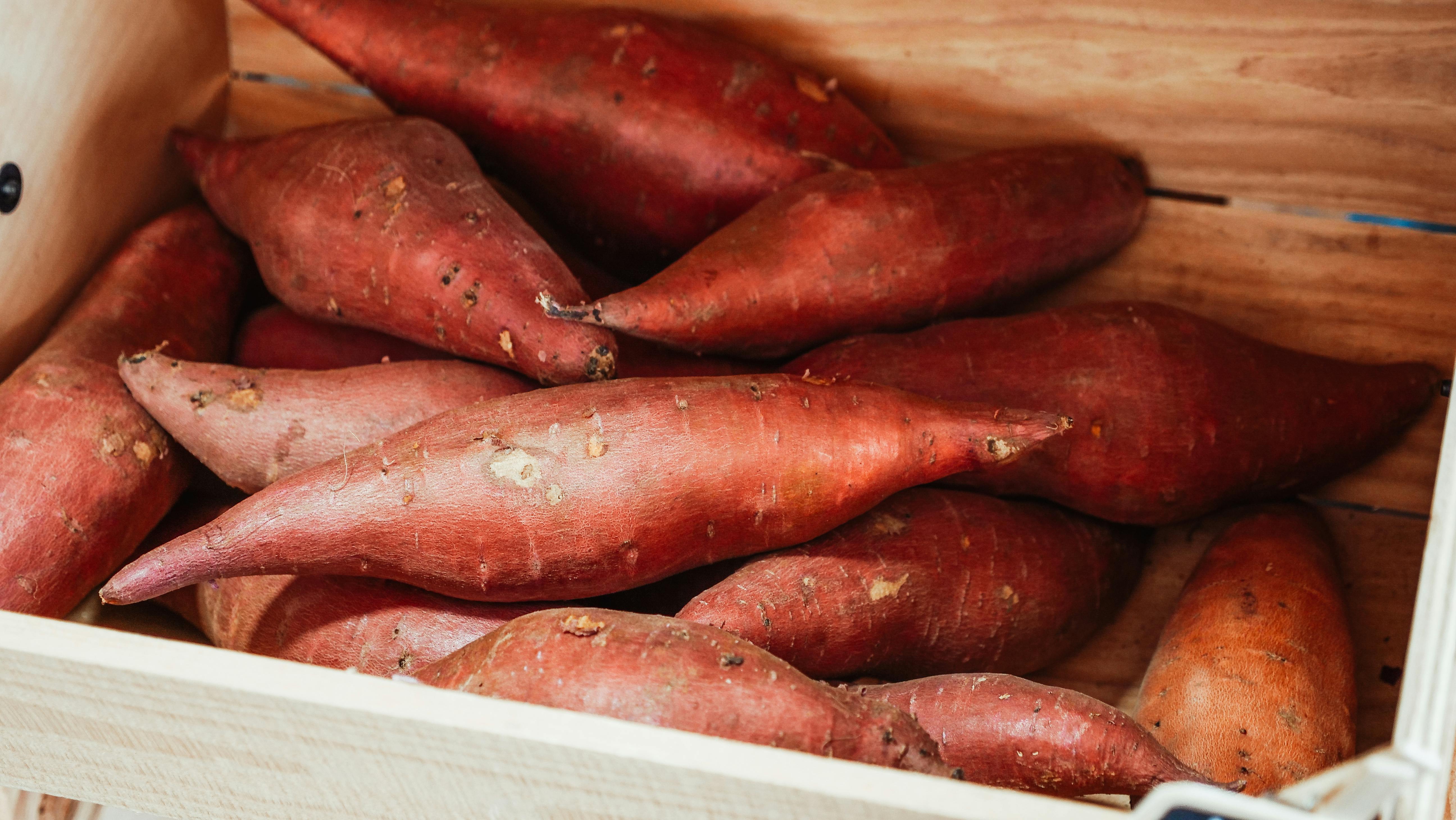
Sweet potato
The tropical orange wonder — β-carotene public-health superfood, anthocyanin bomb in the purple variety.
In 1 minute
What does it provide? β-carotene (vitamin A pro-vitamin, orange-fleshed OFSP up to 8000 μg RAE/100 g — a single tuber covers the daily vitamin A requirement), RG-I pectin and through "cook-cool" treatment forming resistant starch (RS3, butyrate-producing microbiota substrate), in the purple variety acylated anthocyanins (PSPA — unusually stable polyphenols). Hotz 2012 Mozambique RCT showed significant vitamin A status improvement with OFSP.
How much? 100–150 g cooked tuber/day, 3–4×/week. Low-FODMAP IBS dose: 75 g. For β-carotene target always with fat (1 tbsp olive or coconut oil increases bioavailability 5–10×). "Cook-cool" for 12 hours to moderate glycemia (GI ≈ 60–70 fresh, ≈ 90 baked at 200 °C).
When to avoid? IBS flare ≥ 150 g at once (mannitol bloating), calcium oxalate kidney stones (moderate-to-high oxalate — moderately with calcium accompaniment), CKD 4–5 (≈ 340 mg potassium/100 g), infant under 6 months. Carotenoderma (minor orange skin discoloration) with weeks of extreme intake.
Sweet potato was domesticated in tropical America; its cultivation was widespread in Central and South America by around 2500 BCE, where Maya and Inca civilizations cultivated it as staple food. One of the most fascinating chapters in the species' journey: its arrival in Polynesia in the Middle Ages, around 1000–1100 CE, supported by botanical and archaeogenetic data, as well as herbarium samples from Captain Cook's voyages — the "tripartite hypothesis," which assumes multiple gene-flow waves, consistent with Thor Heyerdahl's Kon-Tiki theory that Polynesian and American peoples were already in contact across the Pacific before the Europeans. In Maori the name kumara is related to the Peruvian Quechua "kumar" — linguistic evidence for a centuries-old mystery.
Through Spanish and Portuguese seafaring it took root in Eurasia and Africa from the 16th century under various names: kumara in Polynesia, batata in South America, camote in Mexico — Columbus first described it for Europeans in 1492, and it's often considered the predecessor of traditional potato in the European diet. In the 20th century, targeted breeding of orange-fleshed sweet potato (OFSP) aimed to reduce vitamin A deficiency in sub-Saharan Africa, where it remains part of public health programs in many countries today — HarvestPlus and other initiatives reached millions through introducing carotenoid-rich varieties. (pnas.org, PubMed)
🔬 Scientific Background
Sweet potato is botanically NOT related to regular potato (Solanum tuberosum, nightshades) — entirely different family (Convolvulaceae, morning glory family). The tuber has three main bioactive fractions: (1) Carotenoid (orange-fleshed OFSP): β-carotene up to 8000 μg RAE/100 g, where a single medium tuber more than covers daily vitamin A requirement. (2) Pectin (RG-I) + RS3: the main RG-I pectin structure ferments well; cooked-chilled it forms RS3 (like regular potato). (3) Acylated anthocyanins (PSPA — purple sweet potato anthocyanins) in the purple-fleshed variety: unusual acylated structure (caffeic-, ferulic-, p-coumaric-acid esters), giving extreme heat and pH stability.
The clinical evidence backbone comes from OFSP-vitamin A supplementation programs: human RCTs (Hotz 2012, Mozambique) confirmed significant vitamin A status improvement in children and adults, a food-based VAD-reduction strategy. β-carotene bioavailability is multifold with fat (Tang 2009).
PSPA (purple sweet potato) has been long studied as an anti-inflammatory and anti-T2D substance — in preclinical models it causes microbiome shift, glycemia normalization, and inflammatory marker reduction. Human microbiome RCTs are still limited, but in vitro fecal fermentation showed selective Bifidobacterium and Lactobacillus stimulation.
Cooked sweet potato glycemic index is moderate (GI ≈ 60-70), but baked (in skin, 200 °C, 30 min) is higher (GI ≈ 90). Chilled moderates the glycemia (RS3 formation).
- + Extra-virgin olive or coconut oil: β-carotene bioavailability 5-10× increase.
- + Chilling (12-24h) then reheating: RS3 formation + butyrate boost.
- + Cinnamon + nutmeg: classic American-Caribbean flavor, polyphenol synergy.
- + Lime + chili + cilantro (Mexican camote): Central American original.
- + Tahini + lemon: Middle Eastern dip foundation.
- + Legumes (sweet potato + black bean bowl): RS3 + GOS, butyrate-positive.
- + Yogurt or kefir (in layered dessert): synbiotic.
- Long boiling with discarded liquid: β-carotene + RG-I loss.
- Hot freshly baked large dose + sweet drink: double glycemia.
- Severe kidney disease potassium restriction + large dose: ≈ 340 mg potassium/100 g.
- Kidney stone oxalate predisposition + lots of raw sweet potato: moderate-to-high oxalate (calcium combo recommended).
- IBS flare + 150+ g at once: mannitol-FODMAP bloating.
- Lithium therapy + fried-salted sweet potato: sodium balance.
- IBS flare: ≤ 75 g per serving low-FODMAP, more than this mannitol bloating.
- Kidney stone oxalate predisposition: moderate consumption, with calcium accompaniment (yogurt, cheese).
- Severe kidney disease (CKD 4-5): potassium monitor.
- Diabetes mellitus: "cook-cool" + olive composition recommended, baked-hot-fresh to be avoided.
- Carotenoderma risk (extreme large dose for weeks): skin discoloration, harmless, reduce.
- Infant under 6 months: avoid.
- Gout: low purine — safe.
- Anticoagulant therapy: moderate vitamin K (purple leaves more), consistent dose.
Daily/weekly serving
100–150 g cooked sweet potato 3-4×/week. Low-FODMAP: 75 g. For β-carotene focus: ½ cup + 1 tbsp olive.
Preparation pattern
- Wash thoroughly with brush, don't peel (skin is fiber-rich).
- Baking in skin: at 200 °C for 35-50 min — sweet, caramelized, classic.
- Boiling diced: 15-20 min, drained.
- Pureeing: with oil or coconut milk + cinnamon + nutmeg.
- "Cook-cool": diced, boil 15 min → chill 12h → reheat or cold on salad.
Classic patterns
Roasted sweet potato wedges: in oven at 220 °C for 25 min with olive, rosemary.
Sweet potato + black bean bowl (Mexican): diced roasted sweet potato + black bean + avocado + lime + cilantro.
Sweet potato pie (American): classic Thanksgiving dessert (in moderation, sugar content).
Camote en miel (Mexican): sweet potato + brown sugar + cinnamon + lime → compote.
Purple sweet potato salad (Hawaiian): diced + sesame oil + lime + scallion.
Storage
Fresh: dark, cool (12-15 °C), ventilated place 1-2 months (NOT in fridge — hard, tasteless). Cooked: refrigerated 4-5 days. Frozen (blanched cubes): 8-10 months.
What not to do
Don't refrigerate raw (recrystallization, flavor change). Don't bake above 220 °C for 40+ min (acrylamide). Don't peel if organic — skin is nutrient-rich.
References
[1] Hotz C et al. A large-scale intervention to introduce orange sweet potato in rural Mozambique increases vitamin A intakes among children and women. Br J Nutr 2012;108(1):163–176.
[2] Tang G. Bioconversion of dietary provitamin A carotenoids to vitamin A in humans. Am J Clin Nutr 2010;91(5):1468S–1473S.
[3] Sun H et al. Anthocyanins from purple sweet potato: composition, bioavailability, and health benefits. Foods 2019;8(11):528.
[4] Wang YJ et al. Acylated anthocyanins from purple sweet potato confer thermal and pH stability. J Food Sci 2022.
[5] Mohanraj R, Sivasankar S. Sweet potato (Ipomoea batatas [L.] Lam) — a valuable medicinal food: a review. J Med Food 2014;17(7):733–741.
[6] Ji H et al. Purple sweet potato anthocyanins modulate gut microbiota: in vitro and in vivo evidence. Food Funct 2022.
[7] Roullier C et al. Historical collections reveal patterns of diffusion of sweet potato in Oceania. PNAS 2013;110(6):2205–2210.
[8] Monash University. Sweet potato FODMAP content. Monash FODMAP database.