


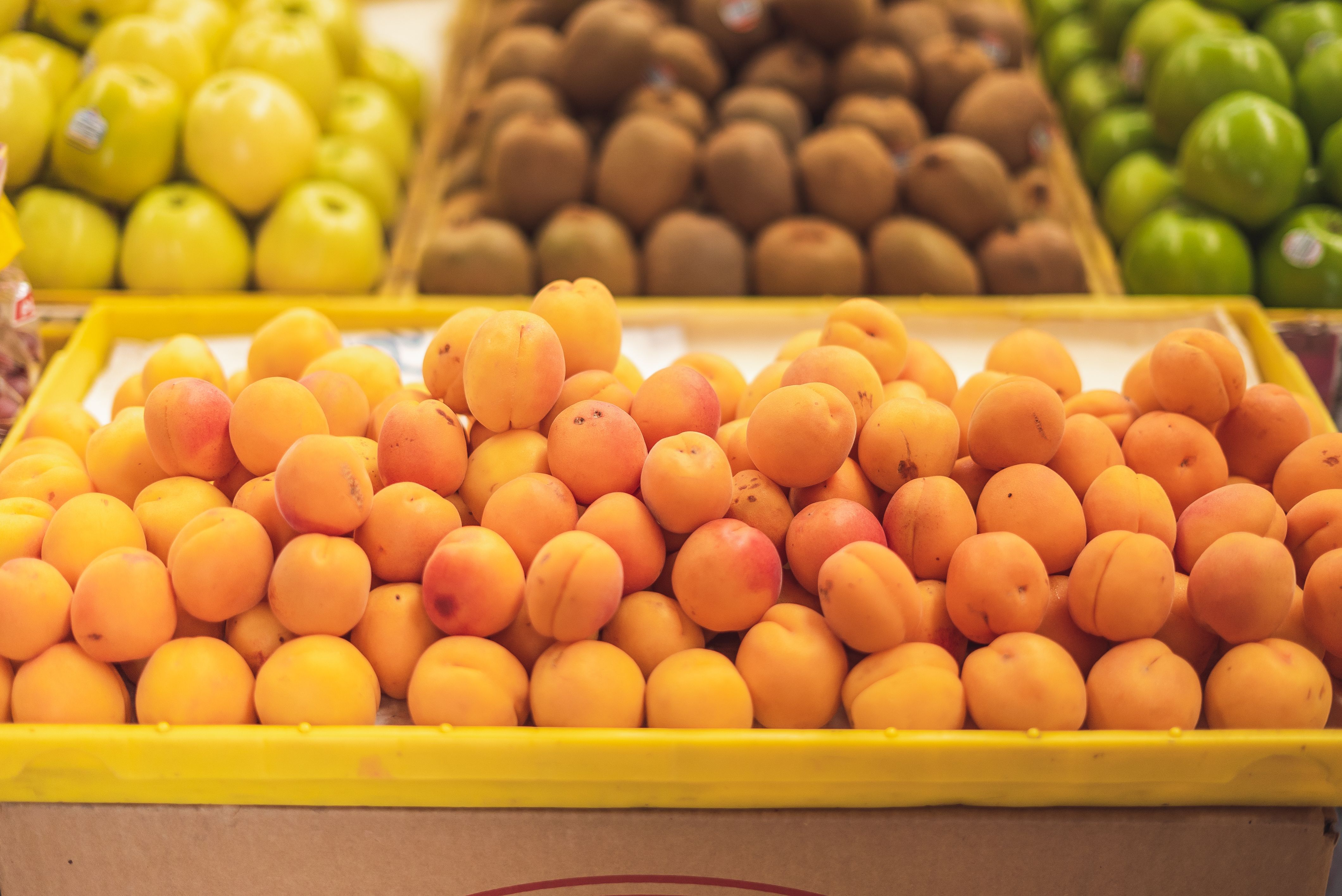
Fresh apricot
The Silk Road's golden apple — β-carotene, vitamin A precursor, and the kernel's amygdalin warning.
In 1 minute
What does it provide? β-carotene (provitamin A — a ripe, orange fruit provides 1500–2200 µg/100 g; with fat, 2–3× bioavailability), pectin (soluble fiber, ≈ 2 g/100 g, Bifidobacterium-favoring and butyrate precursor), chlorogenic acid and quercetin (polyphenol antioxidants, mainly in the skin). Klimek-Szczykutowicz 2020 review: regular consumption shifts the lipid profile favorably.
How much? 3–4 medium ripe fruits (≈ 150 g) daily during summer season, with skin, preferably with a fat source (yogurt, walnut, olive, avocado). From the dried version, max. 5–6 fruits/day, and choose the sulfur-free ("brownish") version if you are sulfur-sensitive (asthma).
When to avoid? Active IBS-D or confirmed sorbitol malabsorption (10+ fruits have a laxative effect), poorly controlled type 2 diabetes (glycemic load), Rosaceae-pollen-associated oral allergy syndrome (latex cross-reaction), CKD 4–5 (≈ 260 mg potassium/100 g). NEVER consume the kernel: 1 adult kernel already represents 50–100% of the tolerable cyanide intake (EFSA 2016), and its "B17/laetrile" anticancer effect has been refuted (Milazzo & Horneber 2015, Cochrane Database).
The ancient home of apricot is Central Asia and China — Pliny and Dioscorides described it as the "Armenian plum," from which the Linnaean name Prunus armeniaca derives. It traveled along the Silk Road to the Mediterranean; in Hungarian culinary culture, Carpathian Basin cultivation spread during the 17th-century Ottoman occupation — the Hungarian word "barack" is of Slavic origin (taken via the South Slavic broskva / Polish broskiew / Czech broskev forms as a derivative of vulgar Latin persica, NOT from the Turkish zerdali).
The Kecskemét apricot pálinka culture began at the end of the 19th century, and the mid-20th-century breeding work of the Cegléd Fruit and Ornamental Plant Research Institute (Sándor Brózik and colleagues) provided the foundation of "Hungarian apricot" — the Magyar kajszi C.235 and Ceglédi óriás cultivars. Modern carotenoid research, following the work of Sloan and Krinsky (1980s), indicates particularly good bioavailability of apricot β-carotene — thanks to the fat-soluble matrix of the carotenoids (Wikipedia, PMC).
🔬 Scientific Background
The main scientific role of fresh apricot is the β-carotene → vitamin A axis. Fresh apricot contains 1500–2200 µg β-carotene per 100 g, which at a 12 µg β-carotene = 1 µg retinol conversion ratio is 125–185 µg retinol equivalent. The carotenoids of the ripe, deep orange fruit are in a natural lipid matrix, so their bioavailability rises 2–3× when consumed with fat.
The fiber–microbiome axis: pectin (about 2 g / 100 g) ferments slowly in the colon, favors Bifidobacterium, and supports butyrate production. Klimek-Szczykutowicz et al. (2020) review indicates favorable lipid profile change with regular apricot consumption, although dedicated RCTs are few.
The clinical safety question is the amygdalin in the kernel (a pseudovitamin marketed as "vitamin B17"): in the small intestine, β-glucosidase releases hydrogen cyanide. Bromley et al. (2005, BMJ) describe acute cyanide poisoning after "natural" apricot kernel consumption. FDA and EFSA (2016) limit: in adults <1 kernel/day, for small children 0. The fresh fruit flesh contains no cyanide. Evidence level: cohort/review (★★) on β-carotene endpoints, clinical case evidence (★★★) for kernel toxicity.
- + High-fat source (avocado, walnut, olive oil): β-carotene bioavailability rises 2–3× in the presence of fat.
- + Greek yogurt or cottage cheese: protein-fat matrix increases carotenoid absorption, and a prebiotic pectin–probiotic synergy arises.
- + Almond or walnut: lipophilic carotenoid carrier, complementing the polyphenol profile.
- + Vitamin E-rich food: vitamin E protects β-carotene from oxidation during storage.
- High-dose synthetic β-carotene supplement: in smokers and those with asbestos exposure, supplemental β-carotene raised lung cancer risk (ATBC, CARET studies) — no such signal from natural sources, but together with a supplement it is not warranted.
- Apricot kernel extract "B17": scientifically refuted anticancer effect, confirmed cyanide toxicity — never consume for health reasons.
- High-temperature, prolonged baking: carotenoids are relatively heat-stable, but polyphenols and vitamin C may be lost.
- IBS-D and sorbitol malabsorption: sorbitol can provoke osmotic diarrhea and bloating.
- Active diabetes with poor control: moderate glycemic load; too many ripe fruits worsen control.
- Latex allergy (Rosaceae cross-reaction): apricot can be an allergen — oral allergy syndrome (mouth, lip swelling) may occur.
- Severe kidney disease: due to moderate potassium content, individual titration needed (~260 mg / 100 g).
Daily serving: 3–4 medium fruits (~150 g) ripe, fresh.
Preparation pattern: Fresh, with skin — most polyphenols are in the skin; in salad with mozzarella + olive oil; in yogurt, smoothie.
Classic patterns: Kecskemét apricot jam (a compromise — cooking and sugar reduce the value); French clafoutis aux abricots; Middle Eastern tagine.
Storage: At room temperature 2–3 days for after-ripening; in refrigerator 5–7 days; pitted and frozen 10–12 months.