


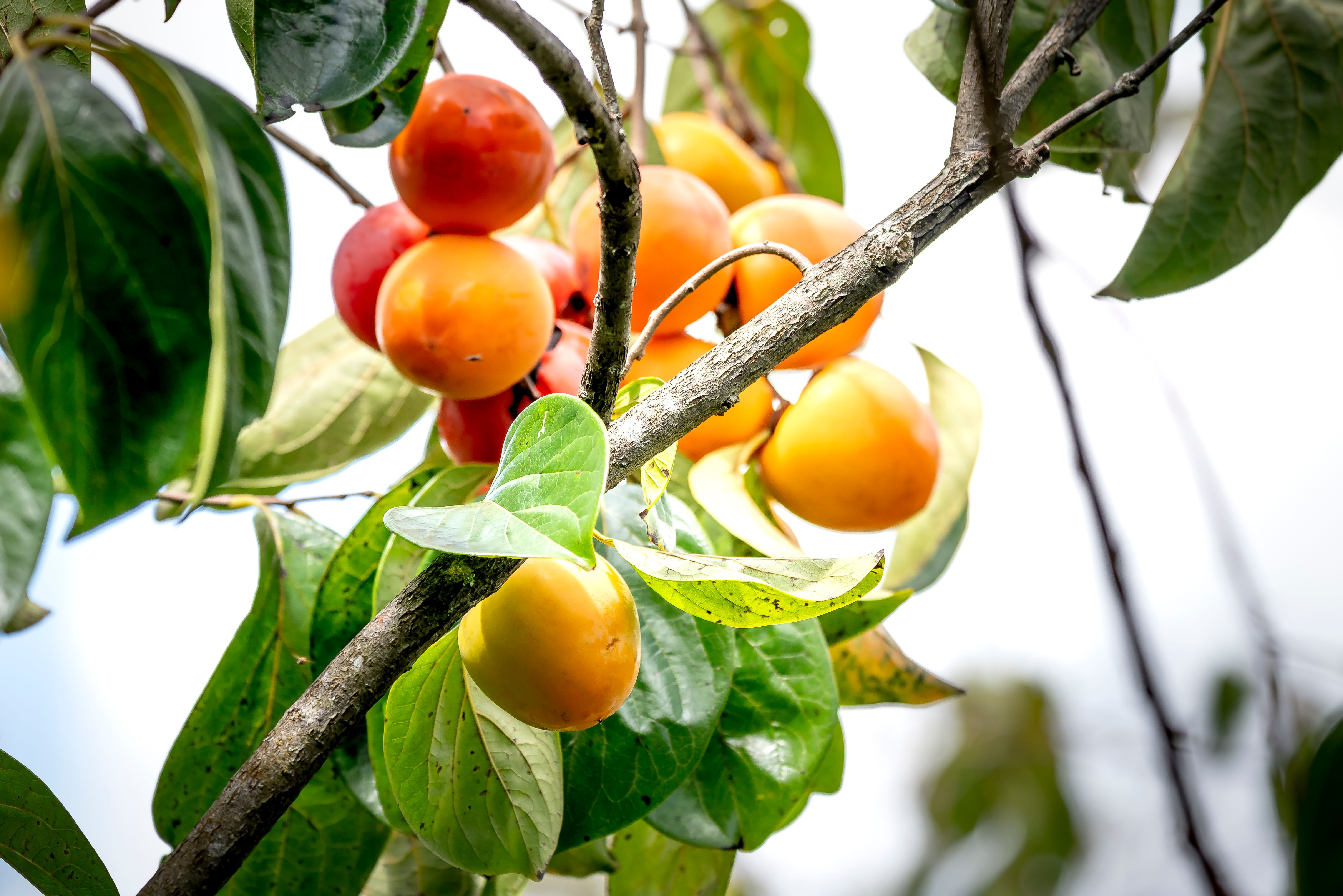
Persimmon (kaki)
The tannin paradox — dramatic difference between ripe and unripe, high β-cryptoxanthin, and the Japanese "kaki" tradition.
In 1 minute
What does it provide? Condensed proanthocyanidin (PAC — a polyphenol polymer that the colonic microbiome converts to phenolic acids, anti-inflammatory), β-cryptoxanthin (yellow carotenoid, bone protector — Sugiura's 5-year study reduced postmenopausal osteoporosis risk by 93%; persimmon is one of the richest dietary sources at ≈ 1450 µg/100 g), and high (3.6 g/100 g) fiber. Asgary 2018 RCT: 200 g/day fresh persimmon produced an 11% LDL reduction over 6 weeks.
How much? In season (October–December) 1 medium ripe fruit (≈ 150 g) daily — Fuyu sliceable while firm, Hachiya only in completely soft, pudding-texture state.
When to avoid? Diabetic gastroparesis, small intestinal stricture, prior gastric surgery (gastrectomy, Billroth, bypass) — unripe Hachiya on an empty stomach can cause a diospyrobezoar (gastric phytobezoar); warfarin with unstable INR (vitamin K 2.6 µg/100 g fresh, 17 µg dried); severe kidney disease GFR < 30 (potassium content 161 mg/100 g, dried 802 mg); iron supplementation in the same meal (tannin chelates up to 70% of non-heme iron — ≥ 2-hour separation).
The persimmon (kaki) is a native fruit of China and Japan, cultivated for over 2000 years. The Japanese name "kaki" (柿) entered European languages too — Swedish botanist Carl Peter Thunberg, during his 1775–76 stay in Dejima (Nagasaki), described it scientifically from collected material, giving it the name "Diospyros kaki" = "fruit of the gods." In Japanese tradition, the kaki is a symbol of long life and wisdom, and the dried version (hoshigaki) — hand-massaged and sun- and wind-dried over 3–4 weeks — remains a luxury delicacy.
European regulated cultivation began in the mid-20th century, mainly in Italy (Campania) and Spain (Valencia). Modern phytochemistry research exploded from the 1990s: Korean and Japanese groups (Gato, Lim, Park) described the condensed tannin profile, and from the 2010s, human RCTs (Asgary, Gorinstein) showed favorable effects on lipid and cardiometabolic endpoints. A special research line is the persimmon leaf tea — regulated in Japan as a functional food for its high tannin and flavonoid content. (PubMed, PMC)
🔬 Scientific Background
The clinically most important component of persimmon is the condensed proanthocyanidins (PAC) — a polyphenol polymer built from catechin and epicatechin units, which passes through the small intestine intact and is transformed by the colonic microbiome into small phenolic acids. PAC is present in concentrated form in unripe Hachiya kaki (hence the strong "astringent" sensation), and during ripening the tannins polymerize into insoluble form — this explains why we do not feel the astringency of ripe persimmon, while the tannin content does not decrease significantly. (PubMed)
The 2019 systematic review by Asgary et al. (Phytother Res), summarizing multiple clinical studies, documented favorable cardiovascular risk profile changes (LDL reduction, HDL elevation) with regular persimmon consumption — the effect is due to the joint matrix of PAC + fiber + carotenoid. The pectin + tannin fraction matrix effect slows arrival in the small intestine and glucose absorption — this explains the clinical observation that ripe persimmon has a more favorable postprandial glycemic profile than fruits with similar carbohydrate content but lower fiber. (PMC)
In terms of β-cryptoxanthin, persimmon is one of the richest food sources (≈ 1450 µg / 100 g), surpassing apricot and orange. According to the 5-year Japanese Mikkabi Bone Health Study (Sugiura), high β-cryptoxanthin intake reduced postmenopausal osteoporosis risk by 93% — persimmon is an ideal seasonal source. Fiber content (3.6 g / 100 g) is higher than apple's, and together with the condensed tannins exerts a strong bowel motility and lipid regulation effect. (PMC)
- + Yogurt / kefir: milk protein and lactic acid bacteria break down the tannins, gentler flavor and absorption.
- + Nuts (walnut, almond, pecan): fat matrix improves carotenoid bioavailability.
- + Fresh cheese (ricotta, cream cheese) for breakfast: classic Italian autumn pairing.
- + Granola + flaxseed: fiber + omega-3 + polyphenol complex.
- + Dark chocolate (70%+): flavanol + PAC synergy.
- + Cinnamon, ginger (autumn spices): essential oils and digestion-supporting matrix.
- Unripe, tannic kaki on an empty stomach (especially Hachiya): the astringent tannin can form a "diospyrobezoar" (gastric phytobezoar) with gastric acid — clinically documented, may require surgery. Always with meals and only RIPE kaki.
- Iron supplementation: high tannin content severely chelates non-heme iron (up to 70% absorption reduction) — time separation ≥ 2 hours.
- Warfarin with unstable INR: persimmon is high in vitamin K (2.6 µg / 100 g fresh; 17 µg dried) — can antagonize warfarin's effect.
- Bezoar risk: gastroparesis, diabetic gastric neuropathy, prior gastric surgery (gastrectomy, Billroth): unripe kaki to be avoided, ripe in moderation.
- Milk + large amount of tannic kaki at the same time: tannin precipitates with milk protein, stomach irritation in sensitive individuals.
- Sugary cereal + kaki: glycemic peak.
- Diabetic gastroparesis, motility disorder, gastric stricture: classic bezoar risk. The Hungarian gastroenterology literature also describes "phytobezoar" cases.
- Prior gastric surgery (gastric bypass, sleeve, Billroth): to be avoided, or only fully ripe, peeled, in moderation.
- Severe chronic kidney disease (GFR < 30): potassium content (161 mg / 100 g fresh; 802 mg / 100 g dried) is limiting.
- Newly adjusted warfarin dose: daily regular persimmon consumption can cause INR disturbance.
- IBS-D with fructose sensitivity: servings above ½ fruit/day can cause bloating.
- Diabetes: fresh ripe Fuyu kaki has a glycemic index of 50, moderate — portion-size limitation recommended.
- Pregnancy: fresh ripe persimmon is safe. High-dose extracts not recommended due to lack of sufficient human data.
- Iron-deficiency anemia under treatment: tannin severely chelates iron, time separation is critical.
Daily serving: in season (October–December) 1 medium ripe fruit (≈ 150 g). Fuyu in firm phase, Hachiya only fully soft, ripe.
Preparation:
1. Fuyu: sliceable apple-like, peelable (but the skin is edible).
2. Hachiya: only ripe if scoopable with a spoon, pudding texture; don't eat if still firm.
3. Traditional "hoshigaki": autumn sun-drying for 3–4 weeks with hand massaging — an unmissable classic Japanese delicacy.
Classic patterns:
- Breakfast: plain yogurt + 1 sliced Fuyu kaki + 1 tbsp pecan + 1 tbsp flaxseed + ½ tsp cinnamon.
- Side/salad: mixed greens + kaki + arugula + goat cheese + walnut + balsamic vinegar.
- Sweet/dessert: Hachiya pudding (spooned, with yogurt, honey, ½ tsp vanilla).
- Cheese platter: Fuyu + blue cheese + walnut + honey + crackers — French/Italian autumn "cheese board."
Storage: Fuyu refrigerated 1–2 weeks, Hachiya at room temperature until ripe (in paper bag with apple is faster), ripe Hachiya refrigerated 3–5 days. Frozen (Hachiya pulp) at –18 °C for 6 months. Dried (hoshigaki) in airtight box in a cool place for 2–3 months.
What not to do: Never eat unripe Hachiya kaki on an empty stomach. Don't combine iron supplements with kaki. Don't store ripe fruit under plastic wrap (mold).