

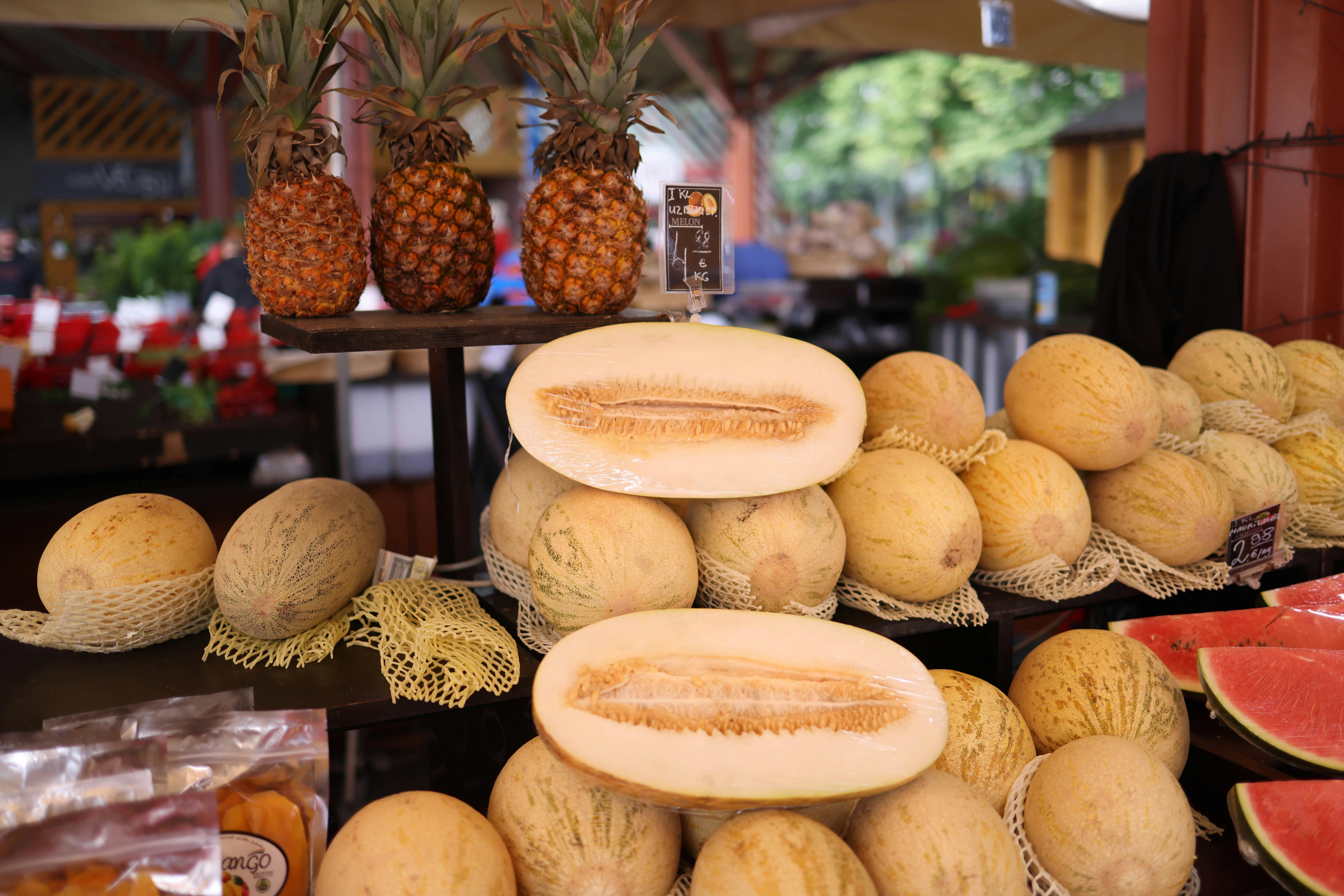
Melon / cantaloupe
The summer β-carotene bath — potassium-rich electrolyte refill and water-balance support.
In 1 minute
What does it provide? High β-carotene (provitamin A carotenoid; in cantaloupe ≈ 2020 μg/100 g — concentration similar to carrot; in honeydew 50–100× less), vitamin C (≈ 37 mg/100 g), potassium (≈ 270 mg/100 g — DASH-style blood pressure-lowering effect), and ≈ 90% water content. Consumed with fat, carotenoid absorption rises 2–3-fold.
How much? 1 thick slice or 1 cup cubed (≈ 150–200 g) of fresh fruit daily, ripe. According to Monash, 90 g/serving is low FODMAP, moderate at larger servings.
When to avoid? Pregnancy (particularly 2nd–3rd trimester — Listeria crosses the placenta; 2011 Jensen Farms outbreak: 33 deaths), immunocompromised state (HIV, chemotherapy, immunosuppressant therapy), elderly age (>65 years — higher listeriosis mortality), severe kidney disease (CKD 4–5 — potassium restriction), IBS-D with fructose malabsorption. The netted rind must ALWAYS be washed with a vegetable brush under running water for 30–60 sec BEFORE cutting; sliced form refrigerated within 2 hours.
Melon comes from the region between Africa and Southeast Asia; Persian and Arab merchants brought it to Europe in the 14th–15th centuries. The name "cantaloupe" comes from the Italian papal estate of Cantalupo, where in the 16th century they cultivated the Armenian-origin seeds brought home by papal envoys — hence the French "cantaloup" → Hungarian "kantalup" borrowing.
The modern listeria warning received global attention in 2011: Listeria monocytogenes contamination of the Jensen Farms (Colorado, USA) cantaloupe shipment caused 33 deaths and 147 illnesses — still the largest US listeriosis outbreak. Investigations showed that the rough, netted surface of the melon rind (particularly the cantaloupe's) is especially favorable for biofilm formation by Listeria and Salmonella (Wikipedia, PMC).
🔬 Scientific Background
The physiological value of the melon group centers on the β-carotene–vitamin A axis — cantaloupe stands out, while honeydew and galia variants are much lower. 100 g of cantaloupe contains ~2020 µg of β-carotene, covering a significant portion of daily vitamin A requirement. According to the Ren et al. (2008) review, the bioavailability of β-carotene from cantaloupe and carrot is equivalent when consumed with fat.
The cardiovascular axis: high potassium (~270 mg / 100 g) and low sodium content contribute to the blood pressure-lowering effect; a central fruit of DASH-style diets. Vitamin C (37 mg / 100 g) is a direct antioxidant and collagen synthesis substrate.
The clinical safety question — the microbiology of the rind surface — is critical for the melon group. McCollum et al. (2013, NEJM) analysis of the 2011 Jensen Farms outbreak showed that Listeria monocytogenes survives refrigeration on the intact rind surface, and the slicing knife transfers it to the flesh. The FDA and CDC continue to issue special warnings during cantaloupe season.
Prevention: thorough washing of the rind with a disinfecting brush, or immediate consumption of peeled pieces. Separate cutting board and knife. Evidence level: cohort (★★) on carotenoid endpoints, clinical case evidence (★★★) on listeriosis risk.
- + Prosciutto or raw ham: classic Italian "prosciutto e melone" — salty-sweet profile, protein + β-carotene + fat synergistic bioavailability.
- + Olive oil + feta salad: with fat, 2–3× elevated carotenoid absorption.
- + Fresh mint + lime: synergistic antioxidant capacity, hydration.
- + Greek yogurt + walnut for breakfast: calcium-protein-carotenoid combination.
- Unwashed rind + raw consumption in immunocompromised: additive listeria risk.
- High-dose synthetic β-carotene supplement: in smokers and those with asbestos exposure, supplemental β-carotene raised lung cancer risk (ATBC, CARET) — no such signal from natural sources.
- High-fat/protein heavy dinner + large melon portion: stomach discomfort due to high water content.
- Prolonged high-temperature cooking: unnecessary; carotenoids are stable, but vitamin C and texture are lost.
- Pregnancy (particularly 2nd–3rd trimester): Listeria crosses the placenta and can cause miscarriage, premature birth — thorough rind washing OR immediate consumption of peeled pieces is mandatory.
- Immunocompromised state (HIV/AIDS, chemotherapy, immunosuppressant therapy): cantaloupe-listeria risk is high.
- Elderly (>65 years): listeriosis mortality risk is higher — rind washing or peeling recommended.
- Severe kidney disease (CKD 4–5): individual titration due to high potassium content.
- Severe fructose malabsorption or IBS-D: individual tolerance.
Daily serving: 1 thick slice or 1 cup cubed (~150–200 g) of fresh fruit.
Preparation pattern: Fresh, with prosciutto; in salad with feta + olive oil; in smoothie with yogurt. Always cut with washed rind.
Classic patterns: Italian prosciutto e melone; French melon au porto (in moderation); Spanish gazpacho de melón; Hungarian summer grill accompaniment.
Storage: Whole at room temperature 1–2 days for after-ripening, then refrigerated 3–5 days; cut, airtight refrigerated 2–3 days; cubed frozen 3–6 months (structure breaks down, suitable for smoothies).
Safety washing protocol: Scrub under cold running water with a coarse vegetable brush for 30–60 seconds before cutting. Clean knife and cutting board after washing. Cut pieces refrigerated within 2 hours.