


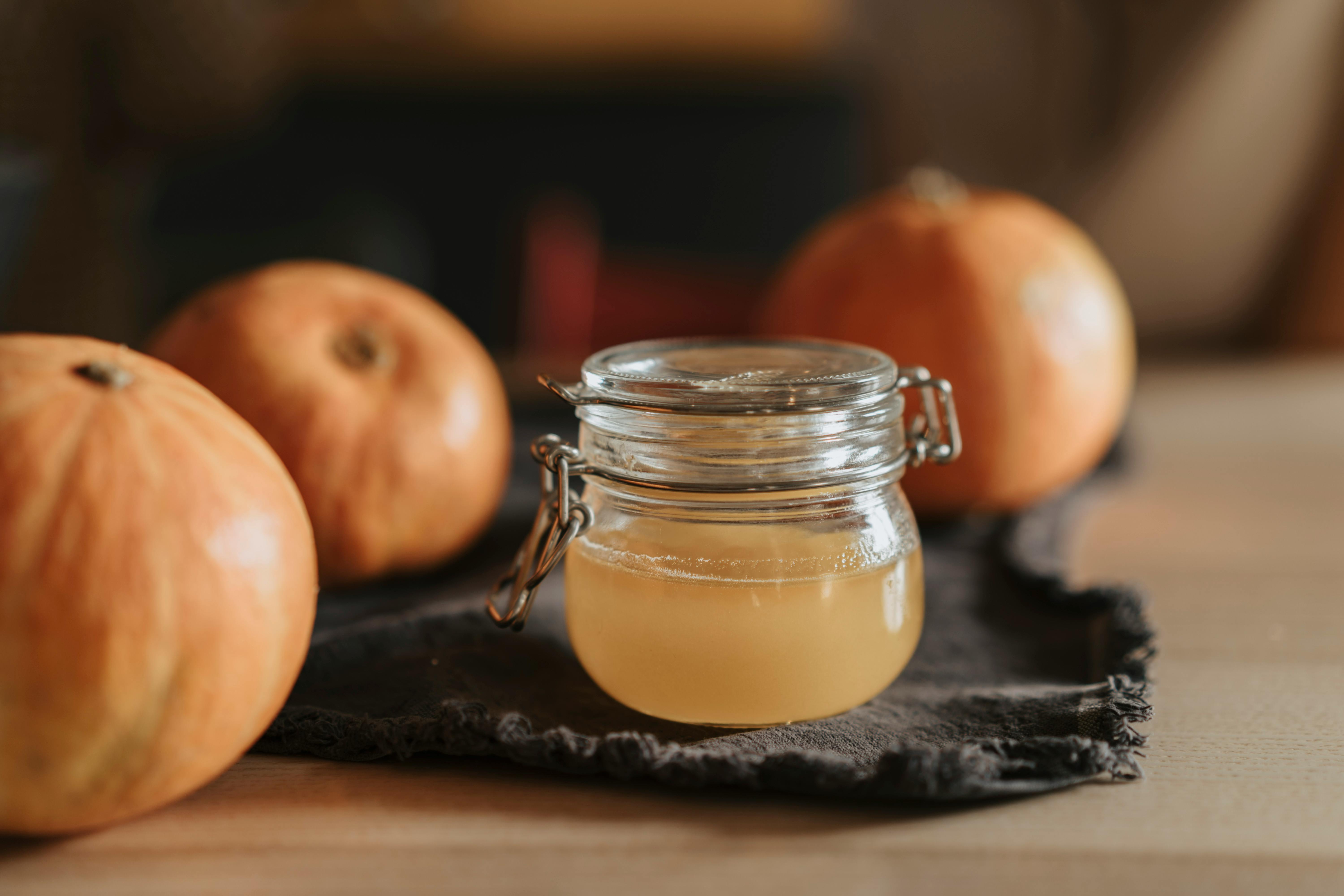
Apple cider vinegar
The "mother" culture — acetate-driven glycemic control, postprandial glucose reduction, and the Mother of Vinegar microbiome.
In 1 minute
What does it provide? Acetic acid (acetate — a direct short-chain fatty acid, the same end product the gut bacteria produce from fiber; energy substrate for butyrate-producing bacteria), apple-derived polyphenols (chlorogenic acid, quercetin, phloretin — antioxidants), and in the raw form a live "mother" culture (Acetobacter + yeast cellulose matrix). It reduces post-meal glucose and insulin responses.
How much? 1–2 tablespoons (≈ 15–30 ml) daily, diluted in 200–250 ml water, 5–10 minutes before a meal. Johnston 2004 RCT (T2DM, n=29): 20 ml apple cider vinegar with a high-carb meal produced a 64% lower postprandial insulin response. Kondo 2009: 12 weeks of 15–30 ml/day produced 1.2–1.7 kg weight loss. In salad dressing daily without limit.
When to avoid? Insulin or sulfonylurea therapy without close monitoring (additive hypoglycemia); active GERD flare, erosive esophagitis or gastric ulcer (acid irritation); gastroparesis (further slows gastric emptying); potassium-wasting diuretics or digoxin + chronic high-dose vinegar (hypokalemia — Lhotta 1998). Always diluted (1:10), with a straw — to avoid tooth enamel erosion. Detailed condition-specific contraindications (kidney disease, osteoporosis, children) in the section below.
Vinegar is one of the most ancient fermented foods — it appears automatically alongside every wine culture, because the Acetobacter bacteria that enter wine from the air oxidize the alcohol in it into acetic acid ("spirit-lost wine"). Vinegar-wine vessels have been found in Egyptian tomb finds (3000 BCE); Hippocrates (400 BCE) prescribed it as a medicine for cleaning wounds, for cough as oxymel with honey, and for digestive problems. According to the medieval legend of the "Four Thieves' Vinegar," during the plague epidemic in Marseille four looters became invulnerable to the disease by regularly consuming spiced vinegar — the recipe survives in French folk medicine to this day.
Apple cider vinegar specifically spread from the American colonial tradition in the 17th–18th centuries: hard cider was the staple drink of the New England colonies, and the soured leftovers served as an effective preservative and folk remedy. Bragg's raw, unfiltered, "mother"-containing apple cider vinegar has been a commercial product in the USA since the 1910s. In Hungarian cuisine, fruit vinegars (apple, pear, grape) are traditionally essential to winter pickling and meat broths. 21st-century clinical research began with the insulin-sensitivity study of Johnston and colleagues (2004), which provided the first RCT-level evidence of the postprandial glucose-reducing effect in T2DM patients. Since then dozens of small RCTs have examined it — the evidence is consistent, but the effect size is moderate. (PubMed, Diabetes Care)
🔬 Scientific Background
The main bioactive component of apple cider vinegar is acetic acid (5–6%), one of the body's most fundamental metabolites: in acetate form it enters the citric acid cycle, but already at the site of absorption in the gut — particularly in the small intestine — it produces significant metabolic effects. Acetate is also the main SCFA end product of fiber fermentation by the gut microbiome — meaning that vinegar consumption bypasses this dependent fermentation step and provides a direct acetate substrate.
The mechanisms of postprandial glucose reduction are multifold: (1) slowing gastric emptying (vagus-mediated), (2) reducing intestinal glucose absorption (via inhibition of disaccharidase activity), (3) improving insulin sensitivity in muscle tissue via AMPK signaling. In the classic Johnston et al. (2004) RCT, type 2 diabetic and insulin-resistant patients showed a 64% lower postprandial insulin response after 20 ml apple cider vinegar with a high-carbohydrate meal. Mitrou (2015) later confirmed and quantified this.
In the longer term, Kondo (2009) in a Japanese 12-week RCT found that 15–30 ml/day of apple cider vinegar produced 1.2–1.7 kg weight loss compared to placebo — modest but significant. Khezri (2018) observed improvement in liver values in NAFLD patients.
The "mother" (mother culture) is the gelatinous, cloudy sediment of unfiltered live vinegar: a cellulose matrix with Acetobacter aceti, Komagataeibacter xylinus, and Saccharomyces cerevisiae cultures. By itself it is not a classic probiotic (CFU counts are small in commercial servings), but it provides a live microbiome matrix. Pasteurized, filtered vinegar does not contain this — most clinical studies were actually done with plain, filtered vinegar, meaning the effect is dominantly the acetic acid function, not the "mother."
At the microbiome level, acetate provides direct energy substrate for butyrate-producing bacteria (Faecalibacterium prausnitzii, Roseburia) via the so-called "cross-feeding" phenomenon. The chlorogenic acid content, as a polyphenol, is Bifidobacterium-increasing.
The polyphenol content (chlorogenic acid, quercetin, phloretin) comes from the apple origin and provides an antioxidant + anti-inflammatory matrix — although the concentration is significantly lower than in fresh apples or apple juice.
- + High-carbohydrate meal (rice, bread, pasta): this is the most striking clinical effect — 1–2 tbsp diluted vinegar 5–10 min before the meal reduces the postprandial glucose peak by 20–30% even in healthy people.
- + Olive oil in salad dressing: classic Mediterranean, polyphenol synergy; fat aids absorption of fat-soluble polyphenols.
- + Honey (oxymel) for sore throat, cough: traditional, since Hippocrates — 1 tsp honey + 1 tsp vinegar + warm water.
- + Souring soups and stews: traditional Hungarian "souring" (at the end of goulash, potato stew) for flavor complexity + digestion support.
- + Fiber-rich diet: the combined action of the body's own microbiome acetate production + external acetate gives an additional SCFA response.
- + Gentle souring of bone broth: the vinegar helps leach collagen amino acids from bone (Mediterranean and traditional Far Eastern pattern).
- Undiluted, directly on teeth: chronic tooth enamel erosion. ALWAYS dilute, ideally drink with a straw, then rinse with water.
- High dose on an empty stomach (> 2 tbsp undiluted/diluted): esophageal irritation, reflux flare, nausea are possible.
- Insulin or sulfonylurea (gliquidone, gliclazide, glimepiride) together with strict glucose control: additive glucose-lowering effect → hypoglycemia risk. Glucose monitoring, possible dose adjustment.
- Digoxin + high-dose vinegar long-term: theoretical hypokalemia-mediated digoxin toxicity risk.
- Potassium-wasting diuretic (furosemide, hydrochlorothiazide) + chronic high-dose vinegar: additive hypokalemia.
- Active esophageal or gastric ulcer: local acid irritation.
- Pill in esophageal stasis (bisphosphonate — alendronate, ibandronate): additive esophageal irritation.
- NSAID + vinegar on empty stomach: gastric irritation is superimposed.
- Active GERD (reflux disease) flare, erosive esophagitis: paradoxically HELPS some (on the low-gastric-acid hypothesis), WORSENS others — individual test, carefully, diluted.
- Gastroparesis (including in diabetic autonomic neuropathy): vinegar further slows gastric emptying → bloating, early satiety, nausea.
- Severe hypokalemia or predisposition to it (Bartter's, Gitelman's syndrome, chronic diuretic use): chronic high doses may further lower potassium (case report: Lhotta 1998 — hypokalemia + osteoporosis after 8 years of large daily apple cider vinegar doses).
- Thin tooth enamel, erosive caries, during orthodontic treatment: even diluted, regular consumption can cause erosion. With a straw + post-rinse / toothpaste.
- Esophageal stricture, achalasia, eosinophilic esophagitis: to be avoided.
- Infant, young child (< 4 years): minimal amounts in food OK; therapeutic use not recommended.
- Severe kidney failure: an individual consideration due to potassium and acid-base balance.
- Osteoporosis (in individual cases): chronic extreme doses (> 4 tbsp/day for years) are a theoretical risk — average dietary amounts are completely safe.
- Pregnancy and lactation: dietary amounts are safe, therapeutic high doses not recommended.
Daily serving (therapeutic): 1–2 tablespoons (15–30 ml) diluted in 200–250 ml water, 5–10 min before a meal, 1–2× daily.
Preparation patterns:
1. Pre-meal shot: 1 tbsp apple cider vinegar + 200 ml water + ½ tsp honey (optional). 5–10 min before a high-carbohydrate meal. With a straw, followed by a water rinse.
2. Salad dressing (classic Mediterranean): 3 tbsp extra virgin olive oil + 1 tbsp apple cider vinegar + 1 tsp mustard + salt, pepper + ½ crushed garlic clove. The most common, most natural dosing.
3. Morning "switchel": 1 tbsp apple cider vinegar + 1 tsp honey + ½ tsp grated ginger + 250 ml water/soda. Traditional American refresher.
4. Souring bone broth: 1 tbsp apple cider vinegar in the cooking water, for improved collagen and mineral leaching from the bones.
5. Meat marinade: apple or grape vinegar + olive oil + spices — the acid tenderizes the meat and reduces HCA formation during cooking.
6. Base for fermented vegetable pickles: souring cucumber, pepper, onion (spicy Hungarian traditional).
"Mother" selection: raw, unfiltered product stored in a dark bottle (Bragg, local small-batch producer). Consume the sediment after shaking.
Storage: in a dark, cool place. Years even after opening (self-preserving due to acidity). The "mother" may continue to grow at the bottom of the bottle — it is not spoiled, usable.
Tooth and esophageal protection: ALWAYS dilute, ALWAYS with a straw, rinse with water afterward or eat neutral food (cheese, bread). Don't brush teeth right away (softened enamel is more vulnerable), wait 30 minutes.
What not to do: don't drink undiluted. Don't hold in the teeth. Don't dose to a child in therapeutic doses. Don't combine with strict glucose-control medication without medical monitoring.