


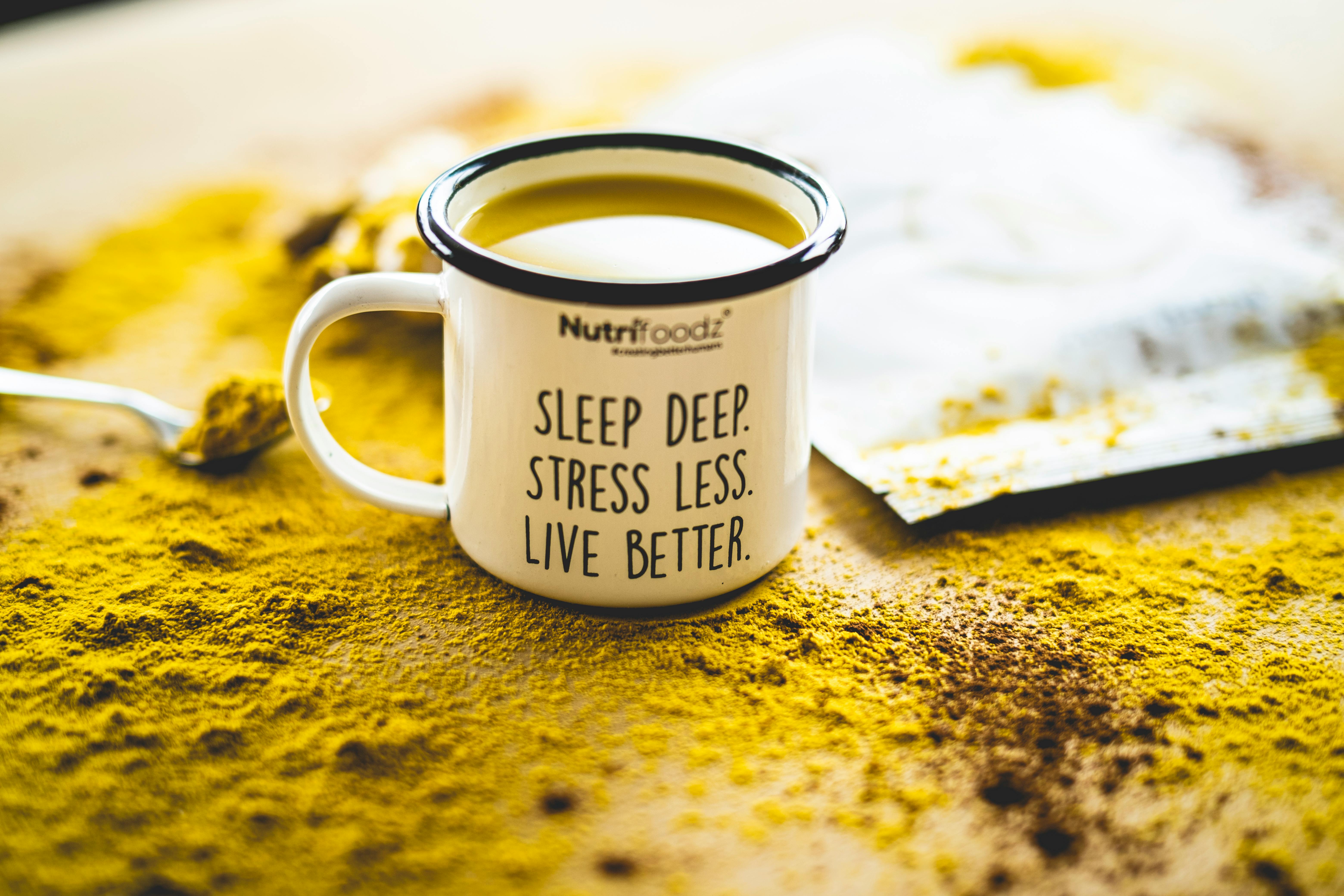
Golden milk
The Ayurvedic renewal of "turmeric latte" — curcumin + piperine + fat for bioavailability boost.
In 1 minute
What does it provide? Curcumin (turmeric's yellow polyphenol, NF-κB inflammation inhibitor, 60–100 mg/cup) together with piperine (the alkaloid of black pepper, which inhibits curcumin glucuronidation and efflux pumps) and fat (micelle formation into the intestinal lymph) — in Shoba's 1998 human study, piperine increased curcumin bioavailability 20×. Gingerol (ginger) is anti-inflammatory; tryptophan (from milk) is a serotonin precursor → sleep support. Daily 2016 meta-analysis (osteoarthritis): 500–1500 mg curcumin/day for 8–12 weeks produced knee pain reduction similar to ibuprofen.
How much? 1 cup (250 ml) plant or animal milk + ½ tsp turmeric (≈ 1.5 g) + a pinch of pepper + 1 tsp coconut oil/ghee, as an evening ritual or after training. Heat slowly to 70–75 °C (curcumin degrades faster above 75 °C); add honey only after cooling below 40 °C.
When to avoid? Gallstones, biliary obstruction, acute pancreatitis (turmeric increases bile secretion), anticoagulant therapy (warfarin, clopidogrel, aspirin — curcumin is a mild platelet inhibitor), 2 weeks before planned surgery, severe iron-deficiency anemia (curcumin binds iron in vitro), during pregnancy in extract-capsule form (a culinary spice amount is safe).
Golden milk's Sanskrit name is "Haridra Ksheera" — "turmeric milk" — and appears in the classical texts of Ayurveda as early as around 1500 BCE. In the northern regions of India (Punjab, Rajasthan), it was traditionally consumed as a winter illness preventer, cold reliever, and post-exercise recovery drink. Grandmothers made it with buffalo or cow milk and ghee; they rubbed it on the knees of active children, gave it by the spoonful to babies with colds. Western wellness culture discovered it in the 2010s; vegan cuisine reimagined it with coconut, almond, and oat milk versions. Today the "golden latte" is a standard café menu item from Sydney to Stockholm. In Hungary, it has been spreading since 2018; a characteristic evening, sleep-supporting ritual.
🔬 Scientific Background
#### Active-substance profile (per cup recipe)
- Curcumin (from turmeric) — 60–100 mg - Piperine (from black pepper) — 5–10 mg → 2000% bioavailability boost (Shoba 1998) - Gingerol, shogaol (from ginger) — anti-inflammatory - Eugenol (from coconut milk, if you use coconut) — antimicrobial - Tryptophan (from milk) — serotonin and melatonin precursor, sleep support - Cinnamaldehyde (from cinnamon, if you add it) — blood-sugar stabilizer
#### Clinical studies (regarding curcumin)
Shoba et al. 1998 human crossover study: 20 mg piperine increased curcumin bioavailability by 2000% (Planta Medica 64(4):353-356).
Daily et al. 2016 meta-analysis of 8 RCTs (osteoarthritis): curcumin/turmeric extract 500–1500 mg/day × 8–12 weeks reduced knee pain, similar to ibuprofen (Journal of Medicinal Food 19(8):717-729).
Lopresti et al. 2014 double-blind, placebo-controlled study in depressed patients: 1000 mg curcumin/day for 8 weeks significantly reduced depressive symptoms (Journal of Affective Disorders 167:368-375).
Detailed clinical evidence: see the [Chapter 91 — Turmeric](../15_szekcio_fuszerek/15-15-kurkuma.md) chapter.
#### Mechanics of the golden milk recipe
1. Fat component (plant milk, coconut oil, ghee) → curcumin micelle formation, lipid-soluble transport into the intestinal lymph. 2. Piperine → P-glycoprotein inhibition, UGT-glucuronidation inhibition → curcumin is not conjugated, remains active. 3. Heat → curcumin partly converts to non-toxic dehydrocurcumin, which is also bioactive. 4. Tryptophan → 5-HTP → serotonin → melatonin (logical as an evening recipe).
- Evening ritual: instead of TV/screen, slowly savored.
- After training: recovery effect, for joint complaints.
- Mixed into morning porridge — alternative use.
- Add honey only after cooling below 40 °C — Ayurvedic principle (hot-heated honey is "toxic" — from a modern bioactive standpoint: HMF formation).
- Anticoagulant drugs (warfarin, clopidogrel, aspirin) — curcumin has a mild platelet aggregation–inhibiting effect; high doses may increase bleeding risk.
- High iron intake — curcumin can bind iron in vitro; not recommended for iron-deficient individuals alongside an iron-rich diet.
- Cow's milk (if you are lactose-sensitive) — switch to a plant alternative.
- Gallstones, biliary obstruction — turmeric increases bile secretion.
- 2 weeks before planned surgery — increased bleeding risk.
- Severe iron-deficiency anemia — avoid around mealtimes.
- Acute gallstone attack, acute pancreatitis.
- In pregnancy, safe at culinary spice amounts; large extract preparations to be avoided.
- "Any milk has the same effect." — PARTIALLY. The fat ratio matters — low-fat oat milk is less effective than full coconut milk.
- "Hottest is best." — Curcumin degrades faster above 75 °C; 70–75 °C is optimal.
- "Pepper burns the stomach." — The pinch of pepper in the recipe (≈ 0.5 g) is not a clinically irritating dose.
Classic recipe (1 cup)
Ingredients:
- 250 ml plant milk (coconut or oat cream recommended due to high fat content)
- ½ tsp turmeric powder (≈ 1.5 g)
- 1 tsp freshly grated ginger OR ¼ tsp ginger powder
- 1 pinch (≈ 0.3 g) freshly ground black pepper
- 1 tsp coconut oil OR ghee (not absolutely necessary for piperine synergy, but improves curcumin transport)
- Optional: pinch of cinnamon, cardamom, clove
- Sweetener: 1 tsp honey or maple syrup (only into the drink cooled below 40 °C!)
Steps:
1. Over low heat (DO NOT boil!), warm the plant milk to 70–75 °C.
2. Add turmeric, ginger, pepper, coconut oil.
3. Whisk continuously for 5 minutes — emulsifies the fat-soluble curcumin into the milk.
4. Take off the heat; 3–5 min rest for the active substances to release.
5. After cooling below 40 °C, add the honey.
6. Drink slowly, savoring.
Optimization tips
- Fresh turmeric root (if available) gives more intense aroma but a weaker powder concentrate; multiply by 2.
- Coconut milk – oat milk combination (50/50) — creamy texture, balanced fat profile.
- For an evening drink, keep it caffeine-free (avoid cocoa powder added to it).
Storage
Freshly made is best. Store leftovers refrigerated for max. 24 hours in a sealed jar; shake before warming.
References
[1] Shoba G, Joy D, Joseph T, et al. (1998). Influence of piperine on the pharmacokinetics of curcumin in animals and human volunteers. Planta Medica, 64(4):353-356.
[2] Daily JW, Yang M, Park S (2016). Efficacy of turmeric extracts and curcumin for alleviating the symptoms of joint arthritis: a systematic review and meta-analysis of randomized clinical trials. Journal of Medicinal Food, 19(8):717-729.
[3] Lopresti AL, Maes M, Maker GL, et al. (2014). Curcumin for the treatment of major depression: a randomised, double-blind, placebo controlled study. Journal of Affective Disorders, 167:368-375.
[4] Hewlings SJ, Kalman DS (2017). Curcumin: a review of its effects on human health. Foods, 6(10):92.
[5] See [Chapter 91 — Turmeric](../15_szekcio_fuszerek/15-15-kurkuma.md) for detailed evidence.