


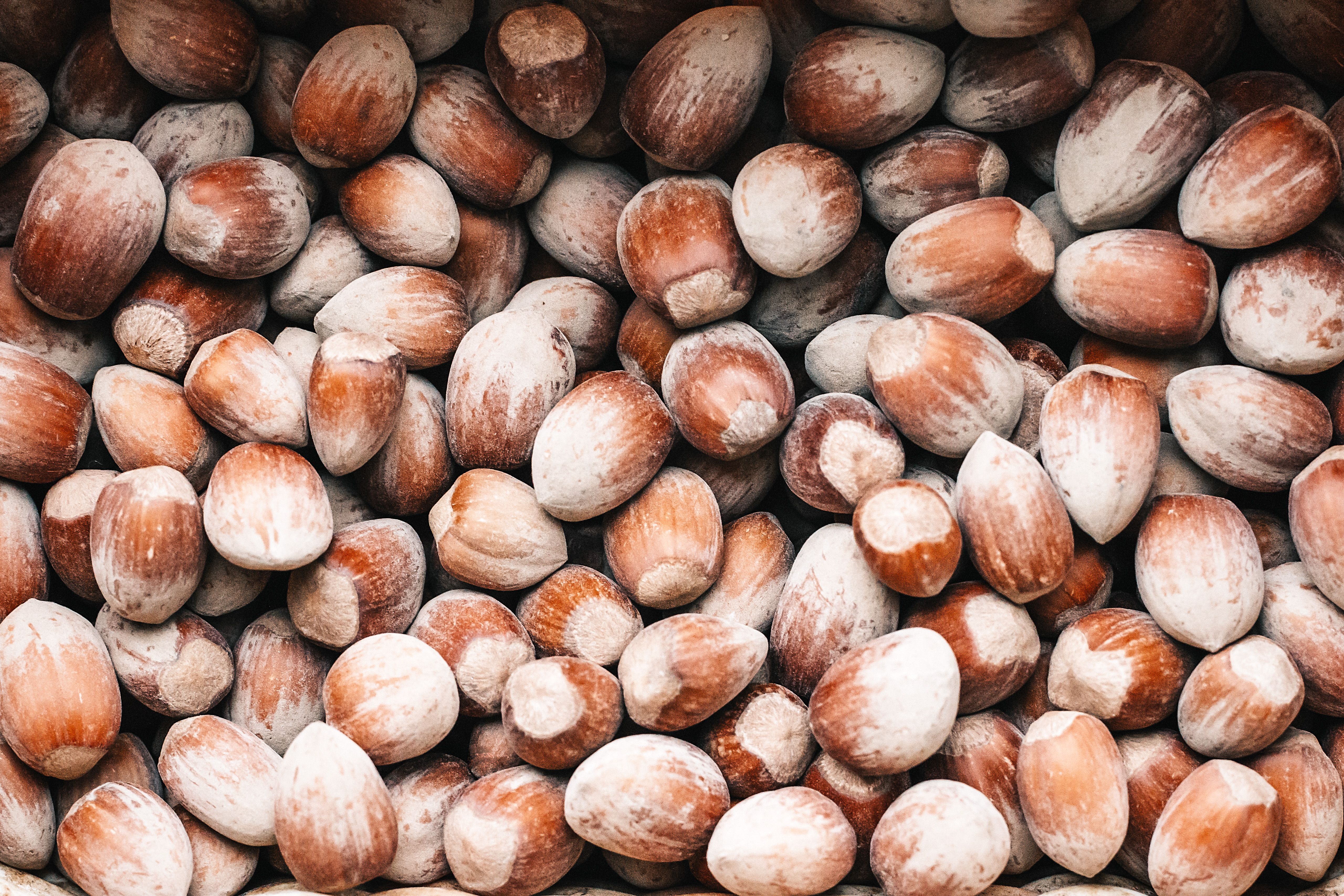
Hazelnut oil
The high-smoke-point nut oil — oleic-acid dominant, fine hazelnut aroma, and a frying-friendly choice.
In 1 minute
What does it provide? Two different oils under one name — both with high oleic acid (MUFA — monounsaturated fat, lowers LDL cholesterol). Peanut oil (Arachis, peanut/groundnut): refined, neutral-aromatic, high-smoke-point (≈ 230 °C) cooking fat — 48% oleic, 32% linoleic. Hazelnut oil (Corylus, European hazelnut): premium, cold-pressed, intensely aromatic salad oil — 75–80% oleic acid, vitamin E (γ-tocopherol), and proanthocyanidins.
How much? For frying, 1–2 tbsp refined peanut oil per day (wok, deep frying at 180 °C, replace after 2–3 uses); hazelnut oil ½–1 tbsp raw in salad dressing or on roasted vegetables. Tey 2015 RCT: 40 g hazelnuts per day reduced LDL — the oil fraction alone has a weaker effect (no fiber).
When to avoid? Peanut or hazelnut allergy (Arachis/Corylus — virgin oil is absolutely contraindicated, anaphylaxis risk; even refined is to be avoided per FDA); acute pancreatitis or severe cholestasis (fat restriction); allergen-sensitive environments (school, daycare — contamination risk). Avoiding stacked omega-6 intake (choose olive instead) in the detailed condition-specific section.
The peanut (Arachis hypogaea) was domesticated in South America, in Bolivia and Peru, around 3500 BCE; Portuguese-Spanish colonizers spread it to Africa, India, and China in the 16th–17th centuries. "Groundnut oil" became a culinary staple of 19th-century colonial India and China, and at the beginning of the 20th century George Washington Carver popularized it in the US as a multifunctional agricultural product.
European hazelnut (Corylus avellana), by contrast, is native to Mediterranean and Eastern European forests — in Piedmont and southern France (Périgord) it was traditionally pressed in small batches with stone mills. The "nougat" (hazelnut-honey) tradition and the Cuneo PDO hazelnut made it famous in Italy. The late-20th-century Nutella globalization (Ferrero, Piedmont) brought worldwide hazelnut demand.
From the mid-20th century, peanut allergy emerged as a public-health problem: it has shown dramatic growth in the US since the 1990s (Sicherer 2010, J Allergy Clin Immunol). The "LEAP study" (Du Toit 2015, NEJM) brought a prevention breakthrough: early (from 4–11 months) introduction significantly reduces peanut allergy development — this rewrote infant-feeding recommendations directly. Refined vs. virgin peanut oil allergen content is a separate topic: during refining, allergen proteins (Ara h 1, Ara h 2) are largely removed, but the virgin version is dangerous for allergic individuals.
🔬 Scientific Background
Cardiometabolic benefits of whole hazelnut and peanut consumption are well documented. Jiang et al. (2002, JAMA) in a prospective cohort linked high peanut consumption to reduced type 2 diabetes risk in women. Kris-Etherton et al. (1999, 2008) meta-analyses link whole nut consumption to a more favorable lipid profile and lower CHD risk. Peanut-oil-specific RCTs are smaller; consistent with whole-nut evidence, Kris-Etherton et al.'s (1999, AJCN) meta-analysis shows that high-MUFA peanut intake in place of saturated fat delivers consistent LDL and CHD risk reduction.
Hazelnut side: Tey et al. (2015, Eur J Clin Nutr) and Mateos et al. (2018, Nutrients) documented LDL reduction and improved endothelial function with 40 g hazelnut consumption per day. Hazelnut polyphenols (proanthocyanidins, ellagic acid precursors) partly transfer into the oil during cold pressing.
Heat stability is key: refined peanut oil has good oxidative stability due to its high MUFA content and antioxidants, stable even at high smoke point (> 230 °C) — ideal for frying, wok, and deep-frying. The virgin/cold-pressed version has a lower smoke point (~160 °C) and is more aromatic, suitable only raw. Hazelnut oil's cold-pressed form is around 160 °C, refined ~220 °C.
Peanut allergy prevention: LEAP study (Du Toit 2015) randomized 640 high-risk infants to early (4–11 months) peanut introduction vs. avoidance: an 81% relative risk reduction in the early group by age 5. This rewrote WHO and AAP recommendations.
At the microbiome level there is no direct nut-oil RCT; whole nut and peanut consumption give mixed data on SCFA producers (Fitzgerald 2021, Nutrients). The isolated oil fraction has a modest microbiome signal due to lack of fiber.
- + Asian wok / stir-fry (refined peanut oil): classic Chinese/Thai/Sichuan fat — stable at high heat, neutral aroma.
- + Deep frying (tempura, fried potato, chicken): restaurant favorite due to high smoke point and reusability.
- + Hazelnut oil + red-wine vinegar dressing: for autumn-winter green salad, roasted beet, goat cheese — with Dijon mustard.
- + Hazelnut oil + cocoa + sugar: Piedmont-style Nutella-like chocolate desserts, pastries.
- + Cold-cooked pasta + hazelnut oil + Parmesan: for the virgin version's aroma.
- + Roasted vegetables (winter squash, beet) + hazelnut oil: drizzled on the finished plate.
- Expensive hazelnut oil for frying: pointless — the delicate aroma evaporates, polyphenols decompose. Only raw, on salad.
- In allergen-sensitive environments (family with children, school, daycare, airplane): peanut oil poses contamination risk — the virgin version especially.
- Stacked with other omega-6-rich oils (sunflower, sesame, corn): peanut oil's omega-6:3 ratio is ~30:1, so stacking further worsens the ratio.
- As a substitute for a healthy diet on its own: the whole nut (fiber + polyphenol + oil) is always more valuable than the isolated oil.
- Peanut allergy (Arachis): life-threatening anaphylaxis risk. Virgin / cold-pressed peanut oil is absolutely contraindicated. Refined peanut oil is largely free of allergen proteins (FDA, EFSA), but complete avoidance is safest.
- European hazelnut allergy (Corylus) or general tree-nut allergy: hazelnut oil is contraindicated.
- Acute pancreatitis: fat-restriction phase.
- Severe biliary obstruction, cholestasis: fat malabsorption issue.
- Stacked omega-6 intake with cardiovascular risk: if the diet is already sunflower/sesame oil-dominant, avoid peanut oil — choose a Mediterranean olive-based pattern.
- Infancy under 4 months: introduction per LEAP protocol only from 4 months, with allergist consultation for high-risk infants.
Daily serving: 1–2 tablespoons within the total fat budget.
Preparation pattern:
1. Refined peanut oil for frying: preheat wok/pan, only then add oil, quick high-heat cooking.
2. Hazelnut oil for salad dressing: 1 tbsp hazelnut oil + 1 tbsp red-wine vinegar + ½ tsp Dijon mustard + freshly cracked pepper → shake together.
3. Deep frying: refined peanut oil at ~180 °C, 5–7 minute cycles; replace after 2–3 uses.
Smoke points:
- Refined peanut oil: ~230 °C — wok, deep frying
- Virgin/cold-pressed peanut oil: ~160 °C — only raw
- Refined hazelnut oil: ~220 °C — high heat possible, but a waste
- Virgin hazelnut oil: ~160 °C — exclusively raw, on salad
Classic patterns:
- Cantonese stir-fry: refined peanut oil + broccoli + beef + ginger + soy
- Thai pad thai: refined peanut oil + rice noodles + egg + peanut + lime
- Tempura: refined peanut oil at 180 °C, light batter, quick frying
- Piedmont salad dressing: hazelnut oil + balsamic + Dijon mustard
- Nutella-style chocolate cream: hazelnut paste + hazelnut oil + cocoa + sugar
Storage: in a dark place, sealed. Virgin hazelnut oil — refrigerated, 6 months. Refined peanut oil — room temperature, 12 months.
Buying: always check the Latin name on the label — "Arachis hypogaea" (peanut) or "Corylus avellana" (European hazelnut). Asian grocery = peanut oil; gourmet store or French/Italian import = hazelnut oil.
What not to do: don't fry in hazelnut oil. Don't be confused about allergen status — virgin peanut oil is off-limits for allergic people. Don't mix hazelnut and peanut products in one kitchen in an allergen-sensitive household.