


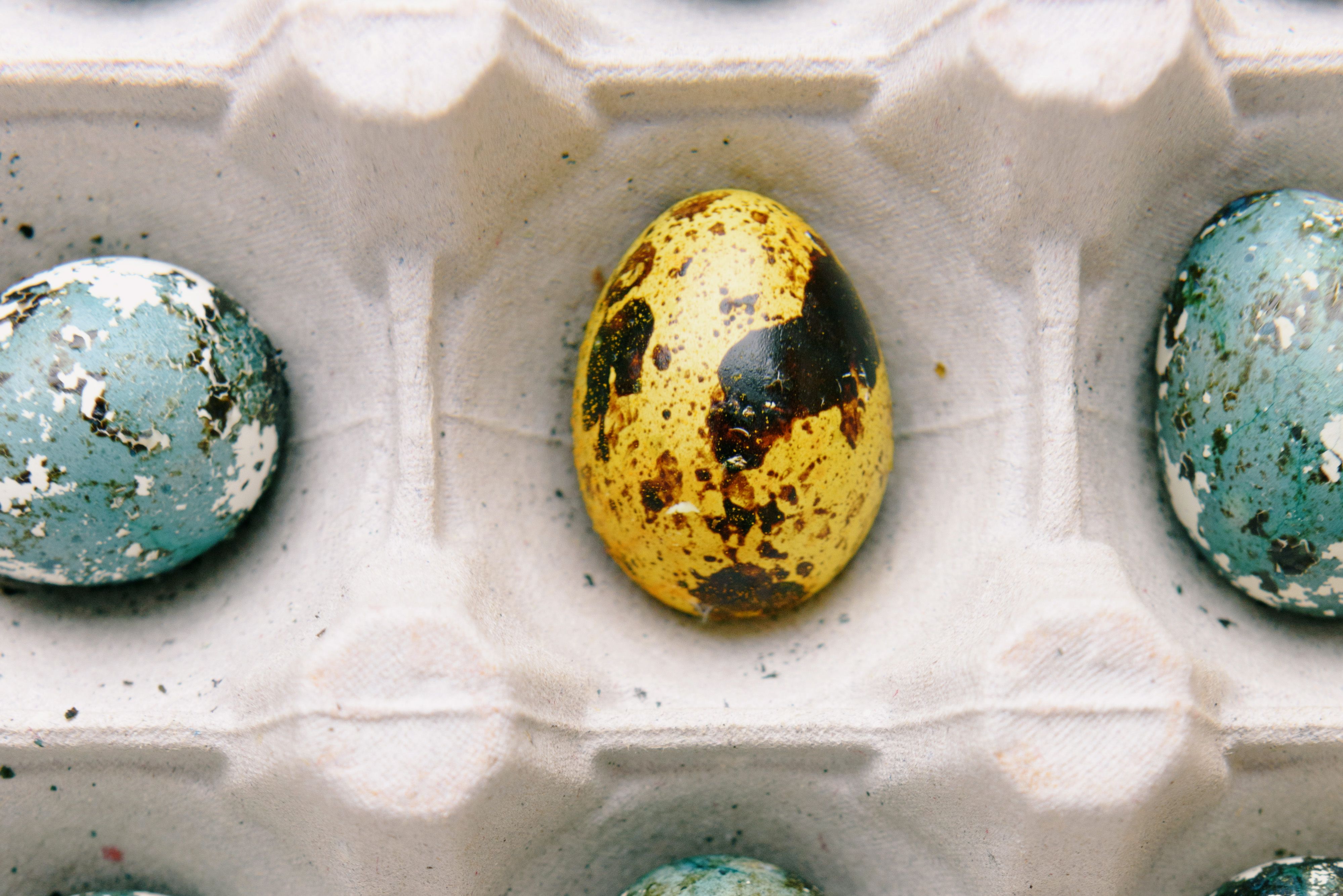
Quail egg
The "allergy-tolerance" mini egg — a higher concentration of micronutrients and the traditional "tonic" role.
In 1 minute
What does it provide? A concentrated micronutrient package in small servings: per unit mass, 1.5–3× more B1 (thiamine), B2 (riboflavin), iron, and phosphorus than chicken egg (USDA). High lecithin ratio (phospholipid — cell membrane component) and ovomucoid protein fraction. Small French studies (Truffier 1979, Bruttmann 1995) reported moderate allergic rhinitis symptom reduction, but no robust meta-analysis exists.
How much? 4–6 quail eggs ≈ 1 chicken egg in mass. 4–8 per day is acceptable for healthy adults. 1 quail egg ≈ 10–12 g, about 1.5 g protein.
When to avoid? Confirmed chicken egg allergy (cross-reaction likely — Gal d 1–4 homologs; only try after medical testing); pregnancy, immunosuppression, infants <1 year, and elderly in raw/soft form (Salmonella — choose pasteurized); with Levodopa treatment in the same meal (protein transporter competition — time them separately); uncontrolled hypercholesterolemia (≈ 850 mg cholesterol/100 g). Detailed contraindications in the dedicated section.
Quail egg consumption in East Asia (Japan, China, Korea) is several thousand years old: a staple of imperial cuisine. Domestication of Coturnix japonica began in Japan in the 12th century, and by the mid-20th century industrial quail farming had developed — a small, fast-maturing bird with high egg-laying rates (300 eggs/year).
In Western gastronomy quail egg appeared as a luxury item, but in the 21st century the "alternative egg" trend (allergy, micronutrient concentration) and high-end (Michelin) cuisine popularized it. Clinical literature published small studies in allergy (Truffier 1979, French group), asthma, and rhinitis models with modest evidence — the classic marketing claims ("cures allergies") are overstated.
🔬 Scientific Background
The quail egg (≈ 10–12 g) per its weight gives a more concentrated micronutrient profile than the chicken egg: per 100 g, 1.5–3× more B1, B2, iron, phosphorus, vitamin K. Absolute quantity is small, however (1 quail egg only ≈ 1.5 g protein), so it does not quantitatively replace the chicken egg.
The largest portion of clinical literature is on quail-egg-based "immunomodulation": small French studies (Truffier 1979, Bruttmann 1995) report the ovomucoid fraction may alleviate allergic rhinitis and asthma symptoms. The evidence is weak, based on small-n studies, and extending it to commercial "quail egg capsule" preparations leads to overstated claims. Modern meta-analyses are missing.
On egg allergy cross-reactivity: main chicken allergens (Gal d 1 ovomucoid, Gal d 2 ovalbumin, Gal d 3 conalbumin, Gal d 4 lysozyme) have homologs in quail egg — cross-reaction likely but NOT 100%. Some chicken-egg-allergic patients tolerate quail egg (Caubet 2011, IUNS), but do NOT try without medical testing.
Cholesterol: per 100 g, quail egg has slightly more (≈ 850 mg) cholesterol than chicken egg (≈ 380 mg) — but consumption volume is lower, so practical relevance is similar (see chicken egg chapter for cholesterol myth debunking).
Salmonella risk is similar: raw quail egg is to be avoided in immunocompromised, pregnant women, and children. The shell is smaller and more fragile — commercial quality control is stricter.
- + Green leafy salad + olive oil: classic high-end combination, lutein synergy.
- + Sushi rice (micro-format): Japanese tradition places raw quail yolk on sushi — a pasteurized alternative is recommended.
- + Avocado toast mini format: complete breakfast in mini-serving form.
- + Asparagus, artichoke: classic French menu with quail egg cooked in butter.
- + Baby spinach + tomato: carotenoids with fat bioavailability boost.
- Raw quail egg + immunosuppression: salmonella risk — use pasteurized form.
- Lots of saturated fat (butter, bacon): quail egg omelet with bacon is the same combined CVD risk matrix.
- Levodopa + high protein: transporter competition — time them separately.
- Iron supplementation: yolk phosvitin iron chelation — separate by ≥ 2 hours.
- Raw egg + biotin sensitivity: avidin binds biotin (resolved by cooking).
- Confirmed chicken egg allergy: NOT automatically safe. Medical testing (skin prick, specific IgE, double-blind oral provocation) needed to determine quail egg tolerance. Some patients tolerate it, others do not.
- Salmonella risk: pregnancy, immunosuppression, infant (under 1 year), elderly — raw/soft quail egg to be avoided.
- Gout flare: moderate purine — in moderation.
- Childhood allergen introduction: quail egg is NOT a hypoallergenic alternative for infants — classic allergen-introduction protocol concerns chicken egg.
Daily serving: 4–8 quail eggs for healthy adults (matches the mass of about 1–2 chicken eggs).
Preparation patterns:
1. Soft-boiled (1.5–2 min, in-shell): classic high-end format, creamy yolk.
2. Hard-boiled quail egg (3–4 min): for salad, table snack.
3. Pan-fried quail egg on mini-burger / canapé: quick, aesthetic format.
4. Whisked into omelet (8–10 / person): unusual texture, micronutrient concentrate.
Classic patterns:
- Salade Lyonnaise miniature version: quail egg + frisée + bacon + balsamic
- Japanese "uzura no tamago" sushi: raw quail yolk on gunkan sushi (pasteurized alternative)
- Cold appetizer: salt-cured quail egg on a pickle
- Asparagus + poached quail egg + hollandaise
Storage: refrigerated 3–5 weeks at 4 °C. Shell damage speeds spoilage.
What not to do: don't give raw to children under 1 year; don't leave at room temperature; don't believe it is a "hypoallergenic alternative" for confirmed chicken egg allergy.