
Bee pollen
The "complete amino acid package" — rutin, quercetin, and the classic regeneration tradition.
In 1 minute
What does it provide? Complete plant protein (20–25%, with all 8 essential amino acids), flavonoids (rutin, quercetin, kaempferol — antioxidants, vascular protectors), B-complex vitamins (especially B1, B2, B5, B6, folate), and carotenoids. Because of small dosing (10–20 g), it is a SUPPLEMENT, NOT a complete protein source (20 g pollen ≈ 4 g protein, less than 1 egg). Winther 2005 Danish RCT: 12 weeks of pollen extract reduced menopausal hot flashes.
How much? 1–2 tbsp (≈ 10–20 g) per day, fresh, cold — sprinkled into yogurt, kefir, smoothie, or muesli. Never in hot drinks or food above 70 °C (B-vitamin and enzyme degradation). With a history of pollen allergy: first dose only under medical supervision, with an EpiPen on hand.
When to avoid? Pollen allergy in any form (ragweed, grasses, birch, Compositae — anaphylaxis risk: oral exposure can cause more severe symptoms than airborne, Mansfield 1996); bee-sting allergy; active asthma (especially pollen asthma); infant < 1 year (botulism spore risk, as with honey); pregnancy and breastfeeding (insufficient data); atopic background (start with a small dose); iron tablet at the same time (flavonoid chelation — separate by 2 hours).
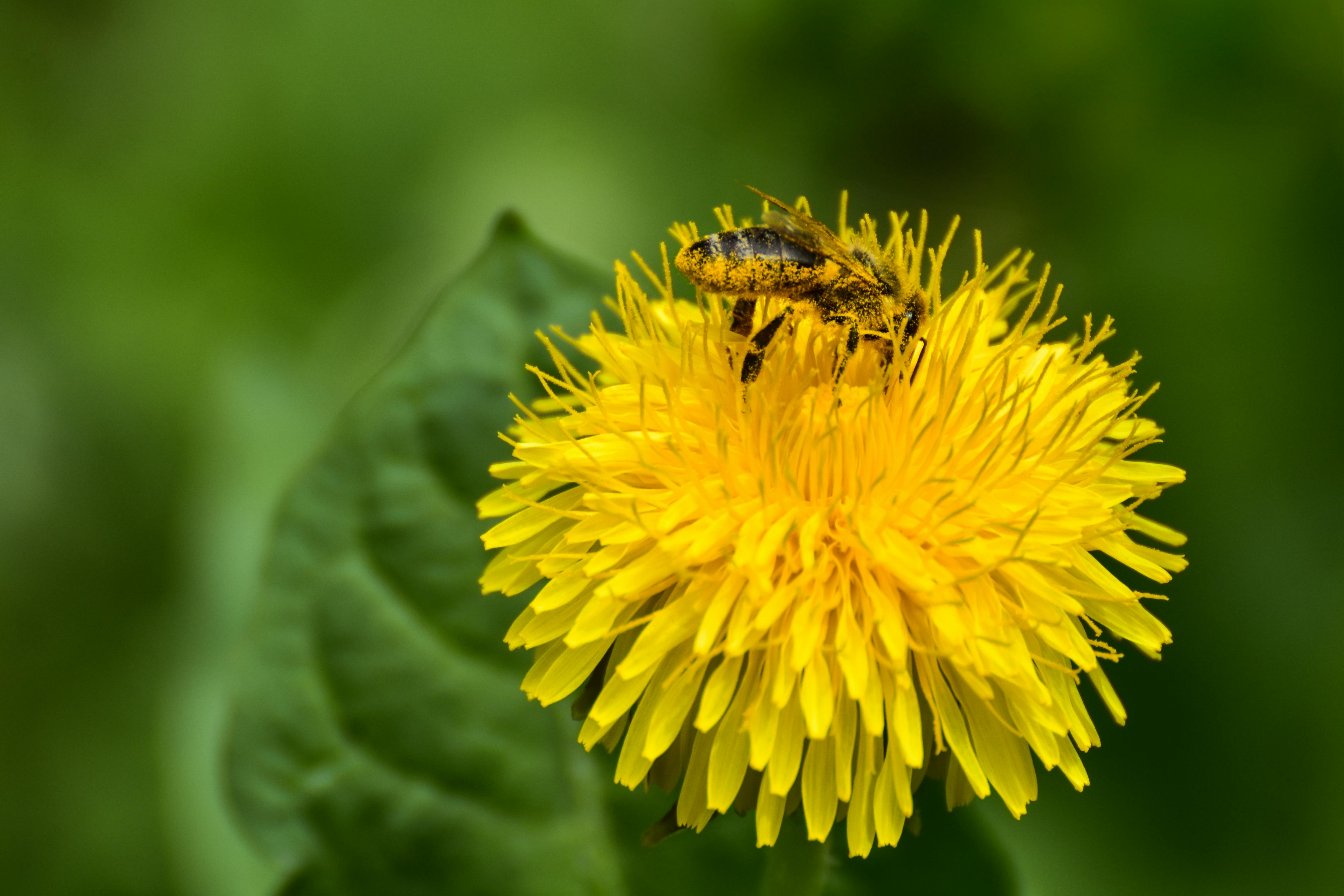
Bee pollen (hive pollen, bee bread) is the flower pollen bees bring into the hive, carried in "baskets" on their hind legs and pre-fermented in the hive with beeswax-derived enzymes (= "bee bread" / Perga). Greek, Roman, and Chinese imperial writings mention it as "food of the gods" — inaccurately, since Greek-Roman ambrosia is more symbolic.
It appeared in mid-20th century Olympic sport marketing: the Finnish long-distance runner Paavo Nurmi, the "Flying Finn" (nine-time Olympic champion, 1920–1928), and later Eastern European Olympic teams (1970s–1980s) reportedly used it as a performance enhancer — clinical evidence is modest. The 1990s alternative nutrition movement (Sjogren, Hahnemann) elevated it to a "superfood." Modern human RCTs give moderate evidence for menopausal symptoms, immunomodulation, and wound healing.
🔬 Scientific Background
Bee pollen composition: 20–25% protein (all 8 essential amino acids present), 25–40% carbohydrate, 5–7% fat (small omega-3 and omega-6), 3–5% water, 2–5% mineral, polyphenols (rutin, quercetin), B-complex vitamins (especially B1, B2, B5, B6, folate), carotenoids, enzymes.
Pollen intake is in small total doses (10–20 g/day), so the "single nutrient source" role is unrealistic — it is more a rank-supplement than main source.
Clinical studies at moderate evidence level: - Menopausal symptoms (hot flush): Winther (2005, Danish RCT) showed 12-week pollen extract reduced hot flashes — replication is incomplete. - Sport performance: showed NO significant improvement vs. placebo (Steben 1978, classic negative RCT). - Wound healing (local): small studies show faster burn and diabetic wound healing. - Antioxidant status: plasma TAC elevation in small studies. - Immunomodulation: in vitro and animal data promising, human evidence modest.
The "superfood" / "contains every nutrient" / "natural multivitamin" marketing claims are overstated — small daily dose limits clinical significance. For example, 20 g pollen ≈ 4 g protein, less than the protein content of 1 egg.
Pollen allergen risk is CRITICAL: anaphylaxis cases are documented even in pollen-allergic patients who otherwise tolerate the pollen by other routes (Cohen 1979, Mansfield 1996). There is a difference between airborne vs. oral pollen exposure.
Botulism risk: bee pollen, like the honey matrix, can contain Clostridium botulinum spore contamination — TO BE AVOIDED in infants under 1 year.
- + Yogurt or kefir in the morning: classic prebiotic-probiotic-pollen matrix.
- + Berry smoothie: antioxidant synergy.
- + Honey + bee pollen + propolis "beekeeping pack": marketing trend; evidence examines them individually.
- + Seed-fiber muesli: complementary macronutrient matrix.
- + Green smoothie (spinach, banana): B-complex and folate synergy.
- Antihistamine at the same time, for masking anaphylactic warning signs: masks symptoms; EpiPen awareness important.
- Hot drink (tea > 70 °C): B-complex and enzymes degrade.
- High-histamine food (fermented cheese, canned fish) in histamine intolerance: additive symptoms (rare but exists).
- Iron supplementation: flavonoids iron chelation — separate by ≥ 2 hours.
- Inhaled corticosteroid in asthmatic + oral pollen: sensitization risk.
- Pollen allergy (Compositae, grasses, birch, ragweed): absolute contraindication. Oral pollen exposure can cause anaphylaxis in patients who otherwise tolerate airborne pollen.
- Bee allergy: absolute contraindication.
- Asthma (especially pollen asthma): anaphylaxis risk.
- Atopic dermatitis, atopic background: cautiously, start with small dose.
- Infant under 1 year: botulism risk (as with honey).
- Pregnancy, breastfeeding: sparse human data — to be avoided.
- Chronic liver/kidney disease: cautiously (extremely large doses may overload).
- History of anaphylaxis for any cause: EpiPen should be available when starting; first dose under medical supervision.
Daily serving: 1–2 tablespoons (10–20 g) in the morning.
Preparation patterns:
1. Mixed into yogurt: the most common; cold consumption preserves B-complex vitamins.
2. Into a smoothie (blender): easy, the flavor blends.
3. Sprinkled on muesli: classic breakfast matrix.
4. Mixed into honey: "bee pollen honey" matrix — dry storage.
Classic patterns:
- Morning "activating" bowl: yogurt + bee pollen + berries + walnut + oats
- Smoothie banana + spinach + bee pollen: complete micronutrient
- Muesli matrix with bee pollen: prebiotic + pollen
Storage: refrigerated 6 months, frozen 1–2 years. Not recommended at room temperature (B-vitamin degradation).
What not to do: don't add to hot drinks (B-vitamin degradation); don't give to infants (botulism); don't start with a large dose in pollen allergy history; don't rely on it as your only vitamin source.