


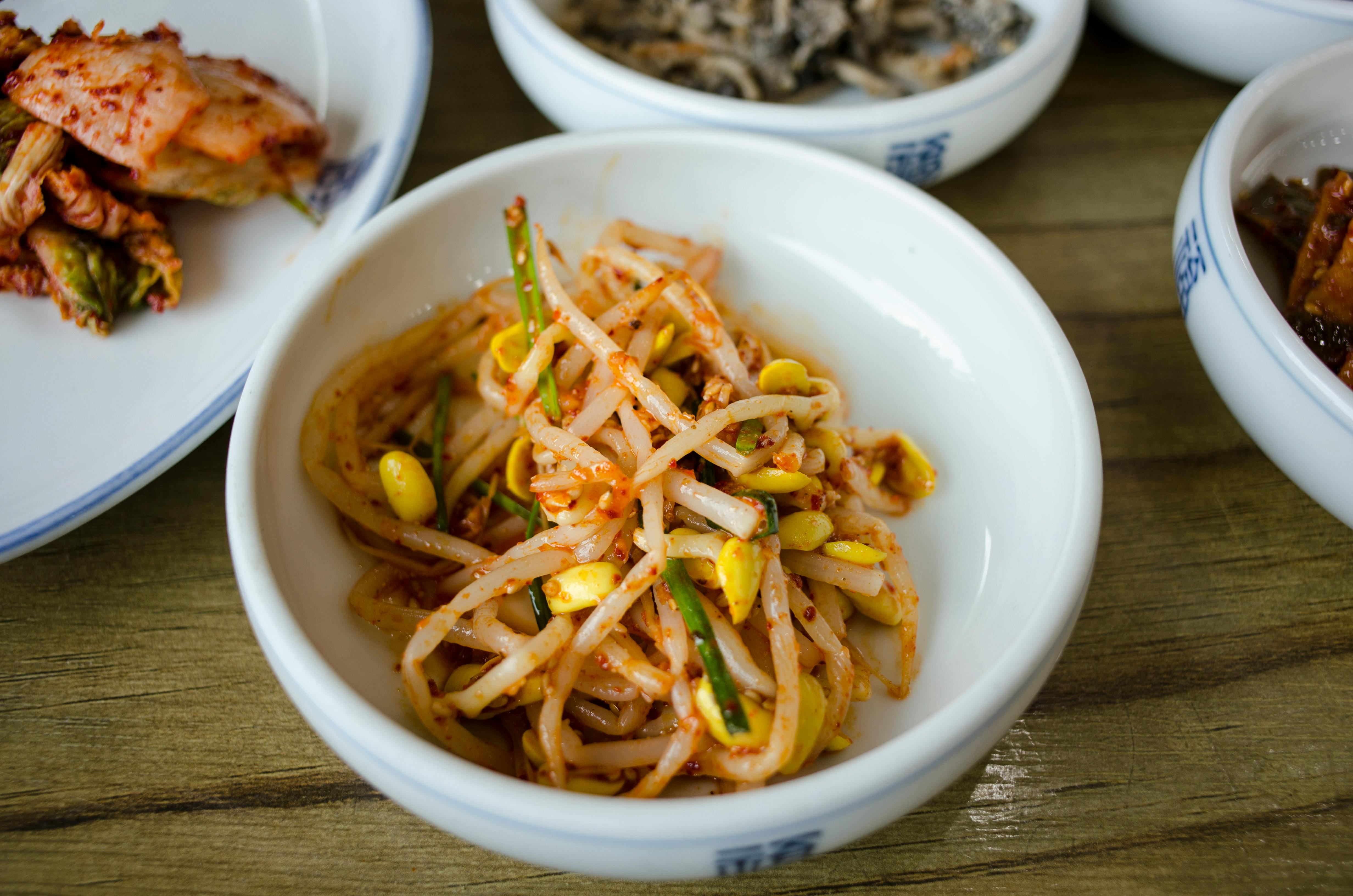
Mung bean sprout
The balancing sprout — folate bomb, cooling effect, and an Asian kitchen staple.
In 1 minute
What does it provide? Easily digestible protein (3 g/100 g), high water content, low calorie, vitamin C, folate, and chlorophyll-rich sprout. A staple of Chinese cuisine, also FODMAP-low.
How much? 50–150 g sprouts per meal (1–3 handfuls). The main component in traditional Asian dishes.
When to avoid? Salmonella/E. coli risk: in pregnancy or immunocompromised state, only home-sprouted with verified hygiene. Legume allergy (rare).
Mung bean (Vigna radiata) was domesticated in the India-Southeast Asia region around 1500 BCE, and is a staple of Chinese, Vietnamese, and Korean cuisine. The "mung bean sprout" ("bean sprout") is documented in Chinese cuisine at least since the Tang dynasty (618–907) — the most common sprout variety in the world, the most produced in industrial quantities.
It arrived in European gastronomy with the 19th–20th century waves of Asian immigration; today it is an integral part of wok dishes, noodle soups (pho, pad thai), and spring rolls. Modern nutrition science has investigated sprouting-induced antinutrient reduction and vitamin C de novo synthesis since the 1990s — mung bean is one of the most common models.
🔬 Scientific Background
Dry mung bean is a moderate protein source (24 g/100 g dry), but with significant trypsin inhibitor, phytate, and raffinose (GOS) — these are antinutrients and FODMAP irritants. Biochemical processes during sprouting (Kim 2017; El-Adawy 2002): - Trypsin inhibitor: 30–60% decrease - Phytate: 30–50% decrease (improves iron, zinc bioavailability) - Raffinose/stachyose (GOS): 40–70% decrease (FODMAP reduction) - Vitamin C: DE NOVO synthesis during sprouting — dry mung bean has zero vitamin C; 3-day sprouts have 13–15 mg/100 g - Folate: rises - Complete protein digestibility: improves
Clinical evidence is moderate: - Glycemic profile: low glycemic index, long satiety (Wani 2017). - Antioxidant status: Kim (2017) reports consumption raises plasma TAC. - CVD risk markers: small studies show LDL-lowering effect (Yao 2018), replication needed.
Microbiome matrix: sprouting reduces high GOS content, so mung bean sprouts are more tolerable for IBS/FODMAP-sensitive individuals than dry mung beans. Remaining fiber (≈ 2 g/100 g) is a modest prebiotic substrate.
Microbiological safety: mung bean sprouts are also a documented source of Salmonella and E. coli outbreaks (the 2011 German EHEC O104:H4 outbreak involved a large industrial sprouting facility), but quantitatively less risky than alfalfa sprouts. The FDA warning applies to ALL sprouts — in pregnancy or immunocompromised states, raw to be AVOIDED.
Canavanine or SLE risk is NOT significant for mung bean sprouts (different from alfalfa) — this is one of the safe traditional sprout choices for autoimmune patients.
- + Wok vegetables + sesame oil: classic pad thai / lo mein matrix.
- + Lemongrass + ginger + chili: Vietnamese pho style.
- + Fresh cilantro stem + lime: Thai salad matrix.
- + Tofu or poached egg: complementary protein matrix.
- + Avocado + tahini: cold salad lane.
- + Fiber-rich rice (brown, wild): complete carb-protein.
- Hot soup > 2 min cooking: vitamin C is lost. Add at serving for benefit.
- Raw sprouts during antibiotic course: microbiological risk.
- Chemotherapy bone marrow suppression raw: absolute contraindication.
- Legume allergy: cross-reaction possible.
- Iron supplementation + large sprout doses: residual phytate chelation potential — separate by ≥ 2 hours.
- Pregnancy raw: FDA recommends avoidance — cooked safe (2 min in pressure cooker or wok).
- Immunocompromised (chemotherapy, AIDS, transplant): avoid raw.
- Infant, small child under 1 year: avoid raw.
- Elderly 65+ immunosenescent: cautious raw.
- Legume allergy (rare, often soy-peanut cross-reactivity): caution.
- Active IBS flare: despite low FODMAP, fresh large amounts may cause GI irritation — start small.
- Active gastritis or reflux: in moderation.
Daily serving: 50–150 g per meal.
Preparation patterns:
1. Wok vegetables 1–2 min (quick stir-fry): Salmonella risk reduced, vitamin C partly preserved.
2. Pho or other soup, added at the last moment: hot soup "blanches" the sprout, microbiological risk reduced.
3. Spring roll (rice paper wrap) raw: classic Vietnamese, freshly layered.
4. Salad raw: classic Southeast Asian fresh salad.
Classic patterns:
- Pad thai with mung bean sprouts: Thai staple
- Pho bo with sprouts: topping a Vietnamese beef soup
- Lo mein wok: Chinese noodle + sprouts + vegetables
- Spring roll matrix: rice paper + sprouts + carrot + tofu + peanut sauce
Storage: refrigerated in airtight container 5–7 days. Use paper towel against moisture.
Home sprouting: in a sprouter jar for 3–5 days, rinse 2× daily with clean water. Mung beans can be sprouted cheaply and safely at home.
What not to do: don't give to infants raw; don't leave at room temperature; don't believe it's a "fat-burning superfood" — part of balanced, calorie-aware eating.