


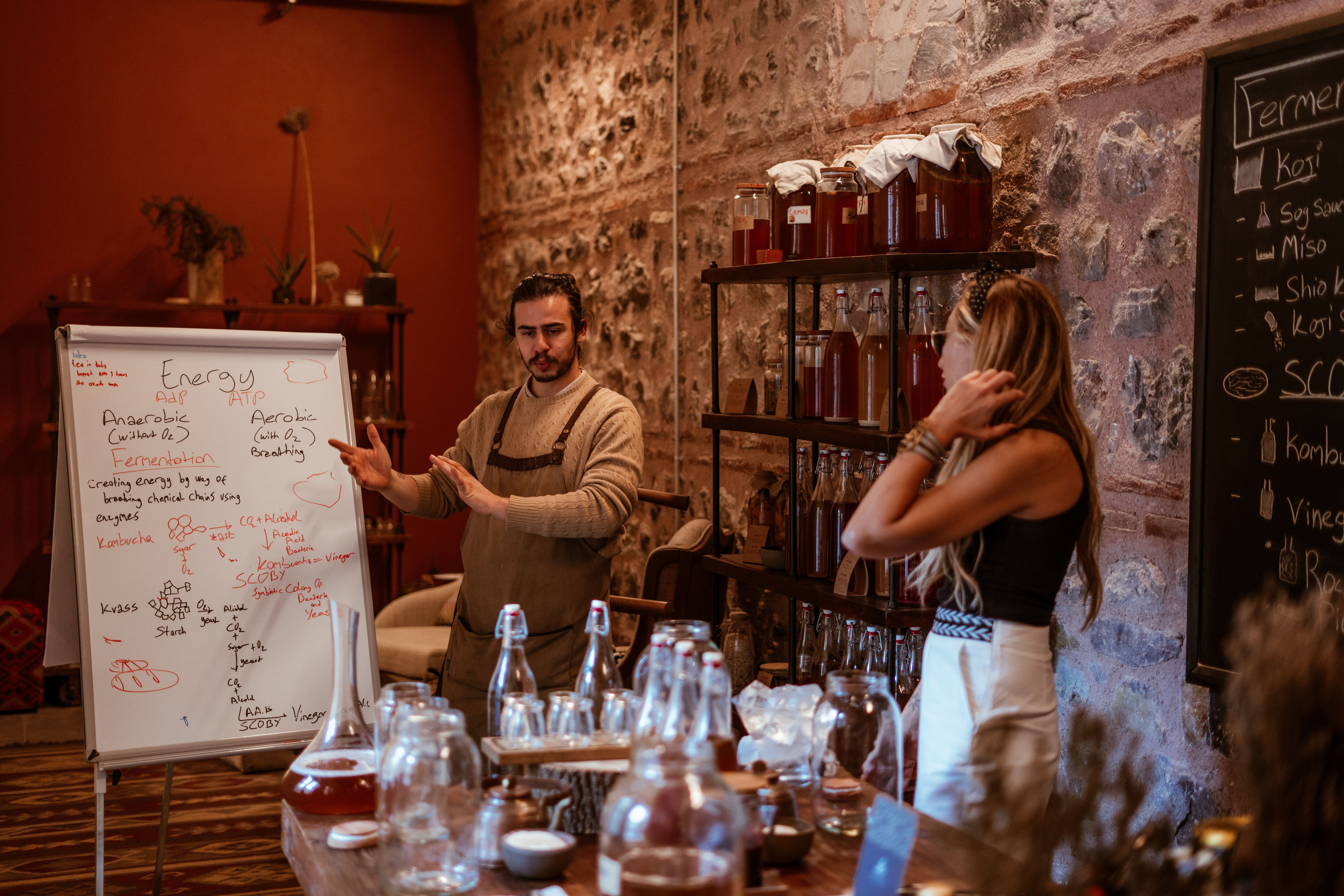
Kombucha
- Latin név
- Camellia sinensis (tea) + SCOBY (Symbiotic Culture Of Bacteria and Yeast)
- FODMAP
- 🟡 moderate (depends on sugar and fermentation degree)
- Evidence
- ★ ★ (in vitro + animal model, clinical RCT limited)
- Microbiota
- acetate + lactic acid + glucuronic acid + live microbiota; raw/pasteurized difference is critical
- What does it provide?
- Live microbiota (Acetobacter, Lactobacillus, Saccharomyces, Brettanomyces), acetate, small amounts of glucuronic acid, and tea polyphenols (catechins, theaflavins). Alcohol content is typically 0.5–3%.
- How much?
- 100–200 ml (½–1 cup) per day — start small. Drinking the full dose is NOT better than the small dose.
- When to avoid?
- Immunocompromised (chemotherapy, transplant, advanced pregnancy), strictly alcohol-free diet, MAO inhibitor (tyramine-like effect), children.
Kombucha's origins are most often linked to Manchuria and the Qin dynasty (around 220 BCE), although the exact source is debated. Legend says a Korean healer named "Dr. Kombu" brought the fermented tea to a Japanese emperor in 414 CE, and the name "kombu-cha" ("Kombu's tea") comes from there. It spread along the Silk Road through Central Asia and Russia, where as "chainyi grib" ("tea mushroom") it became a household staple by the turn of the 19th–20th century. During Soviet times, amid deep poverty and drug shortages, kombucha was a common element of folk medicine; some Soviet research institutes investigated its antibacterial and digestive-supportive effects.
The Western explosion began in the 1990s: Californian naturopathic circles, then from the 2010s the wellness and Whole Foods trend, turned it into a global drink. GT's Kombucha and other large brands' bottled forms dominate today's market. Classic home kombucha is fermented with a SCOBY (Symbiotic Culture Of Bacteria and Yeast) — a composition of Acetobacter, Lactobacillus, and Saccharomyces/Brettanomyces. Industrial bottled versions are often pasteurized (without live microbiota) and supplemented with sugared flavorings. (Wikipedia, ScienceDirect)
🔬 Scientific Background
Kombucha is fermented for 7–14 days from sweet green or black tea, sugar, and SCOBY (a symbiotic colony of acetic acid bacteria + lactic acid bacteria + yeasts). At the end of fermentation it contains acetic acid (≈ 1–3%), lactic acid, glucuronic acid, small amounts of ethanol (0.5–3%), and tea-derived polyphenols (EGCG, theaflavin), alongside live microbiota. PMC
Clinical evidence is limited, mostly building on in vitro and animal models. A 2018 12-week human pilot RCT (in diabetic patients) showed 240 ml kombucha/day produced modest fasting glucose reduction. At the microbiome level, small human interventions indicated Bifidobacterium and Lactobacillus increases and a Bacteroides ↓ shift. PMC
The claimed "liver-detoxifying" and "cancer-preventive" benefits lack robust human evidence — official regulators (EFSA, FDA) do NOT recognize such claims.
Kombucha's SAFETY profile is mixed: home-poorly-made kombucha can potentially be contaminated with pathogenic bacteria or fungi (especially Aspergillus); rare but documented severe cases (lactic acidosis, anaphylaxis) exist in limited form. The CDC investigated several deaths in 1995 associated with kombucha consumption — though causation was not proven.
- + A gentle food-paired amount with meals: ¼–½ cup with a meal — digestion support.
- + A fiber-rich diet (legumes, whole grains, vegetables): synbiotic pattern — live cultures + fermentable fiber.
- + Other fermented foods (kefir, sauerkraut, kimchi): diverse live microbiota.
- + Minimizing sweeteners: natural kombucha is mildly sweet — no need to sugar it.
- + Cold, freshly opened: maximum live microbiota.
- Alcohol-free diet (disulfiram, alcohol rehabilitation): the 0.5–3% alcohol content is relevant.
- MAO inhibitor treatment (phenelzine, tranylcypromine): theoretical tyramine-like risk — to be avoided.
- Anticoagulant with high-dose EGCG concentrate (green tea extract): theoretical additive; culinary kombucha in moderation is fine.
- During antibiotic treatment: live culture effect reduced — restart 1–2 weeks after the course.
- Iron supplementation: tannin content can chelate iron — separate in time ≥ 2 hours.
- Reflux disease, gastric ulcer: acidic pH (≈ 2.5–3.5) can worsen symptoms.
- Immunocompromised (chemotherapy, transplant, late HIV/AIDS): contamination risk — TO BE AVOIDED.
- Pregnancy and breastfeeding: generally not recommended due to alcohol content and non-pasteurized microbiota.
- Children: under 18 to be avoided due to alcohol content.
- Active gastric ulcer, severe reflux: acidic pH can irritate.
- Severe kidney disease: high potassium content and kombucha-derived organic acids can be a burden.
- Diabetes (poorly controlled): residual sugar and alcohol can cause blood glucose instability.
- Histamine intolerance: fermented drinks can be histamine-rich.
- Home-fermented kombucha of unknown cleanliness: contamination — pathogenic molds (Aspergillus) are a potential risk.
"Kombucha cures cancer." No human evidence for cancer-therapeutic or preventive effect. Some in vitro and animal model studies have shown interesting component effects, but these are FAR from clinical evidence. Do NOT replace standard oncology treatment with kombucha.
"Kombucha detoxifies." "Detox" is a marketing concept — no official evidence that kombucha removes specific "toxins." The liver and kidneys perform natural detoxification.
"All bottled kombucha contains live microbiota." No. Many commercial kombuchas are PASTEURIZED — without live microbiota, purchased only for flavors and small amounts of acetate. If you want live cultures, look for a "raw"/"unpasteurized" label, refrigerated.
"Kombucha is alcohol-free." No. Classic kombucha is 0.5–3% alcohol. "Alcohol-free" labeling only after strong fermentation control.
"Anyone can safely make kombucha at home." Partly. Clean SCOBY, clean jar, good pH control (starting pH ≥ 4), and visual inspection (mold = throw it out). Kombucha from unknown sources or poorly made at home carries a potential contamination risk.
🍳 Kitchen Protocol
Daily serving
Starter: ¼ cup (60 ml) — watch tolerance. General: 100–200 ml/day. Maximum: 350 ml/day.
Preparation pattern (home)
1. Brew strong black or green tea (2 tbsp leaves / 1 L water), then cool. 2. Add 80–100 g sugar per 1 L (the SCOBY ferments it, you don't drink it). 3. Add SCOBY + 100 ml previous kombucha (starter liquid) → 5–10 days in a covered jar (breathable, not sealed) at 20–25 °C. 4. Taste after day 5 — leave to ferment to taste. 5. Bottle, chill, serve cold.
Classic patterns
Original black tea kombucha: classic, tart-fruity.
Green tea kombucha: gentler flavor, higher EGCG.
Second fermentation (secondary): berries, ginger, turmeric, lemon — 1–3 days after bottling.
Kombucha cocktail: mocktail base (like ginger beer).
Kombucha vinaigrette: for salad dressing instead of vinegar.
Storage
Unopened refrigerated: 2–4 weeks (continued slow fermentation). After opening: 1 week refrigerated. SCOBY: refrigerated, in a "SCOBY hotel" for several months.
What not to do
Do NOT ferment in a metal jar (acetate corrosion). Do NOT consume if moldy (green/black specks on the surface — NOT normal). Do NOT give to small children. Do NOT replace water intake with kombucha (acidic pH is bad for tooth enamel in very large amounts).
📚 References (selected)
1. Jayabalan R et al. A review on kombucha tea: microbiology, composition, fermentation, beneficial effects, toxicity, and tea fungus. Compr Rev Food Sci Food Saf 2014;13(4):538–550. 2. Greenwalt CJ et al. Kombucha, the fermented tea: microbiology, composition, and claimed health effects. J Food Prot 2000;63(7):976–981. 3. Mendelson C et al. Kombucha tea and health: a critical review. Crit Rev Food Sci Nutr 2017. 4. CDC. Unexplained severe illness possibly associated with consumption of Kombucha tea. MMWR 1995;44(48):892–893. 5. Villarreal-Soto SA et al. Understanding kombucha tea fermentation: a review. J Food Sci 2018;83(3):580–588. 6. Kapp JM, Sumner W. Kombucha: a systematic review of the empirical evidence of human health benefit. Ann Epidemiol 2019;30:66–70. 7. FDA. Acid foods and acidified foods regulations (CFR 21 Part 114). 8. Monash University. Kombucha — Low FODMAP serving guidelines.