


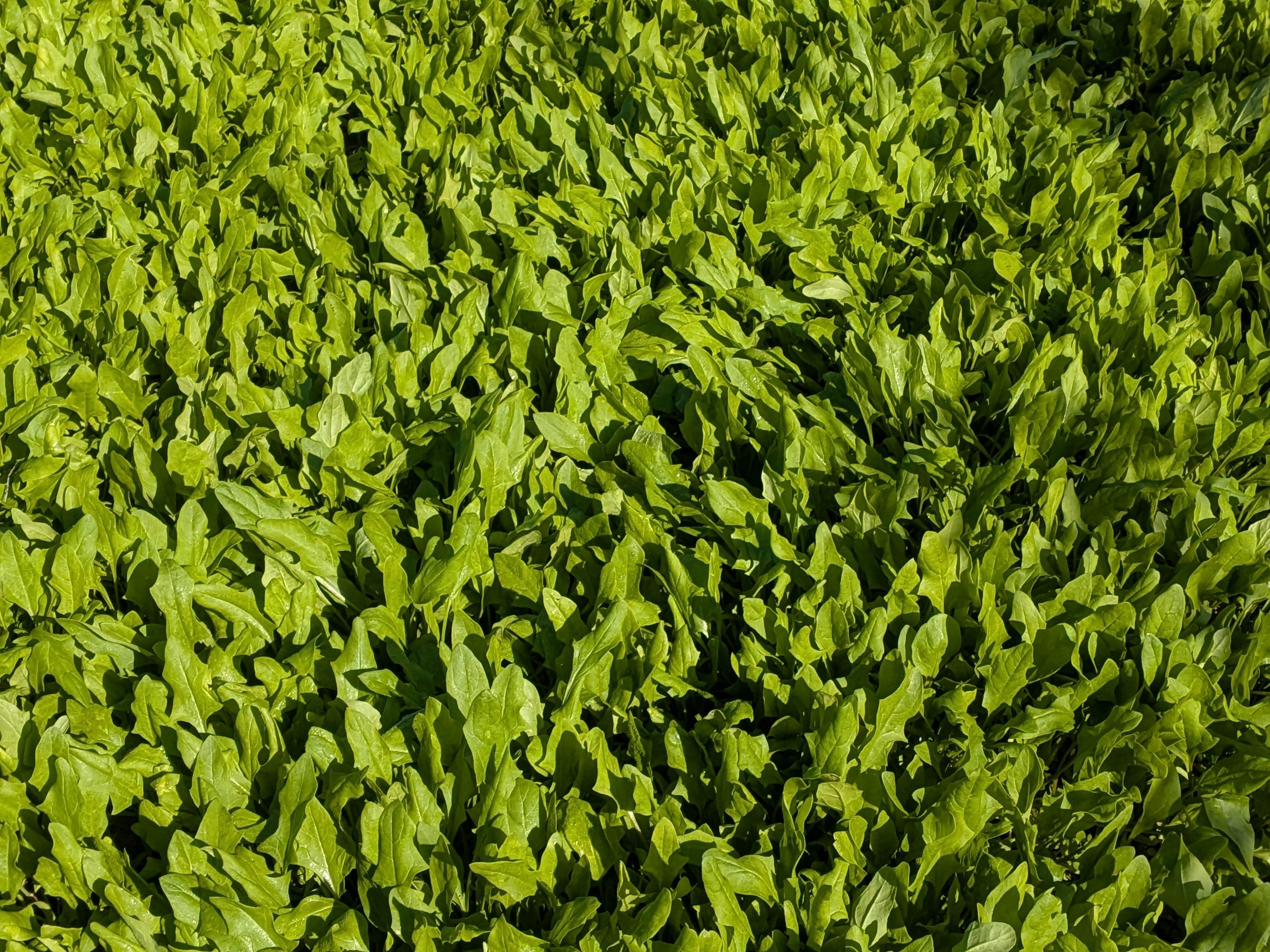
Spinach
The "Popeye paradox" — high iron with oxalate escort, lutein-zeaxanthin for the eyes, and a nitrate gateway to endothelial function.
In 1 minute
What does it provide? One of the most concentrated dietary nitrate sources (NO₃⁻, about 700–1500 mg/100 g) — oral bacteria convert it to nitric oxide (NO, a vasodilator signaling molecule), which in RCTs lowers systolic blood pressure by about 4 mmHg (Siervo 2013). Plus folate (vitamin B9, about 195 μg/100 g — methylation, pregnancy preparation) and lutein-zeaxanthin (macular-protecting carotenoids).
How much? Fresh as salad 50–100 g/serving, steamed-cooked 150–250 g/serving, weekly 3–5×. RCT-equivalent BP effect: about 250 mg nitrate/day (≈ 100 g spinach). In smoothies max 30–50 g (due to oxalate load).
When to avoid? Calcium oxalate kidney stone history or hyperoxaluria (spinach is one of the highest oxalate sources: 600–1000 mg/100 g), chronic kidney disease (CKD 3–5), warfarin at unstable dose (high vitamin K1 — INR fluctuation), infant <6 months (methemoglobinemia risk), simultaneous antibacterial mouthwash (chlorhexidine) use — kills the nitrate-reducing oral bacteria.
Spinach originates from the Persia (modern Iran) region, where it was already cultivated in the 6th century — and from there it got its name: from the Old Persian "aspanākh." The Muslim conquest brought it to Spain (8th century), then from there throughout Europe; the 12th-century Moorish "Andalusian Agricultural Calendar" already discusses it in detail. Catherine de' Medici loved it so much that after her 1533 French wedding, all spinach dishes received the "à la florentine" label — origin of the modern "florentine" culinary tradition.
In the late 19th century, a German chemist, Emil von Wolff, reportedly miscalculated spinach's iron content by tenfold — 35 mg/100 g instead of 3.5 mg/100 g — due to a slipped decimal point (the story itself is partly legend, but the rounding error is documented). The mistake was quoted for decades, and the 1929 Popeye cartoon series cemented the "spinach = iron = strength" image worldwide. The reality: spinach's iron content is moderate (≈ 2.7 mg/100 g), and the high oxalate content drastically impairs absorption — so the Popeye myth is a double error. 21st-century more robust evidence, however, validates spinach's real cardiovascular value via the nitrate-NO pathway (Siervo 2013 meta-analysis). (PMC, BBC Future)
🔬 Scientific Background
Spinach is among leafy green vegetables, alongside beetroot, one of the highest sources of inorganic nitrate. Nitrate enters enterosalivary circulation starting in the oral cavity: nitrate-reducing commensal bacteria on the posterior third of the tongue (Veillonella, Rothia, Neisseria, Actinomyces) convert it to nitrite, which in acidic stomach and tissues is reduced to nitric oxide (NO). NO is vasodilatory, blood-pressure-lowering, platelet-aggregation-inhibiting, and endothelium-protective. Siervo et al. (2013) meta-analysis showed 250 mg/day inorganic nitrate (≈ 100 g spinach equivalent) causes clinically relevant (≈ 4 mmHg) systolic blood pressure reduction. (PMC)
Folate content (≈ 195 μg/100 g fresh) is among the highest of dietary sources — critical for pregnancy preparation, hyperhomocysteinemia, and the methylation cycle. Vitamin K1 (≈ 480 μg/100 g) is important in coagulation factor synthesis and bone mineralization (osteocalcin activation), but warfarin users need to maintain stable daily intake.
The oxalate content (≈ 600–1000 mg/100 g fresh), however, is a significant "anti-nutrient": it binds to calcium, iron, magnesium, reduces their absorption, and can induce calcium oxalate stone formation in kidney stone-prone individuals. Source-specific: lower in baby spinach, higher in mature leaves. Boiling and discarding cooking water reduces soluble oxalate by 30–87% (PMC, Chai 2005).
At the microbiome level, spinach polyphenols (quercetin glucuronides, patuletin) and fiber content (≈ 2.2 g/100 g) have Bifidobacterium-increasing and SCFA-enhancing effects in human interventions. The nitrate-NO axis is oral microbiome-dependent: broad-spectrum antibacterial mouthwash (chlorhexidine) inhibits nitrate conversion and raises blood pressure — important clinical implication (Bondonno 2015).
- + Vitamin C (lemon, tomato, pepper): dramatically improves non-heme iron absorption despite the oxalate block. Fresh lemon juice on steamed spinach is the classic Mediterranean pattern.
- + Healthy fat (extra-virgin olive oil, walnut, almond): fat-soluble vitamin K1, lutein, zeaxanthin, and β-carotene absorption is optimal only with fat present. Spinach salad without fat is almost pointless.
- + Garlic, onion: synergistic antioxidant and cardiovascular effect of quercetin and sulfur-containing compounds.
- + Egg (florentine pattern): egg has high biological value protein + B12 + cysteine — perfect pair for the folate-B12 methylation cycle.
- + Fermented dairy (kefir, yogurt) as separate meal: oral and colonic microbiome support, for diversity of nitrate-reducing bacteria.
- + Boiling → discard cooking water: if oxalate-sensitive (kidney stone, low calcium), 3-5 min boiling + discard reduces soluble oxalate by 30–50%.
- Calcium-rich food in the same meal (dairy, sesame, poppy), if kidney stone-prone: the calcium-oxalate complex in the gut may partially bind and reduce absorption — BUT from a kidney stone perspective this can actually be an advantage (absorbed oxalate decreases). Clinically ambiguous: reduces kidney stone risk but may worsen calcium and magnesium status with chronic consumption.
- Iron supplementation in the same time window (≤ 2 hours): oxalate + polyphenol chelates iron — separate iron supplementation from spinach consumption.
- Antibacterial mouthwash directly before/after meal (chlorhexidine, alcohol-based): kills the nitrate-reducing oral microbiota → nitrate-NO conversion stops → BP-lowering effect ceases (Bondonno 2015).
- Warfarin in large, fluctuating doses: K1 content causes unstable INR. Doesn't need to be discontinued — needs to be kept STABLE daily intake (3–5×/week, similar amount).
- Levothyroxine (Euthyrox) simultaneous intake: the high fiber and iron/calcium content may reduce hormone absorption. Keep > 4 hours apart.
- Antacid (calcium, aluminum, magnesium-containing) directly with meals: chelation interactions.
- Calcium oxalate kidney stone history or active hyperoxaluria: spinach is one of the highest soluble-oxalate-content vegetables (≈ 600–1000 mg/100 g). During active stone formation avoid, or strictly boil + discard cooking water.
- Chronic kidney disease (CKD stage 3–5): the high potassium- (≈ 558 mg/100 g), phosphorus-, oxalate-, and nitrate burden are all problematic. Individual diet consultation mandatory.
- Long-term warfarin therapy: NOT contraindicated, but daily K1 intake STABILITY is critical — sudden large spinach dose (e.g., weekly 1× 500 g) destabilizes INR.
- Thyroid disease (Hashimoto's, hypothyroidism): moderate goitrogen content (glucosinolates in small amounts) — daily large amounts (> 300 g raw) with iodine-deficient diet poses theoretical risk. Moderate consumption is safe.
- Infant (< 6 months): high nitrate content carries methemoglobinemia risk in infants ("spinach syndrome" — Sanchez-Echaniz 2001 described). Avoid under 6 months, between 6–12 months only freshly prepared, NOT stored warm (nitrite conversion).
- Gout, hyperuricemia: spinach is moderately purine-containing — restrict during flare.
- G6PD deficiency: rarely, high-dose intake may cause oxidative stress.
- Acute diarrhea, IBD flare: high oxalate and fiber not recommended during acute flare-up.
Daily/weekly serving
Fresh as salad 50–100 g, steamed/cooked 150–250 g. Weekly 3–5×.
Preparation pattern
- Quick sauté: wide pan + 1 tbsp olive oil + 2 cloves crushed garlic, 30 sec. Add washed spinach, covered 2–3 min, stirring. Salt, freshly ground pepper, lemon drop.
- Florentine: steamed spinach + nutmeg + béchamel (optional dairy-free version with coconut milk roux). With fish, eggs, chicken breast.
- Smoothie: 30–50 g fresh baby spinach + ½ banana + 200 ml kefir/plant milk + 1 tsp flaxseed. Breakfast folate + nitrate + fiber bomb (from oxalate perspective the kefir calcium can partially bind the oxalate).
- Salad: baby spinach + grilled chicken + walnut + pear + balsamic + olive oil — classic, high folate + K1 + lutein.
- Indian palak paneer pattern: spinach + house cheese + turmeric + ginger + pepper. Combined polyphenol matrix.
Kidney stone prevention protocol
3–5 min boiling in plenty of water → discard cooking water → continue preparation. Reduces soluble oxalate by 30–50%. Along with calcium source in the same meal (yogurt, kefir, sesame).
Infant rule
Avoid under 6 months. Between 6–12 months: fresh preparation, immediate consumption, NOT warm holding, NOT reheating.
Storage
Fresh, unwashed leaf in refrigerator, perforated bag 3–5 days. Frozen (after blanching) 6–8 months. NOT warm holding > 2 hours.
What not to do
Don't leave for hours in stuffy paper bag (nitrate-nitrite conversion + spoilage). Don't wash hours before use (cell damage, oxidation).
References
[1] Siervo M et al. Inorganic nitrate and beetroot juice supplementation reduces blood pressure in adults: a systematic review and meta-analysis. J Nutr 2013;143(6):818–826.
[2] Chai W, Liebman M. Effect of different cooking methods on vegetable oxalate content. J Agric Food Chem 2005;53(8):3027–3030.
[3] Bondonno CP et al. Antibacterial mouthwash blunts oral nitrate reduction and increases blood pressure in treated hypertensive men. Am J Hypertens 2015;28(5):572–575.
[4] Sanchez-Echaniz J et al. Methemoglobinemia and consumption of vegetables in infants. Pediatrics 2001;107(5):1024–1028.
[5] Lidder S, Webb AJ. Vascular effects of dietary nitrate via the nitrate-nitrite-nitric oxide pathway. Br J Clin Pharmacol 2013;75(3):677–696.
[6] EFSA Panel on Contaminants. Nitrate in vegetables — scientific opinion. EFSA Journal 2008;689:1–79.
[7] USDA FoodData Central. Spinach, raw — FDC ID 168462.
[8] Hamblin TJ. Fake! BMJ 1981;283(6307):1671–1674.