


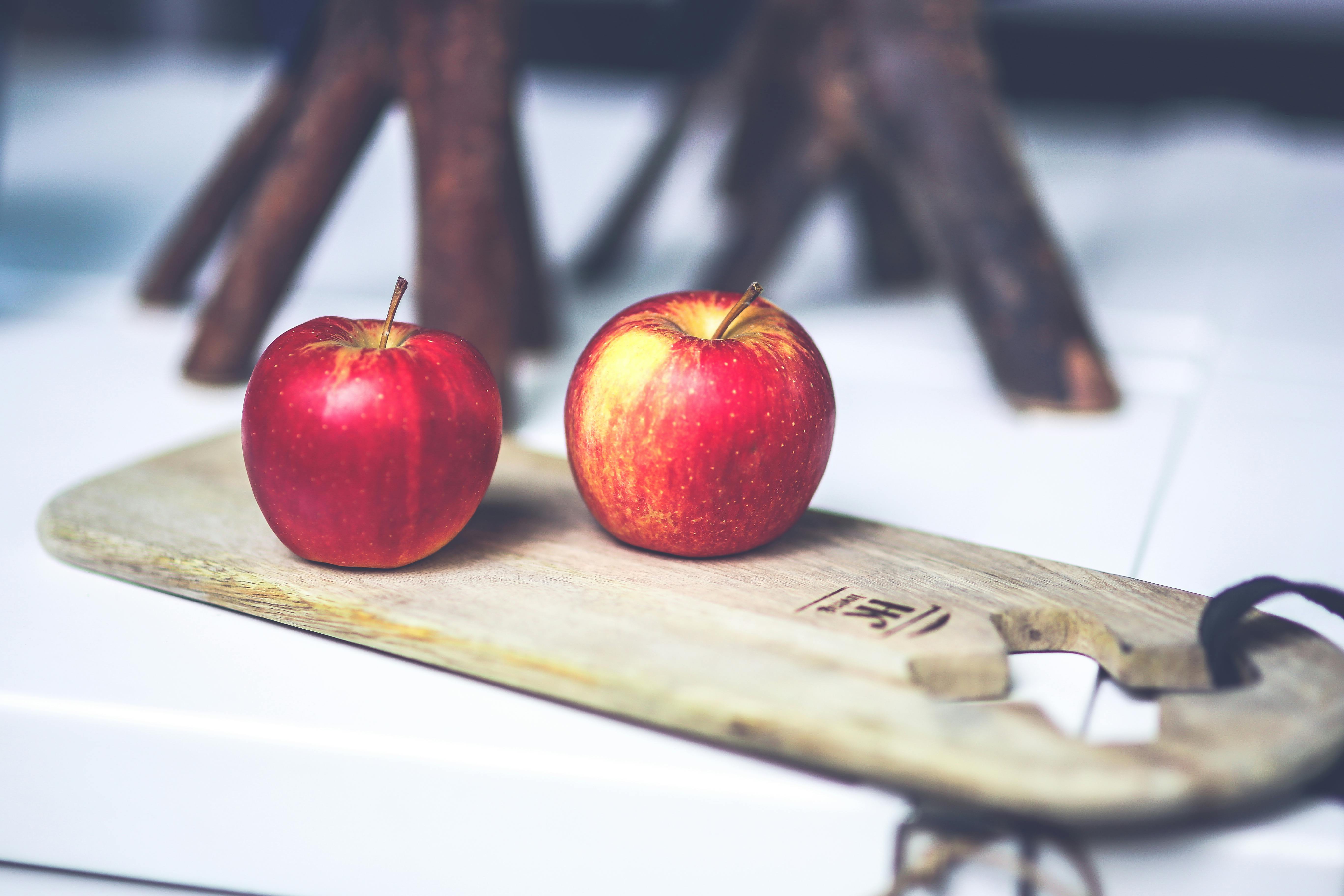
Apple
Under the "an apple a day" myth lies a true microbiome substrate: pectin and (poly)phenols together.
In 1 minute
What does it provide? Water-soluble fiber (pectin), polyphenols (chlorogenic acid, quercetin glycosides, catechins, procyanidins), and a smaller amount of vitamin C — bifidogenic, SCFA-supporting, with a moderate LDL-lowering effect.
How much? 1–2 medium apples a day with skin (≈ 150–300 g); for clinical pectin goal, 6–10 g pectin/day (EFSA claim).
When to avoid? IBS elimination phase (fructose); fructose malabsorption; Rosaceae allergy (peach/apricot cross); high-dose pectin supplement co-administered with medication (time separation recommended).
The apple's homeland is the Central Asian Tien Shan mountain range: the wild Malus sieversii forests provided the gene pool from which Silk Road caravans — with apple seeds in their saddles and bags — carried the fruit westward. According to modern genomic studies, backcrosses along the route (especially with the European M. sylvestris wild apple) shaped today's varieties. The Romans already distinguished dozens of varieties: Pliny names more than twenty apple types in his Naturalis Historia, and Columella also writes in detail about grafting techniques.
Through the quiet centuries of the Middle Ages, monastic orders — mainly the Cistercians and Benedictines — saved the varieties: the pomariums of monastery gardens functioned with carefully kept variety collections. In 17th-century France, Louis XIV's gardener, Jean-Baptiste de La Quintinie, arranged a separate apple quarter for the Sun King in the Potager du Roi at Versailles — one of his favorites was the Calville Blanc variety. American folklore's "Johnny Appleseed" (the real John Chapman) spread varieties across the Midwest at the beginning of the 19th century, and the apple has since been the leading fruit of the Northern Hemisphere — today processed products (juice, cider, vinegar, dried) have just as much cultural presence as the fresh fruit.
🔬 Scientific Background
The apple's dual microbiome matrix delivers water-soluble pectin (not digested in the small intestine, ferments in the colon) and a polyphenol fraction (chlorogenic acid, procyanidin B2, quercetin-3-O-rutinoside, epicatechin) at the same time. Pectin is selectively bifidogenic, and according to in vivo human data also supports Faecalibacterium prausnitzii and Lactobacillus groups, while causing SCFA elevation — especially acetate and butyrate increase. Most of the polyphenol fraction also reaches the colon, where the microbiota converts it into smaller phenolic acids.
According to the recognized EFSA health claim, 10 g pectin per meal reduces postprandial blood glucose elevation; 6 g pectin per day contributes to the maintenance of normal blood cholesterol levels. The classic FDA "authorized health claim" recognizes the connection between soluble fiber (including apple pectin) and CHD risk reduction. Two small randomized human interventions (Koutsos 2015; Tenore 2017) showed that daily consumption of polyphenol-rich apple varieties (Annurca, Renetta) shifts stool pH, water content, and Bifidobacterium ratio in a favorable direction in the short term — within 2–4 weeks.
The skin contains 2–6× more polyphenols and twice as much fiber as the flesh — peeling means substantial microbiome loss. Cloudy (NFC) apple juice retains all the pectin and complex polyphenols, but clarified ("clear") juice is fiber- and polyphenol-poor, and in Ravn-Haren 2013's human study showed exactly the opposite lipid effect from whole apple or pomace.
- + Whole fruit consumed with skin: the polyphenols (2–6× the amount) and the bulk of fiber are in the skin. Wash, don't peel (even for non-organic apples — a thorough scrub removes the wax coating).
- + Live culture (yogurt, kefir): synbiotic effect — pectin + Bifidobacterium combination gives a stronger SCFA response than each alone.
- + Nuts, seeds (almond, walnut, flaxseed): fat + fiber matrix mitigates the glycemic peak while improving polyphenol absorption.
- + Cinnamon (Cinnamomum verum): classic fat-friendly pairing, moderate blood-sugar synergy (small human data).
- + Oat β-glucan (oatmeal): two types of soluble fiber — broader SCFA profile and more stable fermentation.
- + Apple pomace-enriched baked goods: "invisible" fiber and polyphenol boost.
- Clarified ("clear") apple juice as a main fiber source: fiber- and polyphenol-poor, a glucose-fructose bomb — per Ravn-Haren 2013, shifts lipids in the opposite direction from whole apple.
- Prolonged, strong acidic cooking (pH ≤ 4, 30+ minutes): pectin partially hydrolyzes to fructose — for compote, watch the time.
- Iron supplementation + larger amount of polyphenol at the same time: time separation (≥ 2 hours) — polyphenols can chelate iron.
- Pectin supplement (5–10 g pectin/serving) + medication: pectin can delay absorption — take 1–2 hours after medications.
- Apple seeds in bulk: due to amygdalin content, larger amounts (≥ 1 cup of ground seeds) are toxic — in dietary amounts (1–2 apples' worth of seeds) harmless.
- IBS elimination phase (FODMAP protocol): moderate fructose content — small portion (≈ ¼ apple) can be tested for reintroduction.
- Fructose malabsorption: the fructose/glucose ratio is slightly unfavorable (more fructose than glucose) — small portion or alongside a glucose/sucrose source.
- Rosaceae allergy (peach, apricot, pear, almond): cross-reactivity (LTP, Mal d 1, Mal d 3) possible — the skin is more allergen-rich, peeling reduces OAS risk.
- Severe gastroparesis or bezoar history: raw apple high in pectin can form a phytobezoar — precooked form is safer.
- Apple-based diet (mono-diet) followed long-term: not recommended for metabolic balance — apple is part of a complete diet, not a substitute.
- Infant (under 4 months): not before solid food introduction; under 1 year, the peeled, cooked form is preferred.
Daily serving
1–2 medium apples (≈ 150–300 g) with skin, preferably as part of meals or as a snack.
Preparation pattern
- Thorough washing under running water with a soft scrubber — removes most of the wax coating and surface contamination.
- Raw, with skin: as a snack, sliced on salad, in fruit salad.
- Baked apple: 180 °C, 25–35 minutes — with cinnamon, walnut, a little honey; pectin largely retained.
- Compote/puree: cooked with skin (pass seeds through sieve), a little lemon juice — water retains the pectin.
Classic patterns
Breakfast muesli: oatmeal + grated apple with skin + walnut + cinnamon — classic β-glucan × pectin × polyphenol combination.
Apple-beet salad: julienne apple + grated beet + walnut + lemon-yogurt dressing — colorful, polyphenol-rich.
Bircher muesli: oats + grated apple + lemon juice + yogurt + almond (soaked overnight) — low glycemic, high fiber.
Baked apple with cinnamon: cored apple, filled with cinnamon + walnut + 1 tsp honey — dessert, gluten-free.
Storage
In a cool pantry 1–2 weeks, in fridge 3–4 weeks (in a closed bag, no moisture). Dried 6–12 months. Apple puree frozen 6 months. Browning is prevented by lemon juice or slightly salted water.
What not to do
Don't peel unless you have a particular reason to. Don't simmer compote 40+ minutes hot — pectin breaks down further. Don't drink clarified apple juice regularly in place of fiber — concentrated sugar, lost polyphenols.
References
[1] EFSA NDA Panel. Scientific Opinion on pectins and maintenance of normal blood cholesterol concentrations. EFSA Journal 2010;8(10):1747.
[2] EFSA NDA Panel. Scientific Opinion on pectins and reduction of post-prandial glycaemic responses. EFSA Journal 2010;8(10):1747.
[3] FDA. Health claims: soluble fiber from certain foods and risk of coronary heart disease. 21 CFR 101.81.
[4] Koutsos A et al. Apples and cardiovascular health: is the gut microbiota a core consideration? Nutrients 2015;7(6):3959-3998.
[5] Tenore GC et al. Annurca apple polyphenols influence the gut microbiota of healthy subjects. Food Funct 2017;8(5):1837-1846.
[6] Ravn-Haren G et al. Intake of whole apples or clear apple juice has contrasting effects on plasma lipids in healthy volunteers. Eur J Nutr 2013;52(8):1875-1889.
[7] Davis MA et al. Association between apple consumption and physician visits. JAMA Intern Med 2015;175(5):777-783.
[8] Cornille A et al. New insight into the history of domesticated apple. PLoS Genet 2012;8(5):e1002703.
[9] Boyer J, Liu RH. Apple phytochemicals and their health benefits. Nutr J 2004;3:5.
[10] Monash University. High and Low FODMAP foods. Monash FODMAP database.