


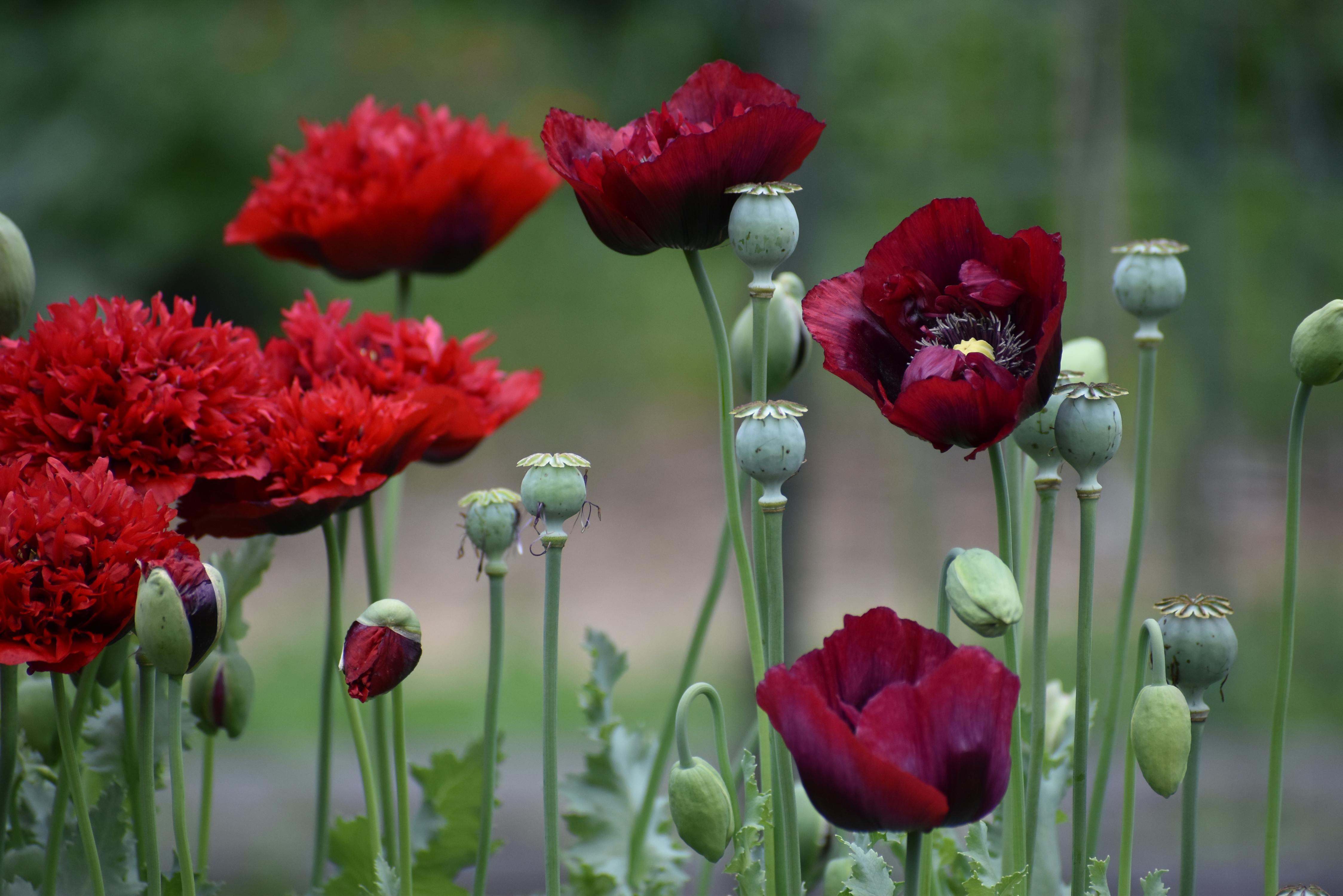
Poppy Seed
The ancient oilseed of Hungarian cuisine — high calcium bioavailability, mild fat profile, and tiny opiate-alkaloid
Poppy Seed in 1 minute
What does it provide? Outstanding calcium (≈ 1438 mg/100 g — one of the highest plant sources, along with sesame), magnesium (≈ 347 mg/100 g), linoleic acid (≈ 28 g/100 g, omega-6 PUFA), phosphorus (≈ 870 mg/100 g), and iron (≈ 9.8 mg/100 g). Poppy alkaloids (morphine, codeine, thebaine) are present in traces (≈ 4–90 μg/g depending on variety and processing — Carlin 2020 Front Chem); mature culinary seeds also have significant oxalate content.
How much? Traditional Hungarian serving: 1–2 tbsp ground poppy/serving (≈ 10–20 g), weekly 2–3× — e.g., mákos guba (poppy bread dumpling), poppy pasta, poppy roll. 100 g ground poppy provides ≈ 1400 mg calcium, with moderate-to-good bioavailability (limited by high phytate, but oxalate is lower than in spinach).
When to avoid? Opiate-screening sensitive workers (avoid 24–48 hours before drug screening — poppy gives false positive urine test), opiate-sensitive infant (large maternal poppy intake during breastfeeding → infant sedation described), active gallstones (fat), kidney stones (moderate oxalate), before planned surgery (mild bleeding tendency), allergy, during drug addiction treatment, very large amounts for young children (alkaloid toxicity).
The poppy's homeland is the eastern Mediterranean coast and the Fertile Crescent — the Sumerians cultivated it in the 4th millennium BCE and knew it as "Hul Gil" (joy plant). Ancient Egypt, Greece, and Rome used it both as an edible seed and for the opium yield — Hippocrates and Galen recommended it as a pain reliever. The species name "somniferum" ("sleep-bringing") refers to this. In medieval Europe, the poppy spread widely, especially in East-Central Europe: it became a basic element of Hungarian, Polish, Austrian, and Czech culinary tradition — poppy roll, mákos guba, poppy pasta, makowiec. In Hungarian folk symbolism, poppy is a sign of Christmas abundance and fertility. The 20th-century pharmaceutical opium cultivation is followed by strict international regulation (UN 1961 Single Convention); for culinary purposes, low-alkaloid varieties (low-morphine selections) are used — although traces are still present in these.
Scientific Background
Poppy seed is interesting from three clinically documented aspects. (1) Calcium and magnesium: poppy's calcium content (≈ 1438 mg/100 g) is one of the highest plant sources — competing with sesame and Brazil nut. Absorption studies (Weaver & Heaney 2006, Calcium in Human Health, Humana Press) show that calcium bioavailability in poppy is moderate (≈ 20–30%) — reduced by phytate and oxalate, but a significant amount in a full serving is utilized. A Hungarian poppy roll serving (≈ 30 g poppy) provides nearly 400 mg calcium — equivalent to a glass of milk.
(2) Opiate alkaloid traces: poppy contains morphine (about 1–90 μg/g), codeine (1–30 μg/g), and thebaine in traces — the Carlin et al. (2020 Front Chem) review shows the content is strongly influenced by variety, ripeness, washing, and grinding. A Hungarian mákos guba (≈ 100 g poppy) intake may provide 0.1–9 mg morphine, which is pharmacologically usually sub-threshold (therapeutic dose ≈ 10–30 mg), BUT: (a) on urine screening it gives a false positive opiate result even days after intake; (b) maternal codeine transfer into breast milk has been documented (Koren 2006 Lancet; EMA and FDA currently contraindicate codeine use during breastfeeding); (c) gargantuan amounts (kg-quantity poppy milk) can rarely cause case-report-grade poisoning. The German BfR and EFSA poppy safety positions recommend the use of low-alkaloid culinary varieties.
(3) Linoleic-acid-dominant fat profile: ≈ 28 g/100 g linoleic acid, with a more balanced (less extreme) omega-6:omega-3 ratio than sunflower seed. Poppy oil is the gentle culinary oil of French and Northern European cuisine.
At the microbiome level, poppy's fiber content (≈ 19.5 g/100 g) and polyphenol content have a moderate prebiotic effect; poppy is not a dominant microbiome substrate, rather a part of the Hungarian culinary cultural matrix.
- + Fresh grinding at meal time: due to high linoleic acid content, ground poppy oxidizes within 24–48 hours — grind fresh.
- + Milk, kefir, quark: calcium synergy + optimizing the phosphorus ratio (mákos guba, mákos tészta classic pattern).
- + Lemon zest, citrus juice: phytate-degrading and vitamin C absorption-boosting effect.
- + Honey or raisin (classic poppy roll): small sugar + poppy fiber matrix safe.
- + Weekly 2–3× poppy dish, not daily: moderate alkaloid intake.
- + Washed, low-alkaloid culinary poppy: meeting European standards.
- Opiate-containing medication (codeine, tramadol): additive sedation with small risk — large poppy meal and opiate drug together should be considered.
- Driving or machine operation after large poppy serving (child, small body weight): theoretical mild sedation.
- Drug screening (urine opiate test): 24–48 hours of abstinence on test days — for athletes and certain occupations.
- Infant during breastfeeding with large maternal poppy consumption: codeine transfer into breast milk is documented (Koren 2006 Lancet); EMA and FDA currently contraindicate codeine use during breastfeeding. Maternal daily 1 tbsp poppy is safe, but daily 50+ g should be avoided.
- Opiate addiction treatment (methadone, buprenorphine) or under opiate-abstinence test: strict avoidance due to false positive tests.
- Active gallstones: fat can provoke colic.
- Before planned surgery 1 week: theoretical mild bleeding (omega-6 + salicylate traces), although the practical effect is small.
- Infant, young child in large poppy serving: alkaloid toxicity theoretical risk — Hungarian poppy dish in small portion is safe.
- Poppy allergy (rare but exists): strict avoidance.
- Carlin MG, Dean JR, Ames JM. Opium alkaloids in harvested and thermally processed poppy seeds. Front Chem 2020;8:737. https://www.frontiersin.org/journals/chemistry/articles/10.3389/fchem.2020.00737/full
- Koren G et al. Pharmacogenetics of morphine poisoning in a breastfed neonate of a codeine-prescribed mother. Lancet 2006;368:704.
- Weaver CM, Heaney RP. Food sources, supplements, and bioavailability. In: Calcium in Human Health. Totowa, NJ: Humana Press; 2006.
- EFSA CONTAM Panel. Scientific opinion on the risks for public health related to the presence of opium alkaloids in poppy seeds. EFSA Journal 2018;16(5):5243. https://www.efsa.europa.eu/en/efsajournal/pub/5243
- USDA FoodData Central — Seeds, poppy. https://fdc.nal.usda.gov/
- Monash University. Poppy seed — FODMAP serving guidance. https://www.monashfodmap.com/about-fodmap-and-ibs/high-and-low-fodmap-foods/