


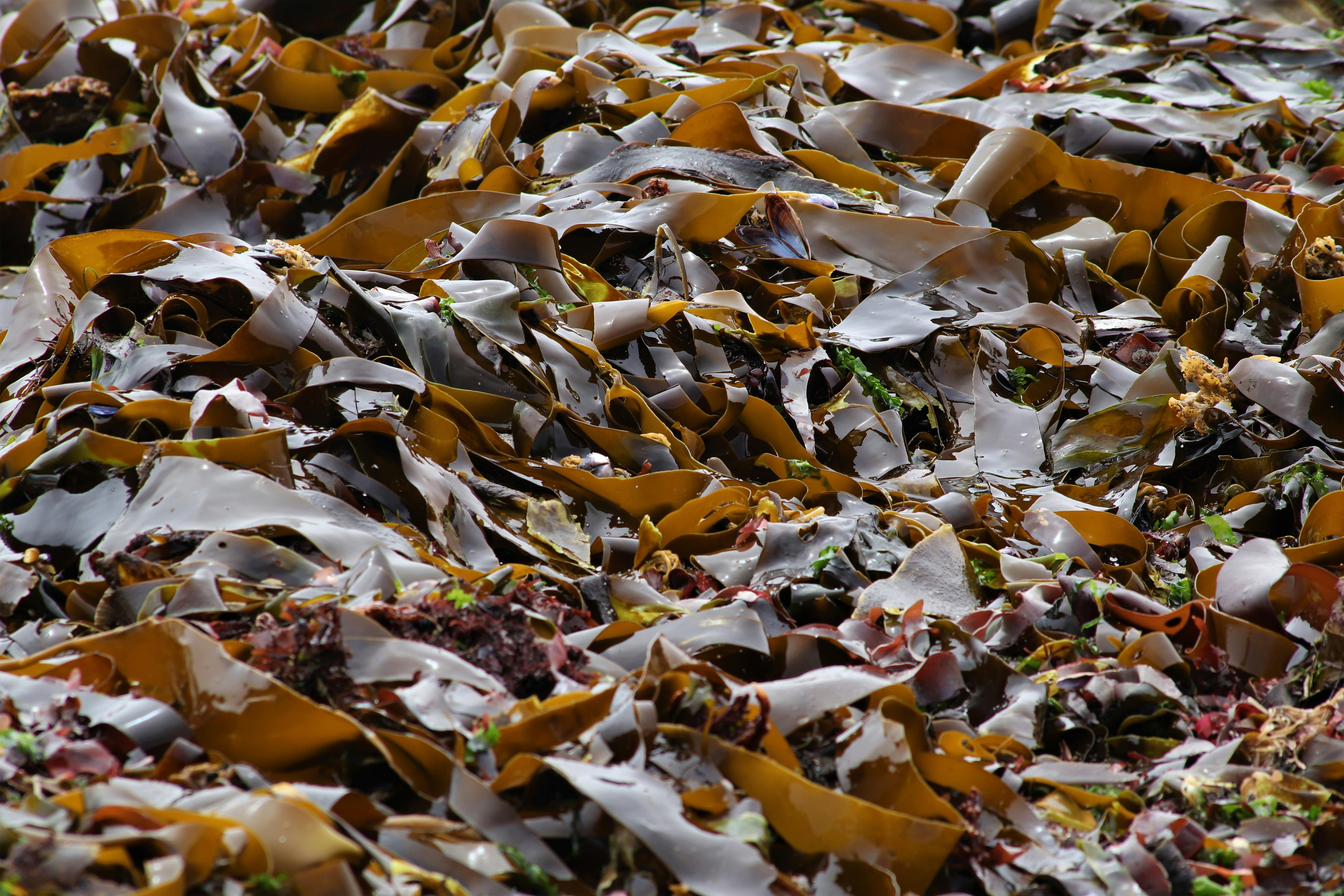
Brown seaweed (kombu, wakame)
Umami discovery and prebiotic polysaccharides — alginate, laminarin, fucoidan. Warning: kombu iodine overconsumption alert!
In 1 minute
What does it provide? Water-soluble fibers — alginate (satiety), laminarin (β-glucan-like), fucoidan (immunomodulating), phlorotannins (polyphenol), fucoxanthin carotenoid, glutamate (umami).
How much? Wakame: 3–5 g (dried) 2–3×/week. Kombu: 1–2 g (dried) per week, and SOAKING + BOILING to reduce iodine.
When to avoid? Warning — Thyroid disease (Hashimoto's, Graves', nodular goiter) — kombu's excessive iodine, to be avoided or under strict monitoring. Hijiki — to be avoided due to inorganic arsenic.
The consumption of kombu and wakame in Japan goes back thousands of years — archaeological remains of Jomon-era shell middens contain seaweed imprints, and the 8th-century Taihō administrative code already categorizes brown seaweeds as a form of tax. Kombu became a foundational pillar of dashi (Japanese broth), and this tradition led to one of science's great discoveries: in 1908, Kikunae Ikeda, chemistry professor at Tokyo Imperial University, isolated monosodium glutamate from the "something else" taste of kombu dashi and named it "umami" — the fifth basic taste. With this, kombu became the world's first documented umami source, and later a kitchen superstar in salt-reduction efforts.
The technology of drying, soaking, and cooking was standardized in the Muromachi and Edo periods (15th–19th centuries); the northern Japanese island of Hokkaido became the "wine country" of quality kombu, and the maritime district ("kitamaebune" sea route) sustained an entire eastern sea trade. By the 20th century, cultivation and processing reached industrial scale on the coasts of Japan, Korea, and China, and wakame soup ("miyeokguk") wove its cultural narrative around early birthdays and motherhood celebrations. The 21st-century "seaweed renaissance" in the West stems both from culinary (umami, texture) interest and from nutritional values (fibers, micronutrients), although the iodine intake question immediately requires public health attention.
🔬 Scientific Background
Brown seaweeds (Phaeophyceae) contain three clinically relevant polysaccharide families:
1. Alginate: β-D-mannuronic acid and α-L-guluronic acid polymer. Dissolved in water, it forms a gel, increases viscosity in the stomach → satiety and slowed gastric emptying.
2. Laminarin: β-(1→3) glucan-like polysaccharide — ferments in the colon, produces SCFA. Similar mechanism to oat β-glucan.
3. Fucoidan: Sulfated polysaccharide — in preclinical models, immunomodulating, anticoagulant, antitumor potential. In human RCTs, modest but positive results for autoimmune and metabolic conditions.
Polyphenols and carotenoids: - Phlorotannins: Unique brown seaweed polyphenol class, antioxidant, antiglycemic. - Fucoxanthin: Carotenoid — preclinical body-fat-reducing, antidiabetic potential.
Clinical human evidence:
- Satiety (Odunsi 2009, Paxman 2008 RCTs): Alginate supplementation in the short term increased satiety, reduced energy intake. - Body weight (alginic acid RCT 12 weeks): Alongside energy restriction, +1–2 kg additional reduction. - Lipid/glycemia (Izaola 2020, wakame-snack RCT): LDL and total cholesterol reduction; postprandial glycemia/insulin attenuation. - Microbiota (Rønne 2023): Bacteroides species break down alginate to SCFAs with dedicated alginate-lyase enzyme sets (PULs).
Warning — IODINE FOCUS — KOMBU ALERT:
Kombu is extraordinarily risky for IODINE OVERCONSUMPTION:
| Algae species | Iodine content (dry matter) | |---|---| | Kombu (Saccharina japonica) | 1500–2500 µg/g | | Wakame (Undaria pinnatifida) | 40–140 µg/g | | Hijiki | (to be avoided, arsenic) |
The EFSA adult UL (upper limit) is 600 µg/day for total iodine intake. A single piece of dried kombu (5 g) can contain as much as 7500–12,500 µg of iodine — many times the daily limit.
HOME IODINE-REDUCTION TECHNIQUES: - Soaking 30–60 minutes + discarding the soaking water: approx. 30–50% iodine reduction. - Boiling 15 minutes: as much as ~ 99% of iodine leaches out of kombu into the cooking liquid. - The kombu-dashi cooking water is NOT recommended for regular, daily drinking.
Hijiki is to be avoided: Hijiki (Sargassum/Hizikia fusiforme) has a high INORGANIC ARSENIC content (10–80 mg/kg). Several authorities (UK FSA, Canada, New Zealand) placed it in the AVOIDANCE category — TO BE AVOIDED.
Umami discovery and salt reduction: The glutamate content of kombu dashi allows significant NaCl reduction in foods without compromising the flavor experience — population-level hypertension-prevention potential.
- + Wakame in miso soup: classic Japanese synergy.
- + Fiber-rich diet (vegetables, legumes, whole grains): broader SCFA profile.
- + Mediterranean-diet seasoning: salt reduction by replacing with glutamate.
- + Side dish to grilled/steamed fish: mineral and fiber replenisher.
- + Kombu dashi as a base: flavorful base, with iodine-reduced boiling.
- + Roasted seeds (sesame): classic furikake mix.
- Levothyroxine (T4): iodine interaction — medical consideration.
- Lithium therapy (bipolar): iodine interaction (both are thyroid-active).
- Amiodarone (iodine-containing antiarrhythmic): to be avoided.
- Anticoagulant (warfarin): theoretical — fucoidan's anticoagulant potential.
- Iron supplementation: separation (polyphenols chelate).
- NEVER hijiki (arsenic).
- Warning — Thyroid disease (Hashimoto's, Graves', nodular goiter): kombu strictly to be avoided, wakame in moderation.
- Levothyroxine (T4) replacement: iodine overconsumption can swing TSH similarly to INR.
- Pregnancy, breastfeeding: wakame OK, kombu to be avoided (transfers iodine to the fetus).
- Infant, small child < 3 years: kombu to be avoided, small amount of wakame OK.
- Severe renal failure Na/K limit: moderate (Na content).
- Severe hypertension, heart failure with Na restriction: portion control.
- Anticoagulant therapy + fucoidan supplement: medical supervision.
- Severe immunosuppression: moderate.
- Hijiki — NEVER FOR ANYONE (inorganic arsenic).
Daily serving
Wakame: 3–5 g (dried) 2–3 soups per week.
Kombu: 5 g soaked + boiled 1×/week, mainly as dashi base.
Iodine-reducing preparation (kombu)
- 5 g dried kombu + 1 liter water.
- Cold-soak 30 minutes.
- Heat slowly to 80 °C (do NOT boil — it becomes bitter).
- Remove kombu.
- If you specifically want to reduce iodine: boil kombu 15 minutes → ~99% of iodine dissolves into the water.
Classic patterns
Wakame miso soup: dashi + miso + wakame + tofu + scallion — classic Japanese breakfast.
Kombu dashi: base broth for sushi rice, sauces.
Wakame salad: soaked wakame + sesame oil + sesame seeds + rice vinegar.
Miyeokguk (Korean): wakame + beef + soy sauce + sesame oil — birthday and motherhood dish.
Furikake (Japanese seasoning blend): dried wakame pieces + sesame + dried fish.
Storage
Dried wakame/kombu: airtight, dark, dry — 2 years. Soaked: refrigerated 2 days.
What not to do
Don't eat kombu whole daily. Don't drink the kombu dashi cooking water as a beverage. NEVER EAT HIJIKI. Don't give kombu to an infant.
References
[1] EFSA Panel on Dietetic Products. Scientific Opinion on Dietary Reference Values for iodine. EFSA Journal 2014;12(5):3660.
[2] Yeh TS et al. Iodine content of dried edible seaweeds. J Food Compost Anal 2014.
[3] Barandiaran LN et al. Iodine reduction in kombu by soaking and boiling. Nature Sci Rep 2024.
[4] Izaola O et al. Wakame intervention in cardiometabolic outcomes. Endocrinol Diabetes Nutr 2020.
[5] Rønne ME et al. Alginate utilization by human gut Bacteroides — PUL system. Nat Commun 2023.
[6] Paxman JR et al. Alginate-enriched bread reduces energy intake. Appetite 2008.
[7] UK FSA. Hijiki and inorganic arsenic — consumer advice. 2010.
[8] Ikeda K. New seasonings — discovery of umami. Chem Senses (English translation 2002, original 1909).