
Chlorella
The cell-wall-disrupted alga — high chlorophyll, CGF growth factor, and mercury-binding capacity.
In 1 minute
What does it provide? A single-celled freshwater green alga that provides complete protein, chlorophyll, β-glucan, and — in some strains — biologically active B12. Strengthens the gut barrier, weak heavy-metal and dioxin binder, immunomodulator.
How much? 3–6 g/day (about 6–12 tablets of 500 mg) — choose a VERIFIED, cell-wall-disrupted (broken cell wall / cracked cell wall) product — non-disrupted chlorella is barely absorbed at all (cellulose-sporopollenin cell wall).
When to avoid? Known chlorella allergy (1980s Hawaiian pseudo-outbreak — photosensitive skin reactions), active autoimmune flare, severe immunosuppression, anticoagulant therapy with high-dose supplementation.
Chlorella was discovered and named in 1890 by Dutch microbiologist Martinus Beijerinck — from a combination of Greek "chloros" (green) and Latin "ella" (small). It was the first single-celled microorganism that was successfully cultured purely under laboratory conditions. In the post-WWII protein hunger of the 1940s–1950s, a serious international research program began: the Stanford Research Institute, the Carnegie Institute, and the Japanese Institute of Microbiology all examined it as a potential mass protein source for the growing world population. Japanese researcher Hiroshi Tamiya published the first industrial mass cultivation protocol in 1957 — Japan has remained the global chlorella market leader ever since.
In the 1960s, the Yaeyama Group and Sun Chlorella Japanese companies developed the cell-wall-disrupted (DCW — disrupted cell wall) process, which solved chlorella's fundamental bioavailability problem: the thick, cellulose-sporopollenin cell wall was virtually indigestible in humans. In the 1980s in Hawaii, due to a manufacturing error at Sun Chlorella, a cluster of photosensitive skin reactions was reported — this is the origin of the term "chlorella dermatitis," which has practically disappeared in modern, controlled products. From the 2000s onward, in post-Fukushima Japan, interest in chlorella as a cesium and mercury binder grew rapidly, while the Nakano (2010) study documented reduction of heavy-metal transfer in pregnancy.
🔬 Scientific Background
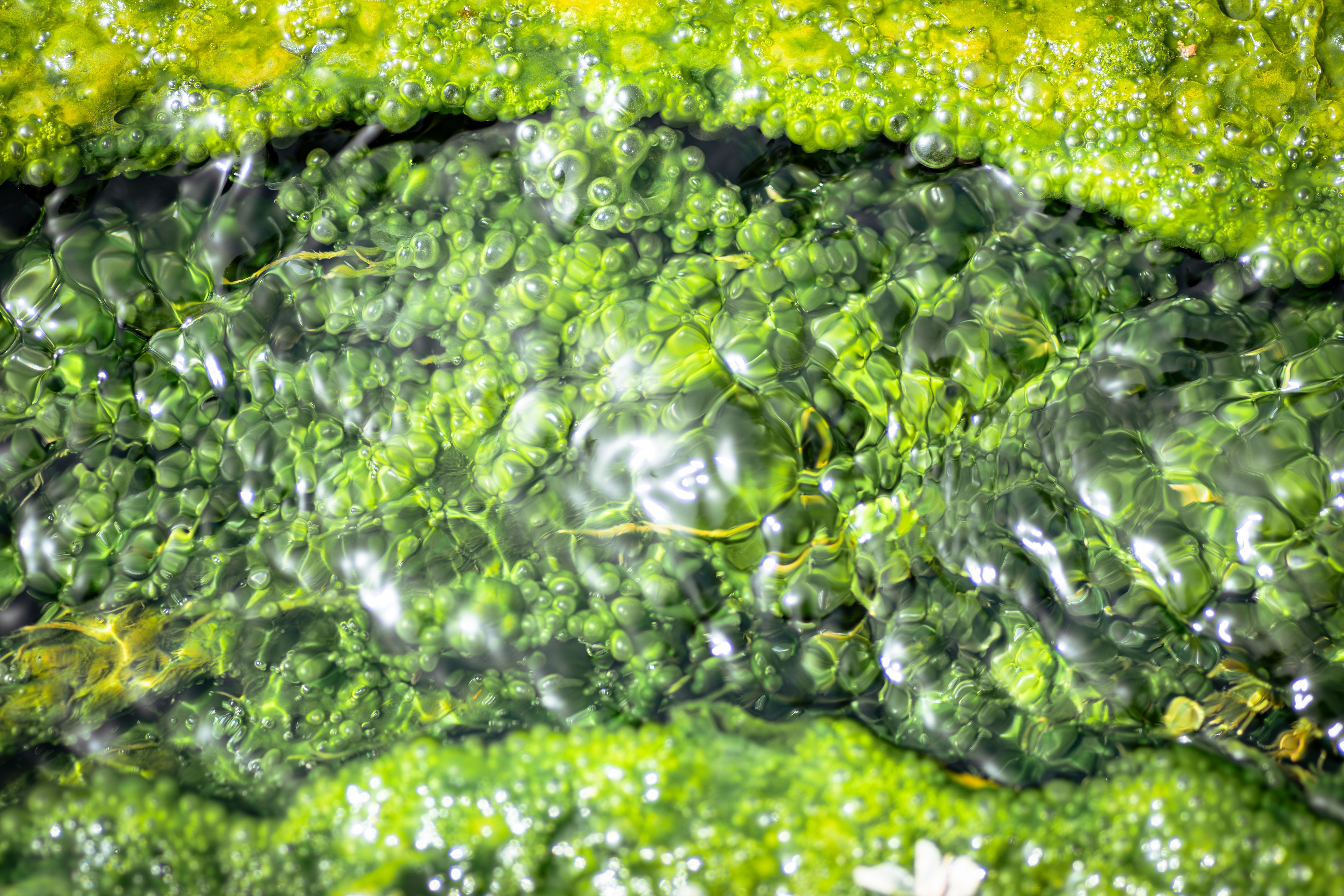
Chlorella is a single-celled, rounded freshwater green alga (3–8 μm) whose fundamental digestibility problem is the cellulose-sporopollenin cell wall — in non-disrupted form, the human gastrointestinal system can extract almost nothing from it. Therefore, the cell-wall-disrupted (broken cell wall, BCW; cracked cell wall, CCW; micronized) product is mandatory — this must be stated on the label. Non-disrupted chlorella passes out largely unchanged.
The chlorophyll content (2–5%) is among the highest of any vegetable. Chlorophyll is antimutagenic in in vitro data, and in the colon it reduces colorectal risk by binding heme-derived pro-oxidants. CGF (Chlorella Growth Factor) is a nucleotide-peptide-polysaccharide matrix that stimulates cell replication — this is the molecular basis of the traditional "regenerative" effect, although human evidence is limited.
Heavy metal and dioxin binding: Japanese RCTs by Uchikawa (2010) and Nakano (2010) documented moderate reduction in breast milk dioxin and PCB levels for chlorella taken during pregnancy. For mercury binding, animal experiments and small human data are supportive, but evidence is not robust. The putative mechanism is the combination of chlorophyll, cell-wall cellulose, and CGF.
B12 issue: unlike spirulina, some chlorella strains contain biologically active B12 (Watanabe 2002, Merchant 2015). Certain Japanese strains of Chlorella pyrenoidosa are specifically selected for this — a 9 g/day serving can provide up to 60–100 μg of active B12. Important: not every chlorella product is an active B12 source — it must be stated on the label, and ideally followed up with serum MMA/holo-TC testing in vegan consumers.
At the microbiome level, the β-1,3-glucan + cellulose cell-wall fragments are fermentable substrates in the colon — human data show increased Bifidobacterium and Lactobacillus proportions. Chlorophyll degradation products (pheophytin, pheophorbide) have antioxidant activity.
- + Vitamin C (lemon, bell pepper, kiwi): improves chlorophyll-derived iron bioavailability and carotenoid stability.
- + Healthy fat (avocado, olive, fish oil): absorption of fat-soluble carotenoids (lutein, zeaxanthin, β-carotene) increases multifold.
- + Fiber-rich matrix (flaxseed, oats, legumes): chlorella's β-glucan + soluble fiber together generate stronger SCFA production.
- + Live cultures (yogurt, kefir, kombucha): synbiotic effect — chlorella polysaccharides are prebiotic-like.
- + Polyphenol sources (green tea, cacao, berries): combined antioxidant effect, chlorophyll stabilization.
- + Heavy-metal exposure (occupational risk, fish consumption): chlorophyll + cell-wall cellulose matrix may chelate — adjunctive, NOT a replacement.
- Warfarin: chlorella has significant vitamin K content (1 g ≈ 30–50 μg K1) — can cause INR disturbances. Even daily intake or avoidance, with INR monitoring.
- Immunosuppressants (cyclosporine, tacrolimus, biologics): chlorella is immunostimulating (β-glucan, CGF) — autoimmune flare and reduction of therapeutic effect possible.
- Photosensitivity-inducing medications (tetracycline, fluoroquinolone, retinoids, amiodarone): chlorella's pheophorbide content may enhance photosensitivity — additive skin reaction risk.
- Iron supplementation: separate timing by ≥ 2 hours (chlorophyll chelation).
- Empty stomach + high dose (≥ 6 g) on first occasion: nausea, abdominal discomfort possible.
- Too-hot drinks (≥ 80 °C): chlorophyll and B12 degrade.
- Autoimmune disease active flare: due to immunostimulant effect — medical consultation required, cautious introduction in remission.
- Severe immunosuppression (post-transplant, neutropenic phase of chemotherapy): β-glucan immunomodulation to be avoided.
- Warfarin therapy: high vitamin K content — INR monitoring or avoidance.
- Known algae allergy, previous "chlorella dermatitis": avoid.
- Gout, high uric acid level: the high protein-purine content can provoke a flare — try with a low dose, or avoid.
- Kidney disease (chronic, GFR < 60): because of protein load and potassium content, medical consultation.
- Pregnancy and breastfeeding: based on the Nakano RCT, a moderate dose (3–6 g/day) from a verified source appears acceptable, but high doses are to be avoided — coordinate with your doctor.
- Predisposition to photosensitivity: caution — start with a low dose, watch for skin reactions.
- 2 weeks before surgery: stop due to vitamin K content and weak antiplatelet activity.
Daily serving: 3–6 g/day cell-wall-disrupted powder or 6–12 tablets of 500 mg. Start with 1–2 g, increase after 1 week.
Preparation pattern:
1. Smoothie: 2–3 g powder + 1 banana + 1 handful spinach + 200 ml plant milk + 1 tbsp almond butter + lemon zest — blend.
2. Salad sprinkle: 1–2 g powder over fresh salad, cilantro-parsley mix — with lemony olive dressing.
3. Tablet: with a meal, 4–6 in the morning, 4–6 in the evening — capsule form avoids the powder's intense "grassy" taste.
4. Bowl sprinkle: on top of miso soup, ramen, or poke bowl, 1 g — Japanese tradition.
Storage: airtight, dark glass, in a cool place — chlorophyll and B12 are light- and heat-sensitive. To be consumed within 6 months of opening.
What not to do: don't cook it (≥ 60 °C destroys B12 and reduces chlorophyll stability). Don't buy non-disrupted (whole cell wall) chlorella. Don't equate it with spirulina.