
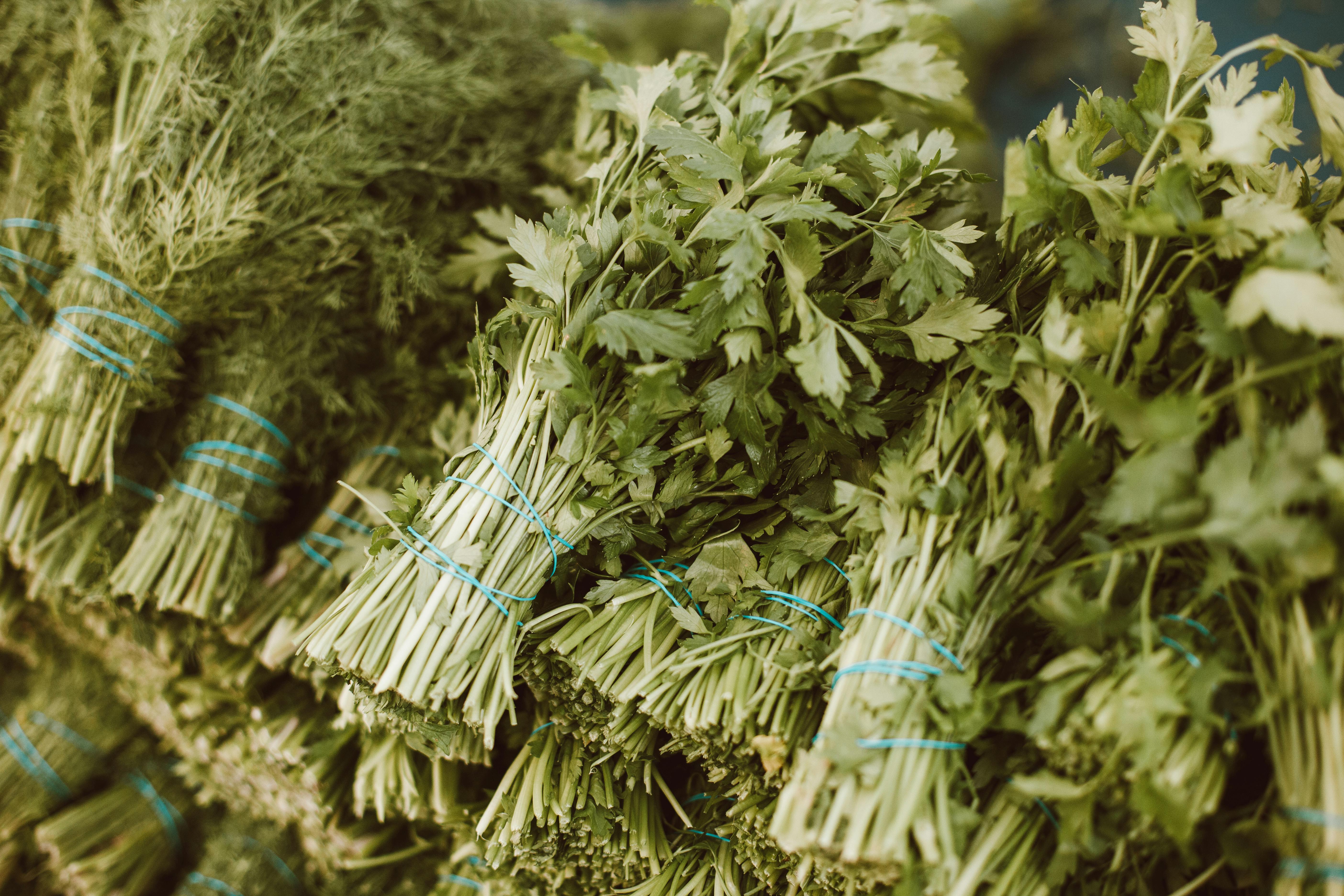
Parsley
The apigenin-champion green herb — record vitamin K, nitrate-NO matrix, classic "petite garniture".
Parsley in 1 minute
What does it provide? Apigenin concentrate (the flavonoid at 215 mg/100 g — one of the highest sources among spices), vitamin K record (1640 µg/100 g — 14× the adult daily requirement), high iron (6.2 mg), vitamin C (133 mg), folate (152 µg), chlorophyll, myristicin (essential oil), moderate nitrate content.
How much? 1—2 tbsp (10—15 g fresh) /day as a spice, or 1 bunch (30 g) as salad. Classic "tabbouleh" and "chimichurri" can use up to 50 g/serving.
When to avoid? Warfarin (EXTREMELY high vitamin K — strictly constant intake). Kidney-stone predisposition (moderate oxalate). Pregnancy: high-dose herbal supplement (uterotonic at high-dose essential oil).
Parsley is Mediterranean in origin — the combination of the Greek "petros" (rock) and "selinon" (celery) refers to its rocky habitat. In ancient Greece and Rome it was not eaten but used in funeral wreaths (linked to Persephone, the goddess of the dead). It entered the culinary arts in the 1st century according to Pliny's records. Charlemagne's edict (812) required planting it on every royal estate. The Hungarian classic "parsley soup" and "parsley potato" tradition dates back to the Middle Ages.
Scientific Background
The main bioactive in parsley is apigenin — a flavonoid that is among the most concentrated sources in spices (chamomile and parsley lead). Apigenin is an NF-κB inhibitor and antiproliferative in vitro, and in small human pilots shows anxiolytic and sleep-supporting effects (Salehi 2019 Phytother Res). Clinical evidence is modest but mechanistically robust.
The extreme concentration of vitamin K1 (phylloquinone) (1640 µg/100 g) is clinically significant: 10 g of fresh parsley is already 1—2× the daily requirement. In warfarin patients, sudden change in intake causes INR disturbance — strictly constant (fixed weekly amount) intake is mandatory.
Myristicin (an essential oil concentrated in the seed) — also present in nutmeg (XV.26) — has hallucinogenic potential in high doses (herbal extract ≥ 5 g/day, NOT dietary amount). At dietary doses (1—2 tbsp/day) it is safe.
At the microbiome level, the chlorophyll matrix and apigenin provide indirect polyphenol support. Specific human microbiome RCT evidence is sparse.
- + Lemon juice: classic Lebanese "tabbouleh" (parsley + bulgur + tomato + lemon).
- + Garlic + olive oil + vinegar: Argentine "chimichurri."
- + Beef liver + parsley: classic Hungarian-French pairing, iron + apigenin + vitamin K.
- + Potato + butter: classic "parsley potatoes."
- + Roasted fish + garlic: Mediterranean "salsa verde."
- + Smoothie (leafy greens + apple + lemon): detox protocol.
- High-dose essential-oil capsule (≥ 5 g/day): myristicin neurotoxic.
- High-temperature, long cooking: partial loss of apigenin + vitamin C; add raw or at the end of the dish.
- Tannin-rich beverages (black tea, red wine): impaired iron absorption (moderate matrix).
- Warfarin therapy: EXTREMELY high vitamin K — strictly constant intake (fixed weekly amount).
- Kidney stones (calcium-oxalate): moderate oxalate content.
- Pregnancy: dietary amount (1—2 tbsp) is safe; high-dose herbal supplement (≥ 5 g/day) is uterotonic — AVOID.
- Hyperaldosteronism / diuretic effect: parsley is classically diuretic — with significant extra intake, monitor potassium balance.
- Salehi B et al. The therapeutic potential of apigenin. Int J Mol Sci 2019;20(6):1305. https://pubmed.ncbi.nlm.nih.gov/30875872/
- Saleem M et al. Apigenin: an emerging molecule in dietary chemoprevention — review. Phytother Res 2012;26(8):1149—1155.
- Mara K et al. Effects of petroselinum crispum extract on blood pressure — pilot study. J Ethnopharmacol 2013;145(1):300—305.
- Manach C et al. Polyphenols: food sources and bioavailability. Am J Clin Nutr 2004;79(5):727—747 (apigenin context). https://pubmed.ncbi.nlm.nih.gov/15113710/
- USDA FoodData Central — Parsley, fresh (NDB #11297). https://fdc.nal.usda.gov/fdc-app.html#/food-details/170416/nutrients
- EMA/HMPC. European Union herbal monograph on Petroselinum crispum (Mill.) Fuss, herba. 2017.
- Monash University. Parsley — Low FODMAP serving guidance.