
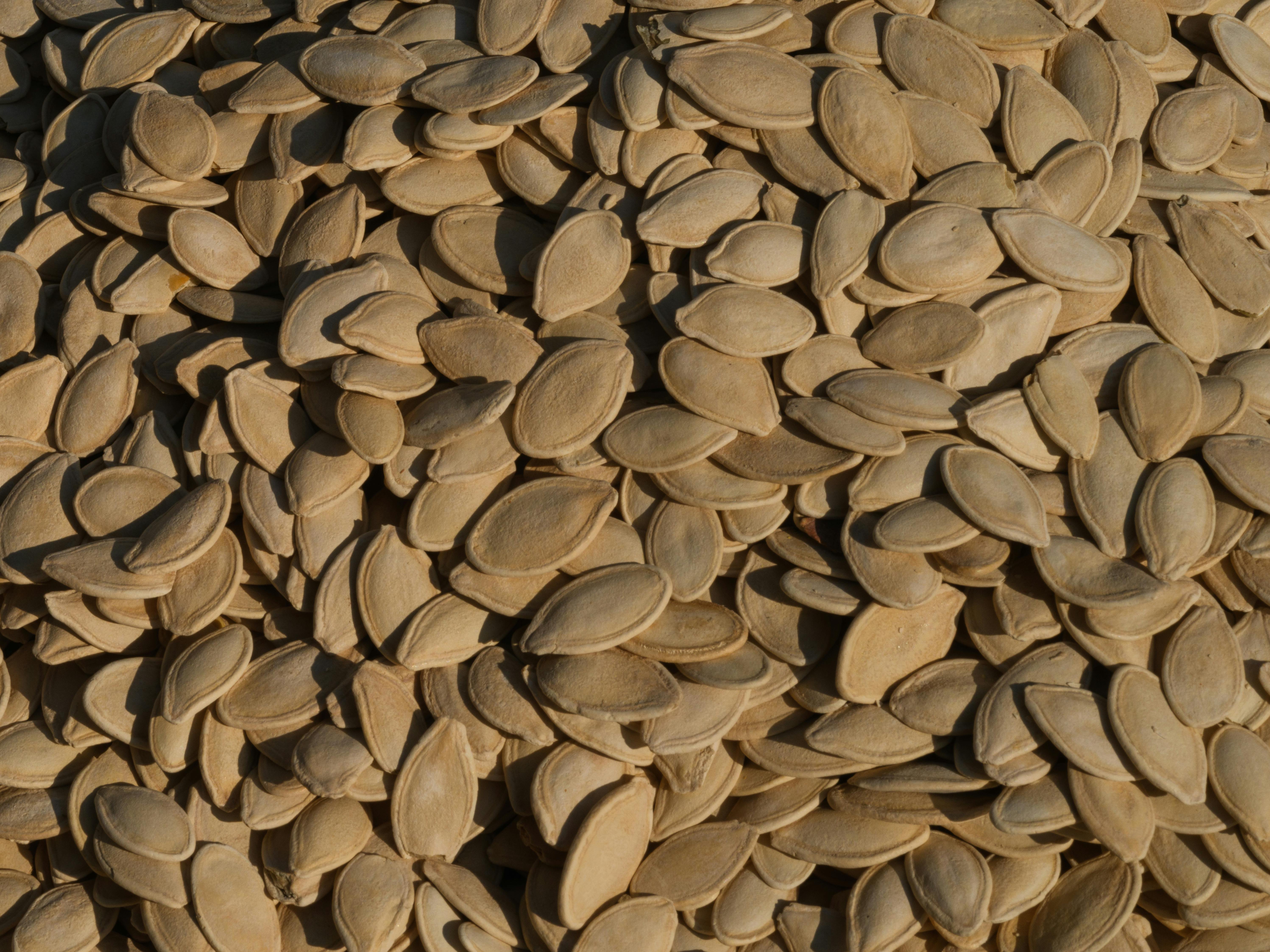
Pumpkin Seed
The magnesium-zinc combo — phytosterols for the prostate and the cucurbitin-based antiparasitic tradition.
In 1 minute
What does it provide? One of the most concentrated plant zinc sources (≈ 7.8 mg/100 g — covers ≈ 75% of the male daily RDA from 100 g), high magnesium (a single handful covers ≈ 40% of daily magnesium requirement), tryptophan (serotonin-melatonin precursor), phytosterols (LDL cholesterol-lowering), and lignans (phytoestrogen-like).
How much? 20–40 g/day (1–2 tablespoons) — roasted or raw. Pumpkin seed oil (Styrian) ½–1 tbsp/day on salad. As a BPH symptomatic adjuvant: Vahlensieck 2015 GRANU-RCT — 5 g pumpkin seed extract/day, 12 months, IPSS score reduction.
When to avoid? Active diarrhea; severe renal failure (high magnesium, phosphorus, potassium); child under 4 with whole seeds (choking); pumpkin seed allergy (rare but described). The previous diverticulosis ban is now outdated (Strate 2008 JAMA disproved it) — no longer a contraindication.
The origin of pumpkin is the Central American region (today's Mexico and Guatemala) — archaeological finds identified 7,000–10,000-year-old pumpkin seed remains in Oaxacan caves, making it one of the oldest domesticated plant cultures alongside carrot and corn. Maya and Aztec civilizations used both the pumpkin flesh and the seeds for food and medicinal purposes: from the Spanish colonial era, the seed was dried under the name "pepita" (the diminutive of the Spanish "pepa" = "seed"), roasted and used as part of apropodotherapy for antiparasitic purposes — the tradition has lived on in Mexican folk medicine.
Sixteenth-century Spanish conquerors brought it to Europe; at the end of the 19th century, around 1870, a spontaneous mutation appeared in Styria (Austria) that gave rise to the hulless variety (Cucurbita pepo var. styriaca), which made industrial development of seed oil pressing possible. "Steirisches Kürbiskernöl" has been an EU protected designation of origin product since 1996 — dark green, nutty-scented oil, traditionally drizzled on salads and dishes. In Hungary it is also grown in Vas and Zala counties. Clinical studies in benign prostatic hyperplasia (BPH) started at the end of the 20th century: the Carbonell-Capella 2016 meta-analysis and the German Commission E monograph also support adjuvant use. The antihelmintic effect of cucurbitin (a specific amino-acid derivative found in the seed) has long been traditionally known (pinworm, Taenia), but clinical evidence is limited. (PubMed, EMA)
🔬 Scientific Background
Pumpkin seed has outstanding nutrient density. Zinc (≈ 7.8 mg/100 g) is the cofactor of more than 300 human enzymes, a regulator of testosterone synthesis, immune function, wound healing, and Th1/Th2 balance. From plant sources, zinc is less well absorbed (≈ 20–30%) than from animal sources (≈ 35–50%) due to phytate content, but roasting and soaking reduce phytate. In male reproductive health, zinc has one of the highest tissue concentrations in the prostate — in BPH, tissue zinc is reduced, and evidence shows that supplementation improves symptoms.
Magnesium (≈ 535 mg/100 g) is critical primarily for muscle relaxation, nervous system excitability regulation, energy metabolism (ATP-Mg complex), and sleep regulation (NMDA receptor modulation). The modern Western diet is magnesium-deficient — pumpkin seed is one of the best dense sources.
Tryptophan (≈ 580 mg/100 g) is a precursor of serotonin and melatonin. Hudson (2005) in a small human study showed that pumpkin seed consumption in evening doses improves subjective sleep quality, likely due to the tryptophan + magnesium + zinc combination.
In the BPH and urology field, pumpkin seed oil and the whole seed have improved IPSS scores (International Prostate Symptom Score), nighttime urination frequency, and urinary flow in several RCTs. The mechanism of action is multifactorial: phytosterols (5-α-reductase inhibition slightly), zinc supplementation, antioxidant and anti-inflammatory effect. Evidence level is ★★ — as adjuvant, not standalone therapy.
Cucurbitin (a specific, 3-amino-3-carboxypyrrolidine) is the material basis of the antihelmintic tradition. In vitro and animal experiments it is effective against Taenia and Ascaris; human clinical evidence is limited — in folk medicine, 100+ g raw pumpkin seeds consumed on an empty stomach + castor oil is the traditional protocol. Not first-line in modern parasite treatment, but the WHO also mentions it as adjuvant (resource-poor regions).
At the microbiome level, pumpkin seed's fiber (≈ 6 g/100 g), lignan, and β-sitosterol content supports SCFA production and Bifidobacterium growth. The high zinc content is modulating: low zinc level worsens gut barrier permeability and causes dysbiosis; optimal zinc restores this.
- + Vitamin C (bell pepper, lemon, tomato): improves plant zinc absorption. Pumpkin seed salad with lemon-tomato dressing is a classic pattern.
- + Soaking or roasting: reduces phytate content → zinc and iron bioavailability increases by ≈ 30–50%. Styrian tradition: mild roasting (140 °C, 10–15 minutes).
- + High-quality protein (yogurt, egg, fish): zinc + protein together are optimal — protein reduces the phytate block.
- + Evening meal with carbohydrate (small serving) for sleep quality improvement: tryptophan + carbohydrate-induced insulin response together improve brain tryptophan uptake → serotonin → melatonin.
- + Pumpkin seed oil on roasted meat, salad: Styrian tradition — synergy of fat-soluble γ-tocopherol and phytosterols.
- + Fermented dairy (kefir, yogurt): fiber + live culture combination optimal for SCFA production.
- Separate zinc supplementation (50+ mg/day): 100 g pumpkin seed + 30+ mg zinc capsule can easily exceed the upper safety limit (40 mg/day), causing copper deficiency and impaired immune function in the long term.
- Other phytate-rich food + iron supplementation at the same time (≤ 2 hours): phytate chelation reduces iron absorption.
- Antibiotics (quinolones, tetracyclines) direct co-administration: zinc, calcium, magnesium chelate fluoroquinolone → efficacy reduction. Keep > 2 hours apart.
- Penicillamine, levodopa: chelation interactions with zinc.
- Thiazide diuretic + high magnesium intake: generally not a problem (thiazides waste potassium and magnesium), but to be monitored.
- During active diverticulitis: the classic myth says seeds cause obstruction — modern evidence shows they are NOT contraindicated (Strate 2008), but in acute flare still to be avoided per individual judgment.
- Large evening dose of pumpkin seed + reflux tendency: high fat may delay gastric emptying → nighttime reflux.
- Severe renal failure (CKD stage 4–5): high magnesium (535 mg/100 g), phosphorus, and potassium can cause dangerous accumulation.
- Acute diverticulitis, IBD flare: to be moderated from a mechanical and inflammatory standpoint. (The classic "seeds are forbidden in diverticulosis" advice was disproved by the Strate 2008 study, but individual in acute situations.)
- Child under 4 with whole seeds: choking risk — can be given ground, in butter.
- Pumpkin seed allergy (rare but IgE-mediated): anaphylaxis case described.
- Severe copper-deficiency history: chronic high zinc intake can worsen copper status.
- Hormonally sensitive cancers (oestrogen-receptor-positive breast cancer, during prostate cancer therapy): theoretical modulation by lignans and phytosterols — oncological consultation.
- Severe GI obstruction or gastroparesis: high fiber delays emptying.
- In osteoporosis with large phytate consumption: phytate may chelate calcium — but moderate daily serving is safe.
Daily serving: 20–40 g (1–2 tbsp) roasted or raw pumpkin seed. Pumpkin seed oil ½–1 tbsp/day.
Preparation patterns:
1. Breakfast muesli / oatmeal topping: 1 tbsp pumpkin seed + rolled oats + berries + yogurt. Magnesium + tryptophan morning boost.
2. Salad topping: green salad + 1 tbsp roasted pumpkin seed + pumpkin seed oil + balsamic vinegar + boiled egg or cheese. Classic Styrian-Vas county pattern.
3. Pesto alternative: pumpkin seed + basil + olive oil + Parmesan + garlic — pine-nut substitute, higher in zinc.
4. Evening sleep-support snack: 1 handful pumpkin seed + ½ banana + warm plant milk + cinnamon, 1 hour before bed. Tryptophan + magnesium + carbohydrate combination.
5. Pumpkin-seeded roasted butternut squash: butternut + olive oil + 2 tbsp pumpkin seed + rosemary — autumn seasonal, root vegetable + seed pattern.
6. BPH-support serving: 30 g roasted pumpkin seed + ½ tbsp pumpkin seed oil daily for 12+ weeks — the protocol of clinical studies.
Self-roasting: dry pan medium heat, 5–10 minutes, continuous stirring, a little salt. Let cool — freshness is key.
Storage: in shell, in a cool, dark, dry place for 6 months. Hulled or roasted in an airtight jar, in the fridge 2 months, in the freezer 6 months. γ-tocopherol is sensitive to light and air.
Pumpkin seed oil: dark bottle, in fridge, 6 weeks after opening. Do NOT use for cooking (low smoke point) — only cold, drizzled, on salad, soup, dish. At high heat it oxidizes and loses value.
What not to do: don't store in a warm, humid place (going rancid). Don't fry pumpkin seed oil. Don't give whole pumpkin seed to a child under 4.