


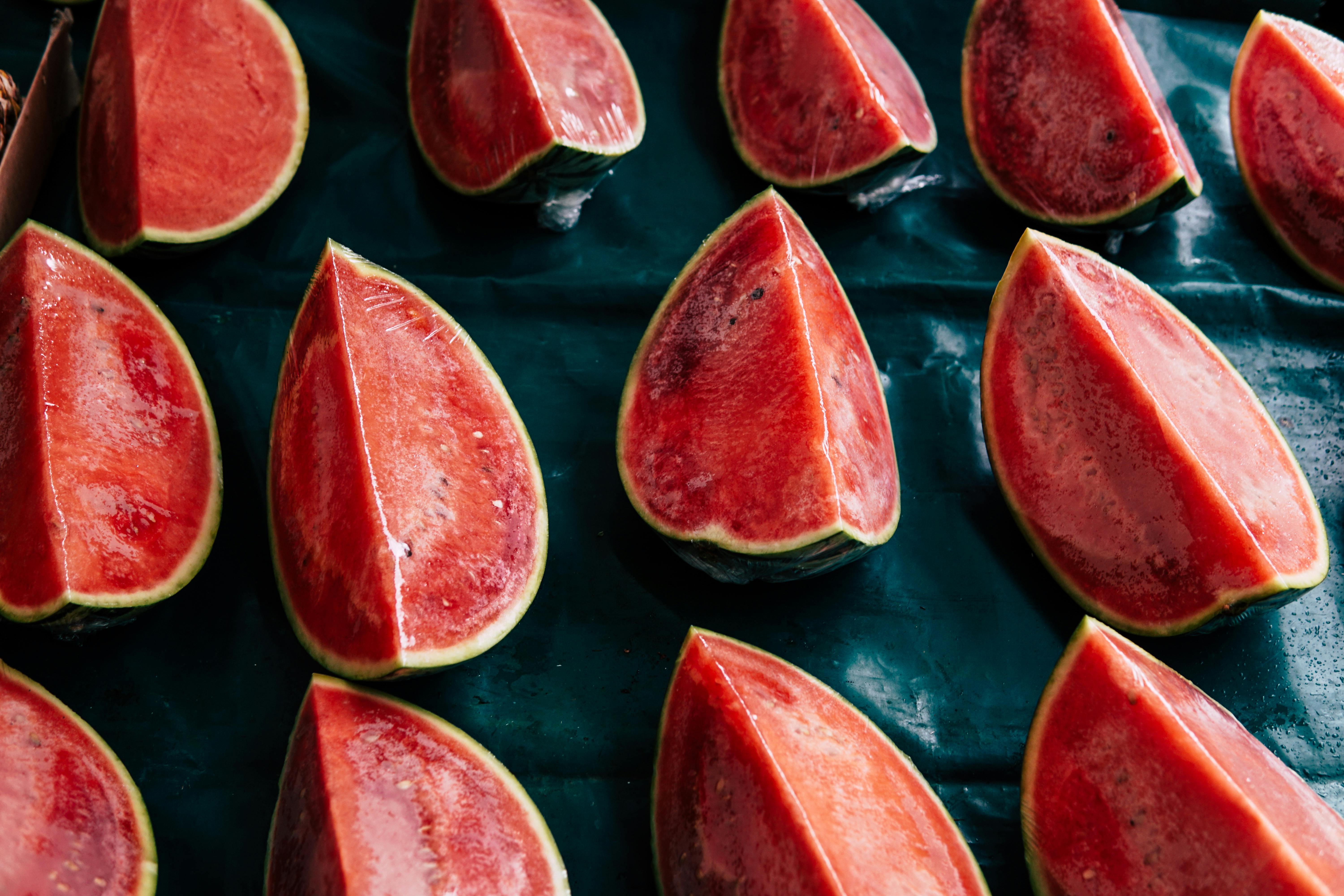
Watermelon
Citrulline for NO synthesis — a blood-pressure-lowering amino acid and the fruit with the highest lycopene content.
In 1 minute
What does it provide? L-citrulline (amino acid — kidney converts it to L-arginine, the substrate of the eNOS enzyme → nitric oxide release, vasodilation; ≈ 150–250 mg/100 g), lycopene (red carotenoid antioxidant, ≈ 4500 µg/100 g — at tomato level), and 92% water with potassium-magnesium company. RCT evidence: Figueroa 2012, watermelon extract 4–6 g citrulline-equivalent/day for 6 weeks → significant brachial and aortic blood pressure reduction in prehypertensive adults; Cormio 2011, 1.5 g L-citrulline → 50% improvement in erection hardness score in mild ED.
How much? 1 thick slice (≈ 300–400 g, 2–3 cups cubed) daily in season. With a fat source (olive, feta), 2–3× elevated lycopene absorption.
When to avoid? Nitrate-containing drugs (nitroglycerin, isosorbide) and PDE5 inhibitors (sildenafil) — additive vasodilation, dangerous blood pressure drop. CKD stage 4–5 (potassium load), fluid-restricted heart failure, severe fructose malabsorption (the fructose-glucose ratio here is high), poorly controlled type 2 diabetes (GI ≈ 75, but low-density glycemic load, in moderation).
Watermelon comes from the African Kalahari Desert region — archaeological remains have been found at 4th-millennium BCE Egyptian settlements; later watermelon seeds were also found in Tutankhamun's burial chamber (ca. 1325 BCE). The Hungarian name "görög" (Greek) is etymologically a misunderstanding: it entered medieval Hungarian via German "türkische Gurke" (Turkish cucumber), and "Greek" here means "foreign, exotic."
Modern citrulline research began in 1914, when Japanese chemists isolated the new amino acid from watermelon — hence the Latin Citrullus → citrulline nomenclature link. Vascular function research began in the early 2000s: Collins et al. (2007, Nutrition) in the first human crossover study showed that 780 g of watermelon consumption over 3 weeks raised serum arginine levels by 11% and reduced arterial stiffness (Wikipedia, PMC).
🔬 Scientific Background
The central role of watermelon is the citrulline–arginine–NO axis. L-citrulline is converted to arginine in the kidney, the substrate of endothelial nitric oxide synthase (eNOS) — the released NO causes vasodilation, lower peripheral resistance, and better endothelial function. Figueroa et al. (2011, 2012, American Journal of Hypertension) in preclinical and clinical studies showed that watermelon extract (4–6 g citrulline-equivalent / day, 6 weeks) significantly reduced brachial and aortic blood pressure in prehypertensive adults.
Erectile function: Cormio et al. (2011, Urology) in a randomized clinical trial with 24 men with mild-to-moderate ED achieved 50% improvement in erection hardness score alongside 1.5 g L-citrulline supplementation — the mechanism is NO-mediated corpus cavernosum vasodilation.
Lycopene: 100 g of red-fleshed watermelon contains 4500 µg of lycopene — comparable to fresh tomato. The cell wall matrix bioavailability is high, and provides carotenoid-type cardiovascular protective effects.
Hydration: combination of 92% water content + potassium + magnesium is a natural electrolyte replenisher, especially valuable during sport and heatwave periods. Evidence level: human RCT (★★★) for vascular function and blood pressure endpoints; cohort (★★) for the lycopene axis.
- + Fresh mint: classic Mediterranean-Turkish combination; menthol synergistic vasodilation effect.
- + Feta or halloumi cheese: classic Greek-Turkish melon-cheese combination; salty-sweet-acidic profile balance, hydration + calcium + protein.
- + Other lycopene sources (tomato, papaya): synergistic cardiovascular effect.
- + Fat source (olive oil salad dressing): lycopene bioavailability rises 2–3× with fat.
- Nitrate-containing drugs (nitroglycerin, isosorbide): additive NO-mediated vasodilation can cause dangerous blood pressure drop — medical consultation needed.
- High-dose PDE5 inhibitor (sildenafil) in ED treatment: synergistic effect theoretically possible, to be avoided outside clinical protocol.
- Large portion in the middle of a high-fat/protein/spicy meal: high water content can cause a gastric "washing effect" — digestive discomfort.
- Prolonged high-temperature cooking: lycopene is relatively stable, but citrulline partially degrades — the main value is fresh consumption.
- Severe kidney disease (CKD stage 4–5): high potassium content can cause hyperkalemia — individual titration.
- Severe heart failure with fluid restriction: the 92% water content accumulates.
- Severe fructose malabsorption: the fructose-glucose ratio in watermelon shows fructose dominance, which can provoke individual intolerance.
- Active diabetes with poor control: moderate glycemic index (~75), but due to low-density sugar the glycemic load is low — can be consumed in moderation.
Daily serving: 1 thick slice (~300–400 g, ~2–3 cups cubed) fresh.
Preparation pattern: Fresh, cold; with feta + oil + mint in salad; gazpacho-style cold soup; in smoothies with lime.
Classic patterns: Greek karpouzosalata (watermelon + feta + mint + olive); Turkish karpuz; favorite of Hungarian summer grill parties; Mexican agua de sandía (without sugar).
Storage: Whole at room temperature 5–7 days; cut, refrigerated airtight 3–4 days; cubed frozen 6 months (suitable for smoothies, fresh consistency does not hold).