


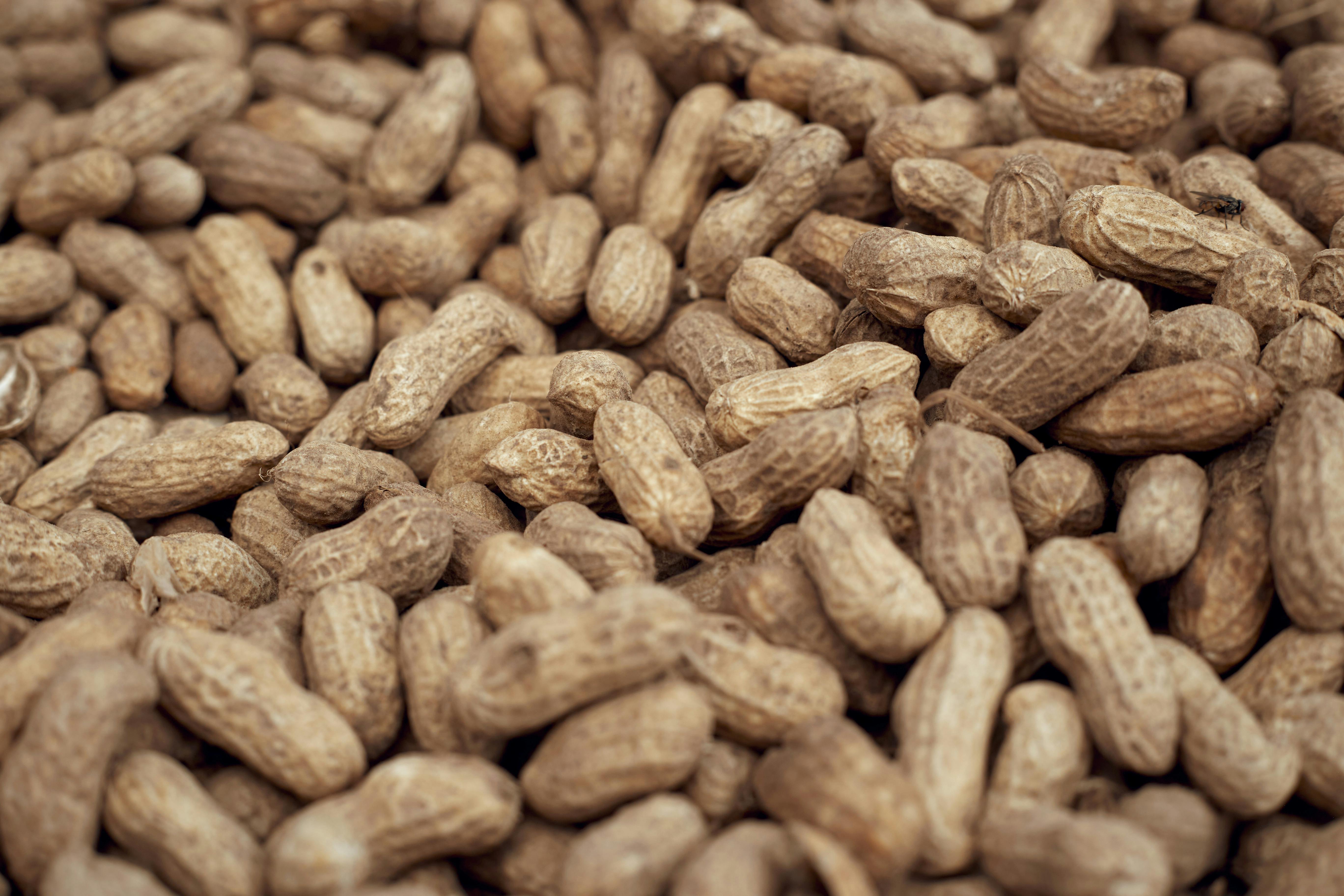
Peanut
Not a nut, but a legume — native seed of the Gran Chaco, with butyrate-boosting RCT and the paradoxical allergy message of the LEAP lesson.
In 1 minute
What does it provide? Plant protein (≈ 26 g/100 g, the highest among seeds), MUFA-dominant fat (oleic acid 50%), and the polyphenols of the reddish-brown skin — mainly proanthocyanidins and resveratrol (supporting butyrate-producing species of gut bacteria). Botanically a legume, not a nut. RCT evidence: Parilli-Moser 2021, 28 g/day for 6 weeks → enrichment of butyrate-producing Ruminococcaceae. Nurses' and Physicians' Health Study: a handful/day ≈ 20% reduction in cardiovascular mortality.
How much? 28–42 g/day (a handful) unsalted, with skin, or 2 tbsp 100% peanut butter (single ingredient). Blanched — skinless — variants lack 80% of the polyphenols. For infants, per the LEAP protocol, from 4–11 months in smooth-blended form.
When to avoid? Confirmed peanut allergy (Ara h 2/6 + EpiPen), aflatoxin-contaminated unverified source (liver cirrhosis and pediatric populations are particularly at risk), whole nuts for child under 4 (choking), CKD stage 3+ (potassium-phosphorus), active peptic ulcer or IBD flare (skin irritation), high blood pressure with salted (300–500 mg Na/28 g) varieties only.
Peanut is not a nut family member but a true South American legume: botanically Arachis hypogaea, with the pollinated flower bending the stem downward into the soil to ripen there — an unusual trait reflected in the Hungarian name "ground" peanut. According to research, domestication is tied to the Gran Chaco region (Paraguay, Bolivia, and the Argentine borderlands); at several archaeological sites in Peru, pericarp remains from about 3,900–3,750 years ago verify intentional cultivation. Peanut-shaped gold and silver vessels recovered from Moche Indian tombs show that the peanut also held religious significance in earlier Andean cultures. Spanish and Portuguese conquerors brought the seed to Europe in the 16th–17th centuries, then to West Africa and South and Southeast Asia, where it was quickly incorporated into kitchens and agricultural economies — Senegalese mafe or Indonesian gado-gado are unimaginable today without it.
The great turn in the peanut's world economy happened in America: in the late 19th and early 20th century, George Washington Carver, son of a freed slave and perhaps the most significant pioneer of southern US agriculture, developed more than 300 peanut-based products and taught growers dependent on cotton fields to switch to this crop. From here also comes the American triumph of peanut butter — today one of the world's cheapest and most accessible protein sources. Botanically important to note: "peanut" is not a tree nut but a legume — with its own allergy group separate from traditional nut and hazelnut allergies. The 2015 LEAP study (Du Toit et al., NEJM) dramatically reversed the 2000s allergy-prevention practice: early introduction (4–11 months of age) reduces the development of peanut allergy by 81% — it doesn't increase it. **(Springer, Du Toit 2015 NEJM)
🔬 Scientific Background
Peanut's bioactive matrix is unique because of its legume status: ≈ 49% fat (mainly MUFA: oleic acid 50%, linoleic acid 30%), ≈ 26% protein (the highest among seeds), ≈ 8 g fiber/100 g, and the reddish-brown skin (thin coat) with outstanding flavan-3-ol, proanthocyanidin, and resveratrol content. The skin alone contains ≈ 17 g polyphenol per 100 g dry — as an industrial by-product, it is now an active research area.
Clinical evidence concentrates on three areas. Cardiometabolic endpoints: according to several RCTs and cohorts (Nurses' Health Study, Physicians' Health Study), daily handful of peanut/peanut butter consumption reduces cardiovascular mortality (≈ −20%) and T2D incidence. Microbiome and butyrate: Parilli-Moser 2021's 6-week RCT with 28 g/day peanut (as evening snack) showed enrichment of butyrate-producing Ruminococcaceae and elevated expression of butyrate-synthesis genes (metatranscriptomics). Allergy prevention: Du Toit 2015 LEAP study (NEJM, 640 infants, high-risk population) shows that early (4–11 months of age) peanut introduction reduces the development of peanut allergy at age 5 by 81%. This was confirmed by the LEAP-On, EAT, and PETIT studies as well — globally changing infant-feeding guidelines (AAP 2017, NIAID 2017).
Skin polyphenols are broken down in the colon into phenolic acids; the resveratrol → dihydroresveratrol microbiome-mediated pathway is well known. The risk of aflatoxin (the toxin of Aspergillus flavus) is strictly limited by EU regulation (max 4 µg/kg in food) — especially dangerous with tropical storage.
- + Retain skin (reddish-brown thin coat): 80% of polyphenols are here. Blanched peanut is pointless from a microbiome standpoint.
- + Whole-grain bread / toast: classic PB-toast pattern — protein + fat + fiber.
- + Banana / apple + 100% peanut butter: fiber + polyphenol + protein matrix.
- + Early infant introduction (4–11 months of age): LEAP evidence — capture the peanut-tolerance window in high-risk infants (only under medical guidance!).
- + Yogurt/kefir: synbiotic synergy.
- + Indonesian gado-gado / Vietnamese salad: vegetable + peanut + sour-spicy matrix — complete meal pattern.
- + Post-workout snack: protein + carbohydrate + fat — good recovery snack.
- Sweetened, salted, trans-fat-containing peanut butter: commercial peanut butters often contain sugar, salt, and sometimes hydrogenated fat. Choose 100% peanut butter (single ingredient: peanut).
- Aflatoxin-contaminated nuts: avoid unreliable sources. EU/USA imports are strictly controlled.
- Iron supplementation + large amount of peanut: polyphenol chelation → ≥ 2 hours separation.
- High heat, long roasting (≥ 180 °C, 20+ minutes): polyphenol loss, acrylamide formation.
- Rancid/off-smelling peanuts: ROS load + aflatoxin suspicion.
- Salted peanut + high blood pressure: commercial salted peanut has 300–500 mg sodium/28 g — cardiovascular benefit disappears.
- Peanut allergy (confirmed, IgE-mediated): strict total avoidance. Ara h 2 and Ara h 6 sIgE for severe systemic reaction, Ara h 8 (PR-10) for milder oral symptoms. Adrenaline auto-injector (EpiPen) carriage required.
- Aflatoxin-sensitive populations (liver patients, liver cirrhosis, children): only controlled, EU-standard-compliant sources. Tropical (African) origin, unverified peanut is a high risk.
- Severe soy or legume allergy: theoretical cross-reaction possible, evaluation recommended.
- Chronic kidney disease (stage 3+): moderately high potassium, phosphorus — dose control.
- Infant, child under 4: whole peanut is a choking hazard — never give whole. As peanut butter, or thinned to a smooth paste for early LEAP-style introduction.
- Active peptic ulcer / active IBD flare: insoluble fiber irritation.
Daily serving
28–42 g (a handful) unsalted, skin-on peanut, or 2 tbsp 100% peanut butter.
Preparation pattern
- Raw, unsalted, with skin: the gentlest form.
- Gentle roasting: 140–150 °C, 12–15 minutes — flavor deepening, small polyphenol loss.
- 100% peanut butter: single ingredient — whole peanut ground. Without added oil/sugar/salt.
Classic patterns
Breakfast PB-toast: whole-grain bread + 1 tbsp 100% peanut butter + banana slice + chia seed — protein + fiber + polyphenol.
Indonesian gado-gado: steamed vegetables + boiled egg + tofu + peanut sauce (peanut butter + lime + soy sauce + chili) — complete meal.
Senegalese mafe: chicken/beef + tomato + peanut butter + sweet potato — rainbow-rich African matrix.
Vietnamese satay sauce: peanut butter + lime + fish sauce + chili + garlic — tofu/chicken marinade.
Post-workout shake: banana + 1 tbsp peanut butter + milk + oats + cinnamon — protein + carb recovery.
Storage
In an airtight jar, in a cool dark place — in-shell peanut 6–9 months, shelled (with skin) 3–4 months, frozen 1 year. 100% peanut butter refrigerated, 3–6 months. Discard rancid peanuts immediately (aflatoxin risk).
What not to do
Don't blanch. Don't roast above 180 °C. Never give whole peanut to a child under 4. Don't keep at high temperature/humidity (aflatoxin growth).
References
[1] Du Toit G et al. Randomized trial of peanut consumption in infants at risk for peanut allergy. N Engl J Med 2015;372(9):803–813. (LEAP study)
[2] Du Toit G et al. Effect of avoidance on peanut allergy after early peanut consumption. N Engl J Med 2016;374(15):1435–1443. (LEAP-On)
[3] NIAID. Addendum guidelines for the prevention of peanut allergy in the United States. J Allergy Clin Immunol 2017;139(1):29–44.
[4] Parilli-Moser I et al. Consumption of peanut products modulates gut microbiota composition and short-chain fatty acid production in adults: a randomized clinical trial. Clin Nutr 2021.
[5] Luu HN et al. Prospective evaluation of the association of nut/peanut consumption with total and cause-specific mortality. JAMA Intern Med 2015;175(5):755–766.
[6] Toomer OT. A comprehensive review of the value-added uses of peanut (Arachis hypogaea) skins and by-products. Crit Rev Food Sci Nutr 2020.
[7] Bonku R, Yu J. Health aspects of peanuts as an outcome of its chemical composition. Food Sci Hum Wellness 2020.
[8] Monash University. High and Low FODMAP foods. Monash FODMAP database.